South Florida’s luxury condominium market is evolving from occasional-use pieds-à-terre toward larger, service-rich residences that can operate as true family homes across distinct submarkets.

For years, the South Florida condominium was often understood through the lens of the pied-à-terre: elegant, efficient, highly amenitized, and oriented around seasonal use. That model has not disappeared, but it is no longer the only framework through which affluent buyers evaluate the market. A different expectation is taking shape, one that treats the condominium not merely as a place to visit, but as a residence where family life can be organized with privacy, scale, service, and neighborhood continuity.
That shift is visible across three distinct settings: Bay Harbor Towers in Bay Harbor Islands, Park Grove Coconut Grove in Coconut Grove, and The Ritz-Carlton Residences® Palm Beach Gardens in Palm Beach Gardens. Together, they suggest that the next stage of high-end condominium demand is less about compact glamour and more about livable permanence.
The common thread is not sameness. It is adaptation. Each project speaks to a different version of family-scale living: a more residential island environment, a walkable historic neighborhood, and a branded, service-driven enclave. For buyers, the question is increasingly practical: can this residence support school routines, visiting relatives, work-from-home needs, children’s lives, adult entertaining, and a secure sense of retreat?
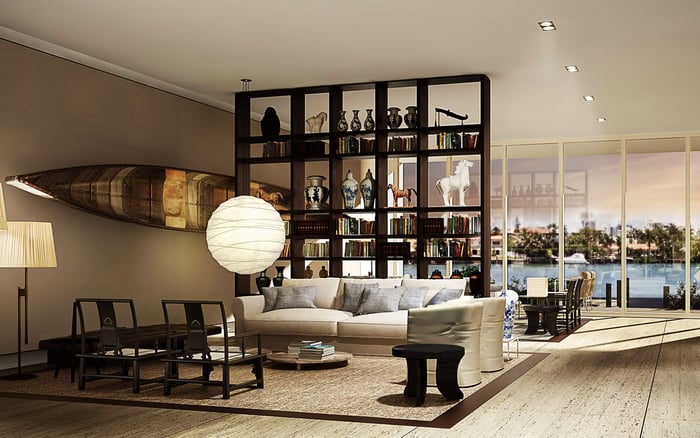
The defining signal is space. Larger floor plans and multi-bedroom residences are becoming central to how affluent households think about condominium living in South Florida. A gracious primary suite is no longer enough. Families want secondary bedrooms that feel considered, flexible rooms that can become studies or play areas, and living spaces that can absorb the rhythm of daily life rather than simply stage an occasional weekend.
This is where family-scale condominiums begin to compete with single-family homes. They offer the privacy of a managed building, the convenience of shared amenities, and the relative simplicity of lock-and-leave ownership, while still allowing a household to live with the scale expected at the top of the market. The appeal is especially strong for families that move between cities, host extended family, or want a South Florida base that does not feel temporary.
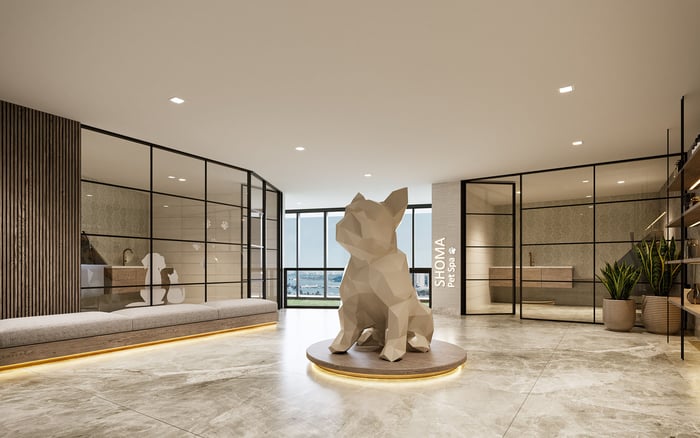
The most compelling projects are not merely adding bedrooms. They are reframing the entire residential experience around daily usability. Children’s programming, adult wellness, social spaces, security, and service all become part of a more complete domestic equation. Luxury is measured less by spectacle and more by how seamlessly the building supports the household.
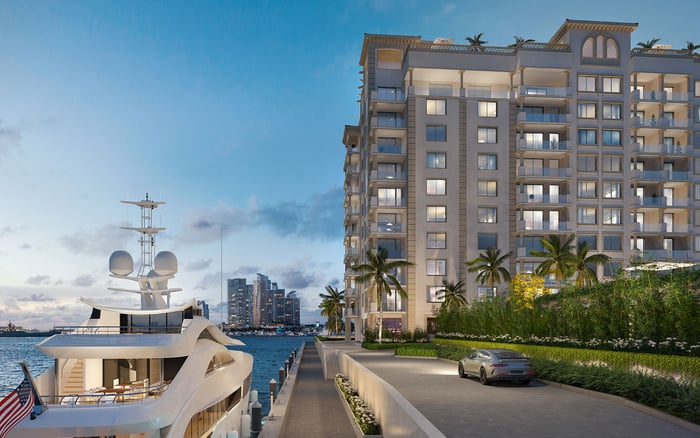
Bay Harbor Towers reflects the appeal of a condominium that can function as a family home rather than a seasonal apartment. In Bay Harbor Islands, the attraction lies in the combination of discretion, residential calm, and access to the broader Miami Beach and mainland ecosystem. The setting supports buyers who want proximity without the constant intensity of a major urban core.
For families, this matters. Neighborhood integration and quality schools are important parts of the decision-making process, particularly for buyers considering primary or near-primary use. The most successful luxury residences in this category are not isolated objects. They are embedded in places where daily life can be managed with a sense of order.
Bay Harbor Towers sits within that conversation as a case study in the move from compact pied-à-terre living toward larger residences suited to affluent households. Its relevance is not only architectural or locational. It points to a deeper buyer preference: the desire for sanctuary without disconnection, and for condominium convenience without sacrificing the emotional logic of a family home.
Bay Harbor Towers increasingly belongs in conversations that once centered almost exclusively on waterfront estates or large single-family properties. The condominium is becoming part of the family-home vocabulary.
Park Grove Coconut Grove represents a different expression of the same trend. Coconut Grove has long carried a particular kind of appeal in South Florida: lush, established, human-scaled, and rooted in neighborhood life. For affluent families, that texture can be decisive. Walkability is not merely a lifestyle amenity. It is a way to make condominium living feel connected to the routines of everyday life.
Within this context, Park Grove is positioned as a condominium environment designed to work for primary or near-primary family use. The appeal is not simply that residents can enjoy a refined tower lifestyle. It is that the building is part of a district where dining, parks, schools, and daily errands can feel more integrated into a family’s schedule.
Coconut Grove also offers an important lesson for the broader market. Family-scale living is not only about interior square footage. It is also about what happens when residents step outside the lobby. A building can provide privacy and amenities, but the surrounding neighborhood provides continuity. For many buyers, that is what transforms a luxury residence into a true home base.
The phrase Park Grove Coconut Grove captures more than a project name. It captures the growing buyer appetite for a condominium that balances sophistication with lived-in neighborhood character. That balance is increasingly central to South Florida’s high-end lifestyle.
The Ritz-Carlton Residences® Palm Beach Gardens brings the family-scale conversation into the realm of branded service. For globally mobile families, the attraction of a managed residential environment is clear: privacy, security, consistency, and a standard of service that can make a large residence easier to maintain and enjoy.
This is where Branded Residences have gained particular traction. The brand is not only a name on the building. At its best, it signals an operating philosophy. Families who travel frequently, split time among homes, or manage complex schedules may value a residence that offers structure as much as elegance.
Palm Beach Gardens adds another layer. Compared with denser urban locations, it speaks to buyers seeking a calmer residential setting with the reassurance of service and privacy. The Ritz-Carlton Residences® Palm Beach Gardens is therefore not simply a luxury address. It is part of a broader movement toward service-backed domesticity, where condominium living is made compatible with full family life.
For this buyer profile, the home must be both sanctuary and base of operation. It should be serene enough for retreat, but practical enough for routines, guests, remote work, and multigenerational use. That duality is becoming a defining feature of the South Florida family condominium market.
Taken together, these three projects show that design, branding, and urban positioning are being used to solve the same problem from different angles. Bay Harbor Islands emphasizes residential quiet and family practicality. Coconut Grove emphasizes walkable neighborhood life. Palm Beach Gardens emphasizes service, privacy, and a managed environment.
For buyers, the key is to evaluate beyond the surface language of luxury. The most relevant questions are domestic rather than decorative. How many bedrooms truly function for everyday use? Is there enough flexibility for work, guests, children, and staff support where needed? Do the amenities serve both adults and children? Does the neighborhood make school, dining, wellness, and errands feel coherent?
The rise of family-scale condominium living does not mean every affluent household will choose a condo over an estate. It means the category has matured. The best buildings now compete on livability, not just views. In South Florida, that is a meaningful evolution.
What is family-scale condominium living? It refers to larger, multi-bedroom condominium residences designed to support primary or near-primary family use rather than occasional stays.
Why are affluent families considering condos instead of single-family homes? Condominiums can offer privacy, amenities, security, and managed service while reducing the maintenance burden of a standalone estate.
How does Bay Harbor Towers fit this trend? Bay Harbor Towers reflects the shift toward larger residences in a quieter, more residential setting suited to affluent households.
What makes Park Grove Coconut Grove relevant for families? Its Coconut Grove setting supports walkable neighborhood living, which can make daily routines feel more connected and practical.
Why does branded service matter in Palm Beach Gardens? Branded service can provide consistency, privacy, and operational ease for families with complex schedules or multiple residences.
Are amenities important for family buyers? Yes. The strongest family-oriented condominiums consider both adult wellness and children’s programming as part of the living experience.
Do schools influence luxury condo decisions? They can. Families evaluating primary or near-primary use often weigh neighborhood integration and access to quality schools.
Is this trend limited to Miami? No. Bay Harbor Islands, Coconut Grove, and Palm Beach Gardens show how the trend appears across different South Florida submarkets.
What should buyers evaluate first? Buyers should focus on functional floor plans, neighborhood fit, privacy, security, and whether the building supports daily family life.
Does family-scale mean sacrificing luxury? No. The new model elevates luxury by making it more livable, practical, and responsive to how families actually use a residence.
For a tailored shortlist and next-step guidance, connect with MILLION.
If branded residences are on your mind — as a home or as an allocation — we would be glad to share what we are seeing, privately.
Begin a quiet conversation