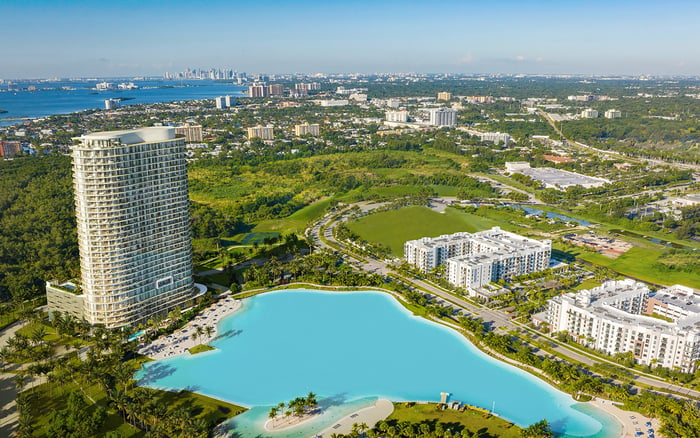
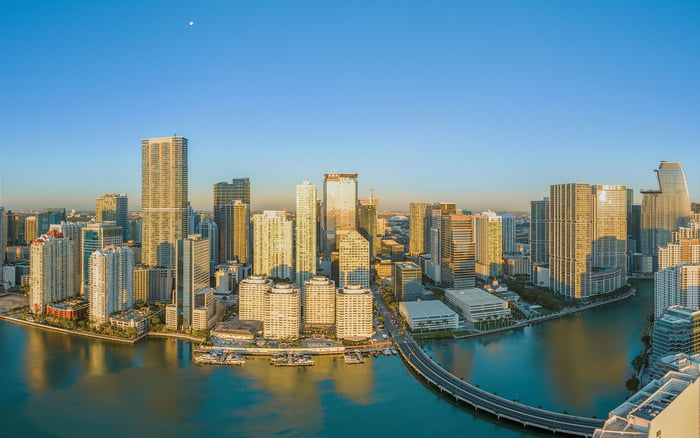
A discreet buyer’s guide to using Miami’s art-week rhythm as a lens for evaluating a better-positioned South Florida pied-à-terre in North Miami.
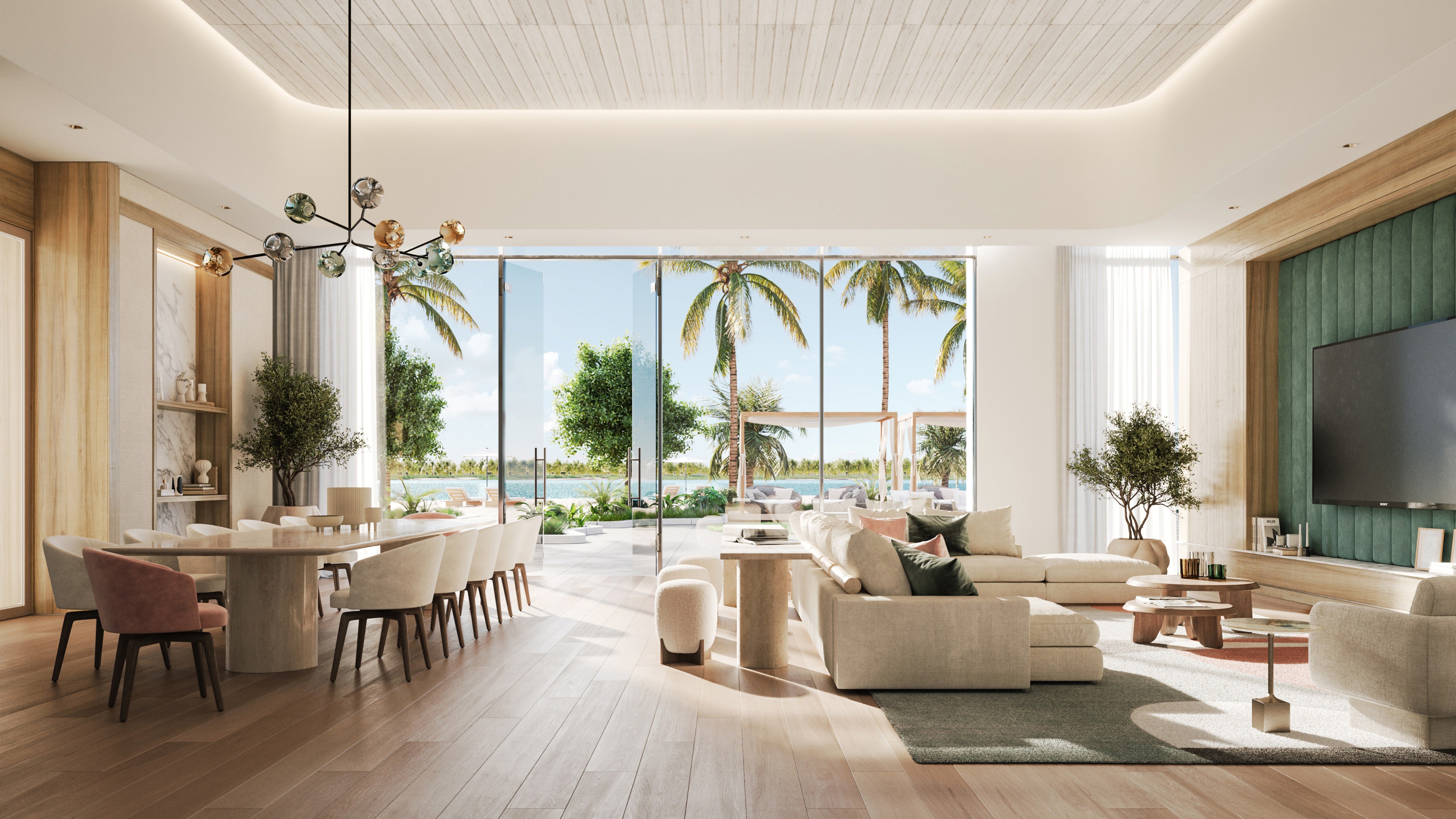
Art Basel Miami Beach has a way of clarifying what a South Florida pied-à-terre is meant to do. For some buyers, the week is an annual ritual of collecting and social obligation. For others, it is a stress test: traffic, dinners, previews, private viewings, last-minute guests, and the constant question of whether a home base makes the week feel effortless or exhausting.
That is where North Miami enters the conversation. The strongest pied-à-terre is not always the one closest to the loudest moment. It is the one that gives an owner the right balance of access, retreat, storage, service, and optionality. A residence slightly removed from the event core can become more valuable in practice because it allows the owner to move in and out of the cultural calendar without living inside it.
For the South Florida buyer who already knows Miami Beach, Surfside, Aventura, and Brickell, the North Miami lens is not a compromise. It is a positioning exercise. It asks whether the home should be a front-row seat, a private salon, a launch point, or a quiet recovery address after five nights of obligations.
A cultural week exposes weak decisions. A building with a beautiful lobby but limited arrival privacy can feel inconvenient. A glamorous address without practical guest flow can become burdensome. A residence with lovely views but inadequate internal storage may not support the wardrobe, art materials, gifts, luggage, and hosting patterns that accompany a serious seasonal stay.
For a North Miami pied-à-terre, the evaluation should begin with use, not with a postcard image. Will the owner come alone, as a couple, with family, or with staff? Is the residence primarily for art week and winter weekends, or must it support longer seasonal stays? Does the buyer entertain at home, or use the residence as a composed retreat between lunches and dinners elsewhere?
This is why a project such as One Park Tower by Turnberry North Miami belongs in the conversation for buyers who want the North Miami address to function as more than a spare apartment. The case is strongest when the residence offers enough scale and polish to feel permanent, while remaining practical enough for intermittent ownership.
During art week, the instinct is often to buy into the center of the action. That can be the correct choice for the collector who wants a Miami Beach identity every hour of the day. Yet many seasoned owners prefer a different rhythm: attend the fair, meet the dealer, host the dinner, then leave the intensity behind.
North Miami can support that temperament. It speaks to buyers who value discretion over display and want a base that connects to multiple South Florida routines rather than one neighborhood narrative. It can also make sense for owners who divide their days among the beach, private clubs, galleries, dining rooms, family commitments, and business meetings.
The comparison set matters. A buyer considering Avenia Aventura is likely thinking about convenience, lifestyle infrastructure, and a polished residential cadence. A buyer studying Continuum Club & Residences North Bay Village may be drawn to a bay-oriented setting that still feels connected to the wider Miami orbit. North Miami sits within that broader mental map: close enough to participate, calm enough to breathe.
Investment should not be reduced to a single event, even one as influential in the social calendar as Art Basel Miami Beach. The stronger argument is more disciplined. Cultural demand can reveal how a residence performs under pressure. It shows whether the location is intuitive for guests, whether building services can absorb peak usage, whether parking and arrivals feel graceful, and whether the owner would genuinely choose to return outside the headline week.
A pied-à-terre that works for only one annual occasion is fragile. A better-positioned one supports several identities: winter retreat, business base, family overflow, collecting-week headquarters, and long-weekend escape. That versatility is what can make North Miami interesting for buyers who want exposure to the Miami ecosystem without buying entirely into the most visible corridors.
Buyers should also be sober about liquidity. The next owner may not share the same art-week schedule. The residence must stand on its own through architecture, plan quality, service, view orientation, building condition, privacy, and neighborhood trajectory. The cultural calendar may sharpen the thesis, but it should not carry it.
Second-home ownership in South Florida rewards precision. The most successful buyers resist the urge to purchase the apartment that photographs best for one dinner party. They look for the floor plan that lives well after the week is over.
That means separating emotion from function. A proper pied-à-terre should have a gracious primary suite, useful secondary space, a kitchen that can support catered evenings, and enough separation between entertaining and private areas. Outdoor space matters, but only if it is comfortable to use. Amenities matter, but only if they reduce friction rather than simply decorate the brochure.
New-construction options can be especially useful for buyers who want a turnkey seasonal base with contemporary expectations around wellness, arrival, security, and service. Still, new does not automatically mean better. The question is whether the building’s daily choreography aligns with the owner’s own pattern: early departures, late returns, visiting friends, quiet mornings, and occasional formal hosting.
A North Miami thesis becomes clearer when it is measured against Miami Beach rather than positioned against it. Miami Beach remains central to the cultural imagination of art week, and for some owners that is the entire point. A residence near the beach can provide the feeling of being fully immersed in the week’s energy.
For that buyer, The Perigon Miami Beach represents a different ownership psychology: more directly coastal, more closely tied to the established beach lifestyle, and more explicit in its resort-residential appeal. Comparing that profile with North Miami helps reveal whether the buyer wants immersion or release.
Brickell adds another contrast. It suits buyers who want a dense urban base, business adjacency, and a more vertical downtown rhythm. North Miami’s argument is quieter. It is less about being seen in the center of the room and more about owning a composed address that can move between worlds.
The strongest candidate is not the buyer chasing novelty. It is the buyer who has spent enough time in South Florida to understand the value of restraint. This person may already have a primary residence in the Northeast, Midwest, California, Latin America, or Europe. They may visit for art, weather, family, boating, dining, or business. They may not need a full estate, but they do need a residence that feels adult, secure, and easy to use.
North Miami can also appeal to buyers who want to avoid over-indexing on one brand of Miami glamour. The location can feel strategic precisely because it is not defined only by nightlife or beach spectacle. It gives the owner a more flexible relationship with the region.
The practical test is simple: if the residence would feel valuable on an ordinary Tuesday in February, it has a stronger chance of feeling valuable during art week. If it only makes sense when the invitation list is full, the buyer should keep looking.
Why consider North Miami for an Art Basel Miami Beach pied-à-terre? It can offer a more composed base for buyers who want cultural access without living inside the busiest event corridors.
Is a pied-à-terre mainly for art week a sound idea? It is stronger when the residence also works for winter weekends, business travel, family visits, and longer seasonal stays.
Should buyers prioritize Miami Beach instead? Miami Beach may suit owners who want full immersion in the cultural and coastal atmosphere, while North Miami may suit those who prefer retreat.
What should an art-minded buyer evaluate first? Focus on arrival privacy, service quality, floor-plan efficiency, guest flow, storage, and the ease of moving through the region.
Does new construction matter for a pied-à-terre? It can help when the buyer values turnkey finishes, contemporary amenities, and predictable building systems.
How does Aventura fit into the decision? Aventura can be part of the comparison for buyers who want convenience and a polished residential environment north of the core.
How does Brickell compare with North Miami? Brickell offers a denser urban rhythm, while North Miami may feel calmer and more flexible for seasonal living.
Can a smaller residence work as a luxury pied-à-terre? Yes, if the plan is efficient, the building is well serviced, and the owner does not need frequent extended guest stays.
What is the biggest mistake buyers make? They sometimes buy for a single glamorous week instead of selecting a residence that performs well throughout the season.
What is the best way to shortlist comparable options for touring? Start with location fit, delivery status, and daily lifestyle priorities, then compare stacks and elevations to validate views and privacy.
If you'd like a private walkthrough and a curated shortlist, connect with MILLION.
If branded residences are on your mind — as a home or as an allocation — we would be glad to share what we are seeing, privately.
Begin a quiet conversation