Florida property-tax planning depends on intended use, ownership continuity, assessment caps, portability eligibility, and the timing of title or estate-planning changes.
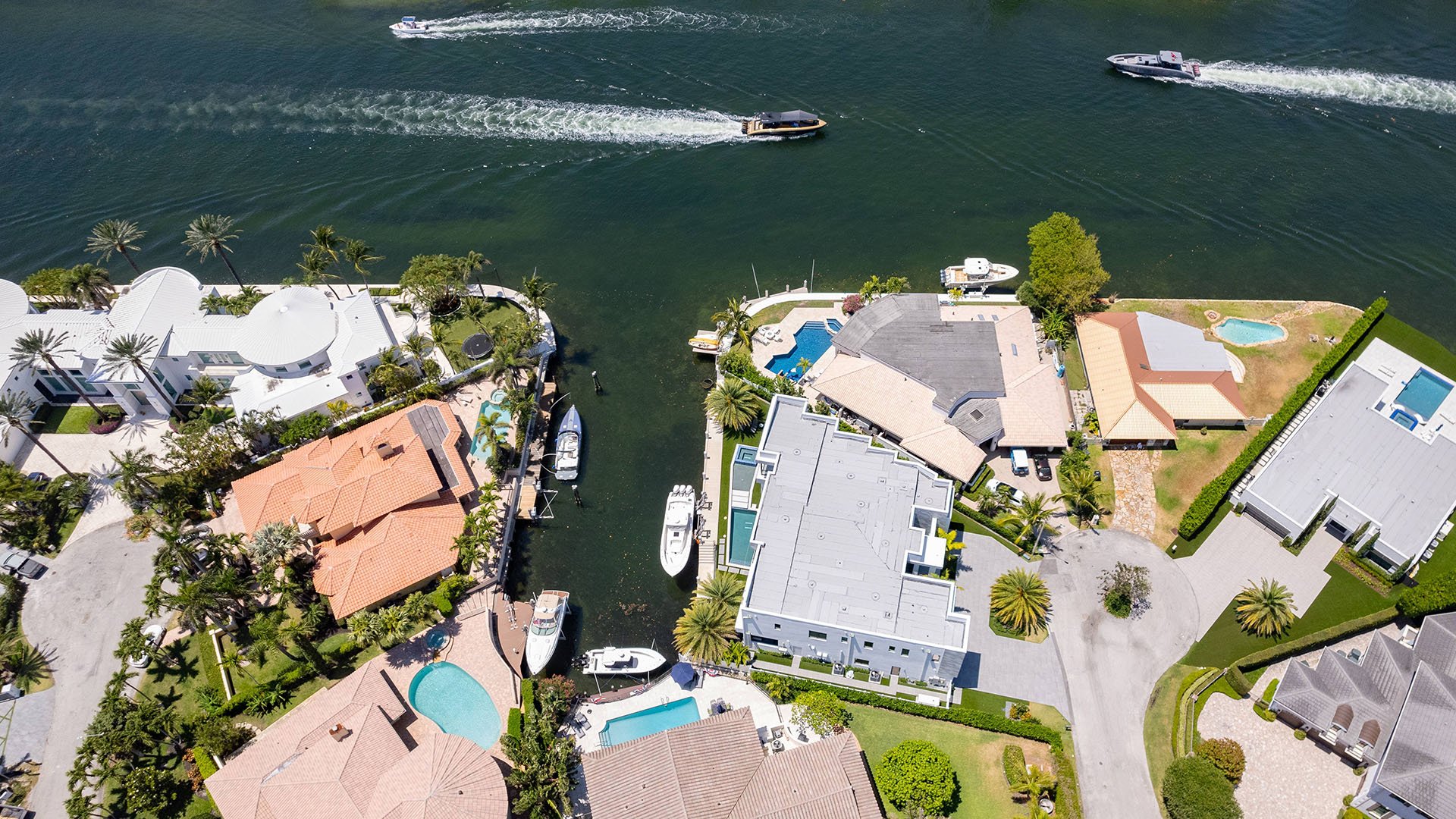
For Florida luxury buyers, the distinction between homestead and nonhomestead property begins with occupancy. Homestead treatment is reserved for an owner’s permanent primary residence. A second home, vacation residence, or most investment property generally does not qualify, even when the residence is held for personal enjoyment and rarely rented.
A qualifying homestead may receive exemptions totaling up to $50,000. The second $25,000 does not apply to school-district taxes-an important distinction when modeling the total bill. Yet for a high-value residence, the exemption is often less consequential over time than the Save Our Homes assessment limitation.
A buyer comparing a principal residence in Brickell with a coastal retreat in Miami Beach should therefore classify each property’s intended use before evaluating carrying costs. The same acquisition price can produce a different assessment trajectory depending on which residence becomes the permanent Florida home.
In luxury real estate, the long-term assessment path may matter more than the initial exemption.
After the first homestead year, Save Our Homes generally limits annual growth in assessed value to the lesser of 3% or the change in the Consumer Price Index. It does not cap market value or guarantee that the final tax bill will rise by no more than that percentage. Taxable value, millage, school assessments, and applicable exemptions remain separate parts of the calculation.
Just value reflects the property appraiser’s estimate of market value. Assessed value incorporates the applicable constitutional or statutory limits. During sustained appreciation, a long-held homestead can therefore develop a meaningful difference between its just value and capped assessed value.
Qualifying nonhomestead property generally receives a 10% annual limitation on assessed-value increases from the prior year. That limitation applies only to non-school assessments, so school-district taxes may be calculated using a higher taxable value. The contrast is especially relevant for buyers deciding whether a residence such as The Residences at 1428 Brickell will serve as a primary home or retain a nonhomestead profile.
Neither cap promises that assessed value will fall when the market softens. Assessment recapture may allow a homestead assessment to rise by the permitted amount while it remains below just value, even if market value declines. A similar principle may permit a nonhomestead assessment to rise by up to 10% while assessed value remains below just value.
A second-home purchase should not be analyzed using the same tax assumptions as a planned permanent residence. For a high-value primary home, promptly establishing homestead status can allow the tighter 3% or CPI limitation to protect more future appreciation than the nonhomestead 10% framework.
By contrast, a Miami Beach residence such as Shore Club Private Collections Miami Beach may remain nonhomestead if used seasonally rather than as the owner’s permanent home. An investment residence will generally remain outside homestead treatment as well.
Buyers should not project future property taxes from the seller’s current bill. A qualifying ownership change generally resets a homestead to just value, after which the new owner may establish a new capped assessment by securing homestead status. A change in ownership or control of nonhomestead property generally triggers reassessment at just value as of January 1 of the following year.
The homestead exemption itself does not transfer. An eligible owner may instead port all or part of the Save Our Homes assessment difference from a former Florida homestead to a new Florida homestead. The maximum portable difference is $500,000.
Portability can lower the new home’s assessed value, but it is not an across-the-board $500,000 exemption from every component of the tax bill. The calculation considers the difference between the former home’s market and assessed values and, when applicable, a percentage factor based on the relative values of the former and new homes.
Portability is particularly relevant to long-term owners entering the luxury market, downsizing, or relocating between South Florida counties. A move from a highly appreciated residence to South Flagler House West Palm Beach, for example, should be modeled using the owner’s available assessment difference rather than a generic estimate. Palm Beach buyers who recently established homestead may have less to port because their assessed value may remain close to market value.
Portability is not automatic. The owner must establish the new Florida homestead and file the required portability application. Eligibility may remain available when the owner held a Florida homestead during one of the three immediately preceding tax years, making transaction timing central to a coordinated sale and purchase.
In the estates and single-family market, title strategy is often considered alongside trusts, family governance, succession, privacy, and liability planning. Property-tax consequences deserve equal attention. A deed transfer, trust arrangement, entity change, or transfer among family members may constitute a change in ownership or control that resets an assessment benefit.
That risk is not confined to detached estates. The same review is prudent when acquiring or transferring an ultra-luxury condominium such as The Residences at Six Fisher Island. Homestead eligibility, continuity of ownership, estate objectives, and the three-year portability window should be examined together before any title change.
A sophisticated estate plan can pursue several objectives, but one objective should not be assumed to preserve another. The legal structure selected for succession may alter the property’s assessment treatment. Conversely, preserving an assessment difference without considering the broader estate plan can create a different form of exposure. Qualified Florida legal and tax advisers should review the appropriate sequence before documents are executed.
A disciplined review distinguishes among just value, assessed value, taxable value, exemptions, school and non-school assessments, and estimated millage effects. It also identifies the seller’s current assessment difference without assuming that the benefit will survive the sale.
For a planned homestead, confirm the occupancy and ownership facts required to qualify, then verify the relevant application instructions. For a nonhomestead acquisition, model reassessment after the ownership change and recognize that the 10% limitation does not constrain school assessments. For a relocating Florida owner, document the former homestead, estimate the portable difference, and align the new homestead application with the permitted three-year period.
County property appraisers administer exemptions, assessment limitations, and portability applications, so forms and filing instructions should be confirmed in the county where the new residence is located. This property-level analysis provides a more reliable view than simply multiplying the purchase price by a headline tax rate.
For a discreet conversation about South Florida residences suited to your ownership and lifestyle priorities, connect with MILLION.
If branded residences are on your mind — as a home or as an allocation — we would be glad to share what we are seeing, privately.
Begin a quiet conversationIt generally must be the owner’s permanent primary residence. Second homes, vacation properties, and most investments generally do not qualify.
A qualifying homestead may receive up to $50,000 in exemptions, although the second $25,000 does not apply to school-district taxes.
It caps annual growth in assessed value after the first homestead year, generally at the lesser of 3% or the Consumer Price Index change.
No. It limits assessed-value growth, not market value or the final tax bill.
Qualifying nonhomestead property generally has annual assessed-value increases limited to 10%, but the limitation applies only to non-school assessments.
Yes. Recapture may permit an increase when assessed value remains below just value, for both homestead and qualifying nonhomestead property.
It allows an eligible owner to transfer all or part of a Save Our Homes assessment difference from a former Florida homestead to a new one.
The maximum amount that may be ported is $500,000, subject to eligibility and the applicable calculation.
No. The owner must establish the new Florida homestead and submit the required portability application.
Transfers involving deeds, trusts, entities, or family members may reset assessment benefits, so their property-tax consequences should be evaluated first.