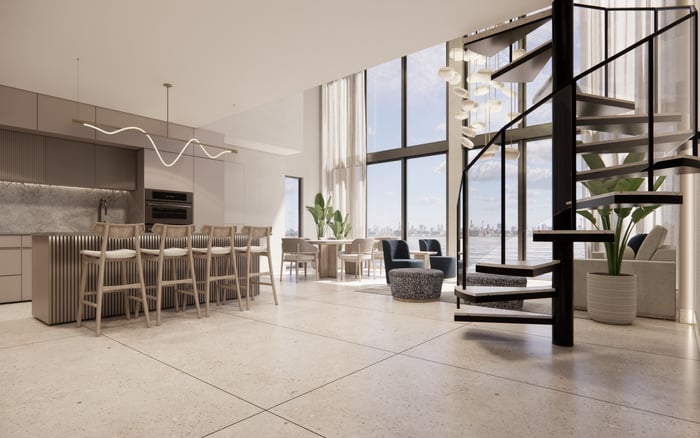
A disciplined assessment of HOA value at Continuum Club & Residences, from operating costs and reserves to insurance, inclusions and multi-year ownership exposure.

When evaluating Continuum Club & Residences North Bay Village, the association assessment should be treated as part of the acquisition decision rather than as a secondary line item.
The useful question is not whether the fee appears high or low in isolation, but whether the proposed budget clearly and sustainably funds the expected services while preparing for future repairs and replacements. A low opening figure can be less reassuring than a well-supported one that accounts for staffing, utilities, insurance, maintenance and reserves.
A current project-specific HOA rate should not be inferred from marketing language or hypothetical per-square-foot examples. Buyers should obtain the developer’s proposed association budget and current offering documents, then review them alongside the purchase contract and disclosure materials.
Before comparing numbers, create a service map. Identify every utility, amenity and operational service included in the quoted assessment, along with every cost that remains the owner’s responsibility. This prevents a building from appearing more efficient simply because its fee excludes items bundled elsewhere.
Service-intensive living can carry ongoing expenses. Front-of-house staffing, security, common-area housekeeping, utility consumption and the upkeep of shared spaces may create a relatively fixed operating base. These costs can deliver lifestyle value, but they may be less flexible than amenities requiring limited personnel.
The right test is utilization. A resident who regularly uses the shared program may view the assessment as an efficient way to access a managed environment. An owner who spends limited time in residence may assign less value to the same service package.
A disciplined review divides the budget into two broad categories. The first is routine operations: payroll, contracts, utilities, common-area maintenance and other recurring expenses. The second is reserves: funds set aside for future repair and replacement obligations.
That distinction matters because an assessment can appear lean when reserve contributions are modest. The apparent saving may shift costs into later years or increase exposure to a special assessment. Buyers should examine the assumptions behind reserve funding, the anticipated useful lives of major components and the process for updating those assumptions as the property ages.
Insurance warrants a separate review. Ask how premiums and deductibles are allocated, what the association carries and what must be insured individually. Insurance conditions, inflation, building aging and regulatory changes can affect long-term ownership costs beyond the initial estimate.
A useful comparison begins by normalizing assessments against interior square footage, then adjusting for materially different service packages. Even then, a per-square-foot figure is a screening tool, not a verdict. Residence size, allocation methodology and included services can alter what the number represents.
A local comparison set can include Shoma Bay North Bay Village and Tula Residences North Bay Village. The Well Bay Harbor Islands may broaden the comparison, but buyers should not assume identical amenities, staffing or inclusions. Each budget must be reconciled line by line.
Rather than asking which property posts the lowest assessment, ask which offers the clearest relationship among recurring cost, service intensity and reserve preparation. That is a more relevant measure of operating discipline.
Buyers should model assessments across the anticipated ownership period rather than assume the initial rate will remain unchanged. This exercise does not require presenting a prediction as fact. It requires scenarios that test how the household balance sheet responds if recurring costs rise.
Run a base case, a moderate-growth case and a more demanding case. Consider the cumulative effect rather than focusing solely on the next monthly payment. Then add separate sensitivity analyses for insurance changes, reserve revisions and potential special-assessment exposure. The objective is to determine whether the residence remains comfortable to own under less favorable conditions.
For a second home, pair the assessment with other recurring carrying costs and realistic personal usage. For a primary residence, consider whether the service package replaces expenses that would otherwise be paid directly. In both cases, evaluate long-term affordability alongside the purchase price, not after it.
Request the proposed association budget, the schedule of included utilities and services, reserve assumptions, insurance allocations and the provisions governing assessments. Ask which costs are estimates, which contracts are established and how future budget decisions will be made.
Then investigate three points. First, determine how staffing-intensive the expected experience will be. Second, identify whether reserves are meaningfully incorporated rather than deferred. Third, understand the circumstances under which special assessments may be imposed.
For buyers evaluating North Bay Village opportunities, the conclusion is deliberately measured: fee discipline is not synonymous with minimal spending. It is the transparent, durable funding of the expected experience without obscuring future obligations.
Is a current HOA rate for Continuum Club & Residences established here? No. Buyers should rely on current offering documents and the developer’s proposed association budget rather than inferred figures.
Why should the HOA assessment be reviewed with the purchase price? The assessment is a recurring ownership cost that directly affects long-term affordability.
What should be included in a service map? List all included utilities, amenities and services, along with expenses paid separately by the owner.
Are higher HOA fees necessarily inefficient? No. The central issue is whether the budget sustainably funds a service package the owner values.
Why separate operations from reserves? Operations fund current needs, while reserves prepare for future repairs and replacements.
What can make operating costs less flexible? Staffing-intensive services and elaborate common areas can create substantial continuing obligations.
How should buyers compare fees across condominiums? Normalize by interior square footage, then adjust for differences in services, utilities and amenities.
Why does insurance require separate attention? Premiums, deductibles and allocation methods can materially influence recurring costs and owner exposure.
What is the purpose of a multi-year stress test? It shows whether ownership remains comfortable if assessments, insurance or reserve demands increase.
What ultimately defines HOA fee discipline? Clear budgeting, credible reserves and sustainable funding for the service level expected by residents.
To compare the best-fit options with clarity, connect with MILLION.
If branded residences are on your mind — as a home or as an allocation — we would be glad to share what we are seeing, privately.
Begin a quiet conversation