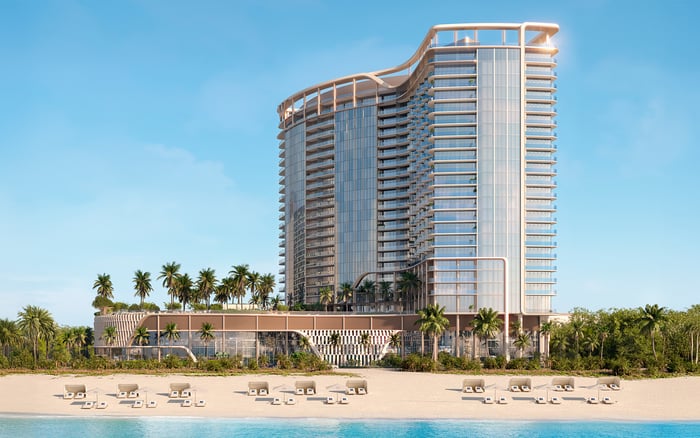
A disciplined framework for examining association finances, insurance exposure, reserve assumptions and debt before a portfolio-financed Hillsboro Beach purchase.

A Hillsboro Beach condominium purchase is not solely an appraisal of water views, privacy and interior finishes. For a portfolio-financed buyer, it is also an examination of a shared operating enterprise whose financial condition may shape underwriting, liquidity needs and long-term ownership costs.
That distinction matters when payroll, utilities, insurance and capital work represent meaningful obligations. A polished current-year budget is only a starting point. The more revealing exercise is to compare several years of adopted budgets with actual results, financial statements, reserve activity, assessments and board discussions.
The same discipline applies when considering Rosewood Residences Hillsboro Beach. The objective is not to assume one property resembles another, but to apply a consistent financial lens before committing capital.
Request the current operating and reserve budgets, recent financial statements, reserve studies, insurance declarations, assessment history and recent board minutes. If the association has debt, obtain the outstanding principal, interest rate, maturity, amortization schedule and treatment of debt service within regular assessments.
Then connect the documents. Budgeted reserve contributions should align with the adopted funding plan, while reported reserve balances should reconcile with financial statements and supporting account records.
A reserve line is not necessarily proof of immediately available cash. Likewise, a balanced budget can conceal capital exposure when engineering findings or board minutes discuss work absent from reserves, loans or planned assessments.
Operating budgets commonly organize recurring items such as payroll, utilities, insurance, landscaping, maintenance and administration. Review each major category against recent actual spending, then identify the assumption behind the following year's figure.
For payroll, separate salaries, benefits, management, security, concierge and maintenance contracts. High staffing expense is not inherently a weakness in a luxury property. It becomes a concern when recurring revenue cannot sustain the service model without reserve transfers, delayed maintenance or repeated assessment increases. Unexplained jumps deserve attention, but unusually low projections can be equally revealing.
For utilities, identify common-area electricity, water and sewer, trash, pools, and any central chiller or cooling system. Compare forecasts with actual bills and ask how management accounted for changes in usage, rates, equipment and service levels rather than accepting a broad inflation percentage without support.
Buyers exploring nearby Broward options, including Armani Casa Residences Pompano Beach and The Ritz-Carlton Residences® Pompano Beach, can use the same review structure while evaluating each association on its own documents, staffing model, systems and coverage.
The annual premium is only one part of an insurance review. Examine policy limits, replacement-cost assumptions, wind or hurricane provisions, flood coverage, exclusions and deductibles. Confirm what the association insures and what remains the owner's responsibility.
Model the potential owner allocation of deductibles or uncovered losses alongside the association's liquid resources and any existing debt. Premium increases also deserve attention when dues remain flat or another operating category has been reduced.
The objective is not to compare headline dues alone. It is to understand what those dues support, which risks may be transferred through insurance and which obligations may remain with owners.
Review the association's reserve categories, governing documents, professional studies and adopted funding plan. For each significant component, examine estimated remaining useful life, anticipated project timing, estimated cost and the inflation assumption used in the calculation.
Test those inputs for major structural, exterior and mechanical work identified in the available records. A distant replacement date, stale cost estimate or modest inflation assumption can reduce the current contribution while increasing a later funding need.
Establish which reserve or structural studies apply to the property, when each was performed, and whether the adopted reserve budget follows the relevant findings. Florida condominium counsel and qualified financial or reserve professionals can help identify the requirements applicable to a particular association.
For an investment decision, the decisive question is not whether assessments are high or low today. It is whether operating revenue, reserve cash and future contributions plausibly match the obligations documented for the building.
Ask the portfolio lender which association documents and financial conditions will affect its review. Prepare a concise risk schedule covering recurring deficits, reserve transfers, insurance deductibles, unfunded projects, association loans and projected assessment changes.
Potential warning signs include chronic operating deficits, reserve money used for ordinary bills, contributions below documented recommendations, and flat dues despite rising budget assumptions. Any one item may have an explanation. A pattern may indicate optimistic budgeting, deferred work or future assessment pressure.
Engage Florida condominium counsel and an association-experienced CPA or reserve specialist when structural obligations, insurance gaps, loans or pending capital projects are material. Their role is to test the documents, not to replace the buyer's economic judgment.
Why review several years of association budgets? A multiyear comparison can reveal recurring deficits, habitual underbudgeting and repeated transfers that a single current budget may obscure.
What should payroll diligence include? Compare salaries, benefits, management, security, concierge and maintenance contracts with recent actual spending and the stated service model.
Are high staffing costs automatically a concern? No. Evaluate whether recurring revenue supports the staffing model without reserve transfers, deferred maintenance or persistent deficits.
Which utility expenses deserve review? Examine common-area electricity, water and sewer, trash, pools, and any central chiller or cooling system against recent bills.
Is an insurance premium enough to assess coverage? No. Review limits, replacement-cost assumptions, wind and flood terms, exclusions, deductibles and the owner's remaining responsibilities.
Can insurance still leave owners exposed to assessments? Yes. Deductibles, exclusions and uncovered losses may create owner obligations, depending on the policy and association documents.
Does a reserve-budget line prove cash is available? No. Reconcile reported reserve balances with financial statements and supporting account records.
What reserve assumptions should a buyer test? Test remaining useful lives, project timing, current cost estimates and inflation assumptions for significant building components.
Why do board minutes matter? Minutes may identify engineering findings, proposed loans, insurance concerns or capital projects not apparent in the adopted budget.
How can association debt affect the purchase review? Review principal, rate, maturity, amortization and the way debt service is reflected in assessments, then discuss the documents with the lender.
For a confidential assessment and a building-by-building shortlist, connect with MILLION.
If branded residences are on your mind — as a home or as an allocation — we would be glad to share what we are seeing, privately.
Begin a quiet conversation