A discreet buyer’s guide to planning a Florida homestead position when relocating capital, family life, and property ownership from Geneva to Coral Gables.
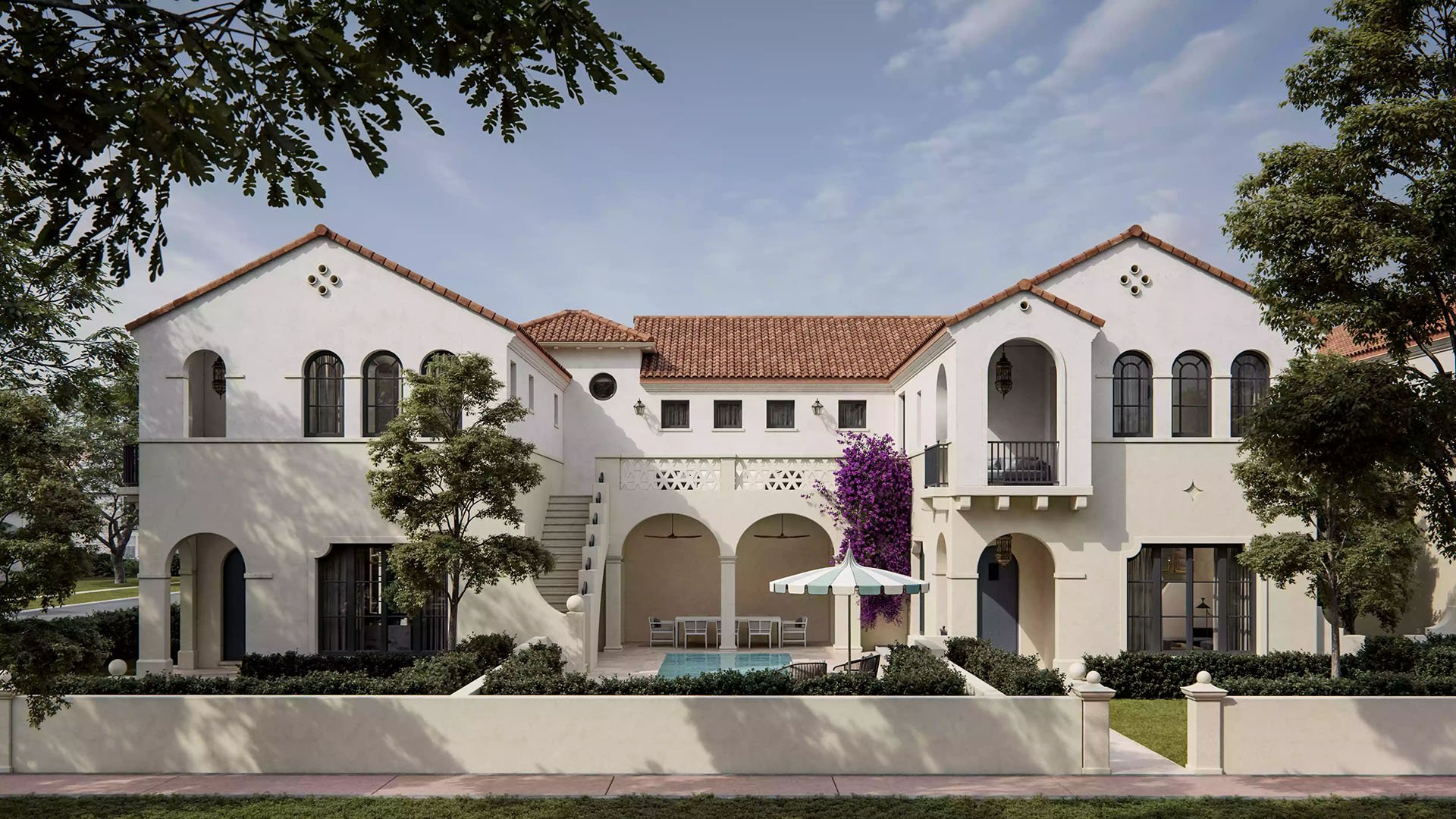
For a Geneva-based buyer considering Coral Gables, the instinct is often to begin with architecture: a shaded Mediterranean façade, a garden suited to weekend lunches, proximity to schools, privacy, perhaps a condominium pied-à-terre in a more urban corridor. The more important first conversation is quieter. It concerns whether the Florida residence is meant to become a true primary home, how title will be held, and whether the buyer’s global affairs support that intent.
Homestead exemption strategy sits at the intersection of property tax planning, asset structuring, family logistics, and personal residency. It should not be treated as a closing checklist item. For ultra-premium buyers, getting the sequence wrong can be more expensive than choosing the wrong finishes.
Coral Gables is especially attractive because it offers permanence without spectacle. A buyer may compare a lock-and-leave residence near Merrick Park, such as Cora Merrick Park, with a more neighborhood-oriented setting like The Village at Coral Gables. The right choice is not only aesthetic. It must also fit the buyer’s actual pattern of use.
Homestead strategy begins with a simple question: what will this property be in real life? A buyer who spends meaningful time in Florida, anchors family routines there, and treats the residence as the center of personal life is in a different position from a buyer seeking a seasonal escape.
For international households, this can require a disciplined review of calendars, school plans, private aviation routines, medical relationships, club memberships, domestic staff arrangements, and where important records will be maintained. None of these details alone decides the matter. Together, they form a portrait of intent.
This is where Coral Gables has an advantage. It is not a transient market in the way some resort addresses can be. The city appeals to buyers who want a refined base: walkable village moments, established streets, university and cultural proximity, and homes that can function as long-term family infrastructure. A residence such as Ponce Park Coral Gables may suit buyers who want the convenience of a newer residential setting while still aligning with a primary-home lifestyle.
Luxury buyers often approach Florida acquisitions through entities, trusts, or cross-border planning vehicles. That may be appropriate for privacy, succession, financing, or estate coordination. Yet homestead strategy can be sensitive to how ownership is structured.
The practical rule is to settle the structure before the contract becomes difficult to change. A last-minute title revision can affect lender review, insurance coordination, estate planning documents, and the timing of post-closing filings. Geneva families should bring Florida counsel, tax advisers, estate counsel, and property advisers into the same conversation early.
This is not about chasing a single benefit. It is about preventing conflict between goals. Privacy, inheritance planning, marital planning, liability protection, financing efficiency, and homestead eligibility can point in different directions. The best structure balances them without forcing a future correction.
Property type matters because it influences how convincingly the residence can serve as a primary base. A gated estate, a boutique condominium, and a branded tower each create a different day-to-day life.
A Coral Gables buyer focused on family routines may value generous storage, staff circulation, private outdoor space, and proximity to everyday services. Another buyer may prefer a condominium because it simplifies maintenance while still supporting extended Florida occupancy. The key is consistency: the chosen home should match the story the buyer’s life will tell.
Some families compare Coral Gables with Brickell for access to banking, dining, and a more vertical waterfront rhythm. A residence like Baccarat Residences Brickell may appeal to a buyer who wants city energy, while Coral Gables may be the better expression of permanence. Others consider Coconut Grove for its softness, canopy, and bay-adjacent ease, with Four Seasons Residences Coconut Grove offering a different interpretation of South Florida residential life.
For sophisticated buyers, documentation should be treated with the same seriousness as design drawings or art inventories. Keep closing statements, title records, occupancy-related materials, insurance documents, and adviser correspondence organized from the beginning. If the property is intended as a primary residence, the file should reflect that intention coherently.
The most common planning error is assuming that wealth can solve sequence. It cannot. A buyer who waits until after closing to ask basic homestead questions may discover that the ownership structure, use pattern, or timing is misaligned. The better approach is deliberate and uneventful: decide intent, design ownership, close cleanly, then maintain records that match the plan.
For a Geneva-to-Coral Gables move, discretion also matters. The goal is not to over-document personal life unnecessarily. It is to maintain a precise, professionally managed file that allows advisers to act quickly and consistently.
Before signing, clarify whether the Florida property is meant to be a principal residence, a second home, or an investment holding. Confirm whether the ownership structure supports that goal. Coordinate estate, tax, immigration, insurance, and lending considerations before documents are finalized. Finally, choose a property whose lifestyle pattern genuinely supports the intended use.
This is why the best homestead strategy is rarely isolated from the search itself. The home, the holding structure, and the family plan should all tell the same story. In Coral Gables, that story is often one of rooted elegance: privacy, schools, gardens, clubs, culture, and a slower form of luxury that rewards patience.
Can a foreign buyer consider a Florida homestead strategy? Yes, but eligibility and planning depend on personal facts, ownership structure, and intended use. Cross-border counsel should be involved before closing.
Should homestead planning start before or after the purchase contract? Before. The contract phase is when ownership structure, financing, and closing logistics can still be aligned with the buyer’s broader plan.
Is Coral Gables a practical choice for a primary residence? For many buyers, yes. Its residential character, services, and established neighborhoods can support a long-term family base.
Does buying through a trust or entity affect strategy? It can. The structure should be reviewed by qualified advisers because privacy, estate planning, and homestead goals may interact.
Is a condominium less suitable than a single-family home? Not necessarily. The better question is whether the condominium realistically supports the buyer’s primary-residence lifestyle.
What documents should buyers keep organized? Buyers should maintain closing records, title materials, insurance documents, occupancy-related records, and adviser correspondence.
Can a second home receive the same treatment as a primary home? A second home should be analyzed differently. Homestead planning is tied to the nature and use of the residence.
Why compare Coral Gables with Brickell or Coconut Grove? Each area expresses a different lifestyle. The comparison helps buyers test whether their intended use matches the property.
What is the biggest mistake luxury buyers make? Waiting too long to coordinate advisers. Homestead strategy should be part of acquisition planning, not an afterthought.
Who should be involved in the planning conversation? Florida counsel, tax advisers, estate counsel, lending contacts, and the buyer’s property adviser should coordinate early.
When you're ready to tour or underwrite the options, connect with MILLION.
If branded residences are on your mind — as a home or as an allocation — we would be glad to share what we are seeing, privately.
Begin a quiet conversation