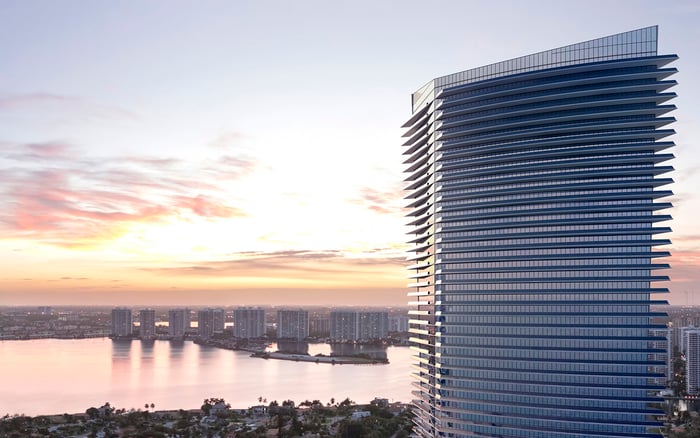
A seller-financed luxury condominium purchase deserves the same precision as the residence itself. Understand the three-property exclusion, fixed and adjustable repayment structures, title questions, prepayment negotiations, and the limits of future liquidity.

A seller-financed luxury condominium purchase brings two negotiations to the table: the acquisition of a residence and the creation of a private credit arrangement. The price may be settled while more consequential questions remain open. What funds must arrive at closing? How does the balance amortize? What happens if rates rise, the buyer wants to repay early, or the seller needs cash?
For a buyer considering Una Residences Brickell, those questions belong alongside the property decision, not after it. Project references here provide shopping context; they do not indicate that seller financing is available. Any arrangement requires a willing seller and transaction-specific legal review.
The central discipline is simple: structure the financing so that ownership remains manageable even if the hoped-for exit never arrives.
Regulation Z’s three-property seller-financing exclusion concerns the definition of “loan originator.” It is not a blanket exemption from mortgage laws. A privately negotiated transaction should not be treated as unregulated merely because no bank provides the purchase financing.
The exclusion covers financing for three or fewer property sales in any 12-month period, provided the seller owns each property and the property secures the financing. Individuals, trusts, estates, and entities may qualify, subject to the conditions. The seller must not have constructed the residence, or acted as its construction contractor, in the ordinary course of business.
Two requirements deserve particular attention: the financing must be fully amortizing, and the seller must make a good-faith determination that the buyer has a reasonable ability to repay. Neither a substantial purchase price nor an impressive financial profile should substitute for that analysis.
Ask counsel to identify the applicable framework before negotiating a detailed term sheet. This article focuses on the three-property exclusion, not every possible seller-financing arrangement.
For jumbo-sized balances, start by separating loan size from loan design. A large principal amount alone does not explain the repayment schedule, establish compliance, or provide a meaningful comparison with current institutional jumbo pricing.
A fixed interest rate is expressly permitted under the three-property exclusion when the other conditions are satisfied. It removes scheduled interest-rate resets from the negotiation, although buyers should still distinguish debt payments from the broader cost of ownership.
An adjustable structure qualifying for this exclusion cannot begin adjusting until at least five years after origination. It must also include reasonable annual and lifetime limits on interest-rate increases. These are structural requirements, not optional refinements to a lower introductory rate.
For a Miami Beach buyer evaluating Setai Residences Miami Beach, the useful comparison is between two complete payment schedules. Request the initial payment, principal reduction, adjustment timing, and payments under rising-rate assumptions. Do not assume an adjustable proposal is less expensive without reviewing the full terms.
A qualifying adjustable rate must reference a widely available index, such as a U.S. Treasury index, with the rate determined by adding a margin. Both the index and the margin should be identifiable in the documents, not left for later discussion.
Review the proposed mechanics together: the exact index, margin, first adjustment date, subsequent adjustment frequency, and annual and lifetime increase limits. Ask the drafting attorney how the agreement would operate if the specified index became unavailable. Do not assume any particular replacement provision is suitable without review.
A buyer comparing residences at Jade Signature Sunny Isles Beach should test the proposed financing against personal cash flow, not a prediction that rates will decline. Model the contractual upward path alongside an unchanged-rate scenario. The aim is to understand the obligation, not forecast the market.
Before closing, request a written reconciliation of the purchase price, buyer cash contribution, seller-financed principal, and separately identified closing charges. Confirm who provides each amount and when it must be available. This is a practical funding exercise, not a substitute for the legal documents.
Under the three-property exclusion, a balloon-payment structure does not satisfy the fully amortizing requirement. A schedule that calculates installments over a long period but demands the remaining balance at an earlier maturity is not full amortization over the loan’s actual term.
Have the proposed note and payment schedule reviewed together. An intended refinance should not be used to explain away a repayment structure that fails the exclusion’s requirements.
Keep the debt instrument distinct from the security instrument: the promissory note states the repayment obligation, while the mortgage secures it against the property. Avoid treating them as a single “recorded note and mortgage” without clarifying the closing documentation.
For a contemplated purchase at Arte Surfside, ask the closing attorney what the title review establishes, which existing obligations require resolution, and how the proposed mortgage will be documented and recorded. Do not assume lien priority or a clear title position simply because the seller accepts installments.
Ask separately what condominium documentation and property-specific review are needed. Financing terms do not answer questions about the association, insurance, reserves, or the residence’s condition.
Florida documentary stamp tax applies to mortgages and other taxable recorded indebtedness. The mortgage rate is $0.35 for each $100 of indebtedness, or fraction thereof. Tax on taxable recorded documents is paid to the county clerk or recording official at recording. Request a transaction-specific closing calculation rather than treating this rate as the entire closing-cost budget.
Prepayment deserves its own discussion. Ask whether partial and full repayment are contemplated, whether any charge is proposed, how that charge would be calculated, and what notice or payoff procedures the documents would require.
Have counsel determine which provisions are permissible and enforceable for the particular transaction. Do not assume either universal permission or a universal prohibition on prepayment penalties.
Buyers should also ask how a partial payment would affect the remaining schedule. Sellers should consider whether the proposed early-payoff terms fit their income expectations. Resolve these preferences before either side relies on them.
Refinancing and a future sale of the seller’s note are possibilities, not assured sources of liquidity. A fixed rate should not be presented as a guarantee of superior note resale terms.
The buyer’s final test is whether the obligation remains manageable without refinancing. The seller’s is whether holding the note longer than anticipated remains acceptable. A carefully negotiated purchase should work beyond its most optimistic scenario.
For a considered approach to South Florida’s luxury residential market, explore MILLION.
If branded residences are on your mind — as a home or as an allocation — we would be glad to share what we are seeing, privately.
Begin a quiet conversationNo. It concerns the definition of loan originator under Regulation Z, not a blanket exemption from mortgage laws.
It covers financing for three or fewer property sales in any 12-month period, subject to its conditions. The seller must own each property, and the property must secure the financing.
Yes. Individuals, trusts, estates, and entities can potentially qualify, provided the applicable conditions are met.
Yes. The seller must not have constructed, or acted as contractor for construction of, the residence in the ordinary course of business.
A balloon-payment structure does not satisfy the three-property exclusion’s fully amortizing requirement. The actual maturity and payment schedule should be reviewed together.
Yes. The seller must make a good-faith determination that the buyer has a reasonable ability to repay the financing.
A fixed rate is permitted if the other requirements are met. A qualifying adjustable rate cannot begin adjusting until five or more years after origination.
It must use a widely available index plus a margin and include reasonable annual and lifetime limits on interest-rate increases.
The rate is $0.35 for each $100 of indebtedness, or fraction thereof. Tax on taxable recorded documents is paid to the county clerk or recording official when recorded.
Prepayment terms require transaction-specific legal review, and refinancing is not assured. The financing should remain manageable without a guaranteed future exit.