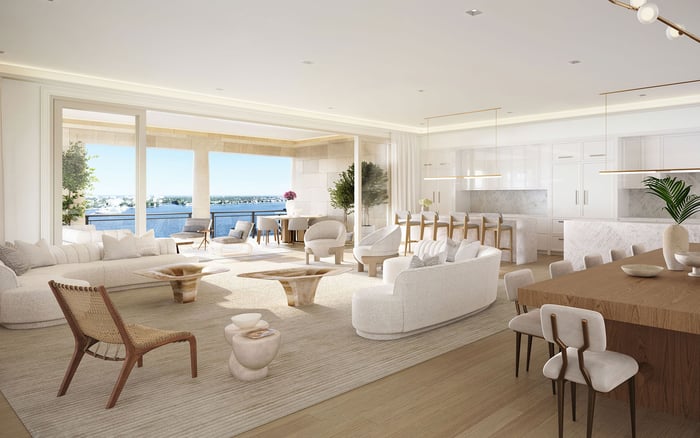
Maison D'Or South Flagler offers a compelling full-floor proposition, but sophisticated buyers should test elevator controls, acoustic separation, service circulation, sightlines, staff protocols, and condominium rules before valuing privacy.
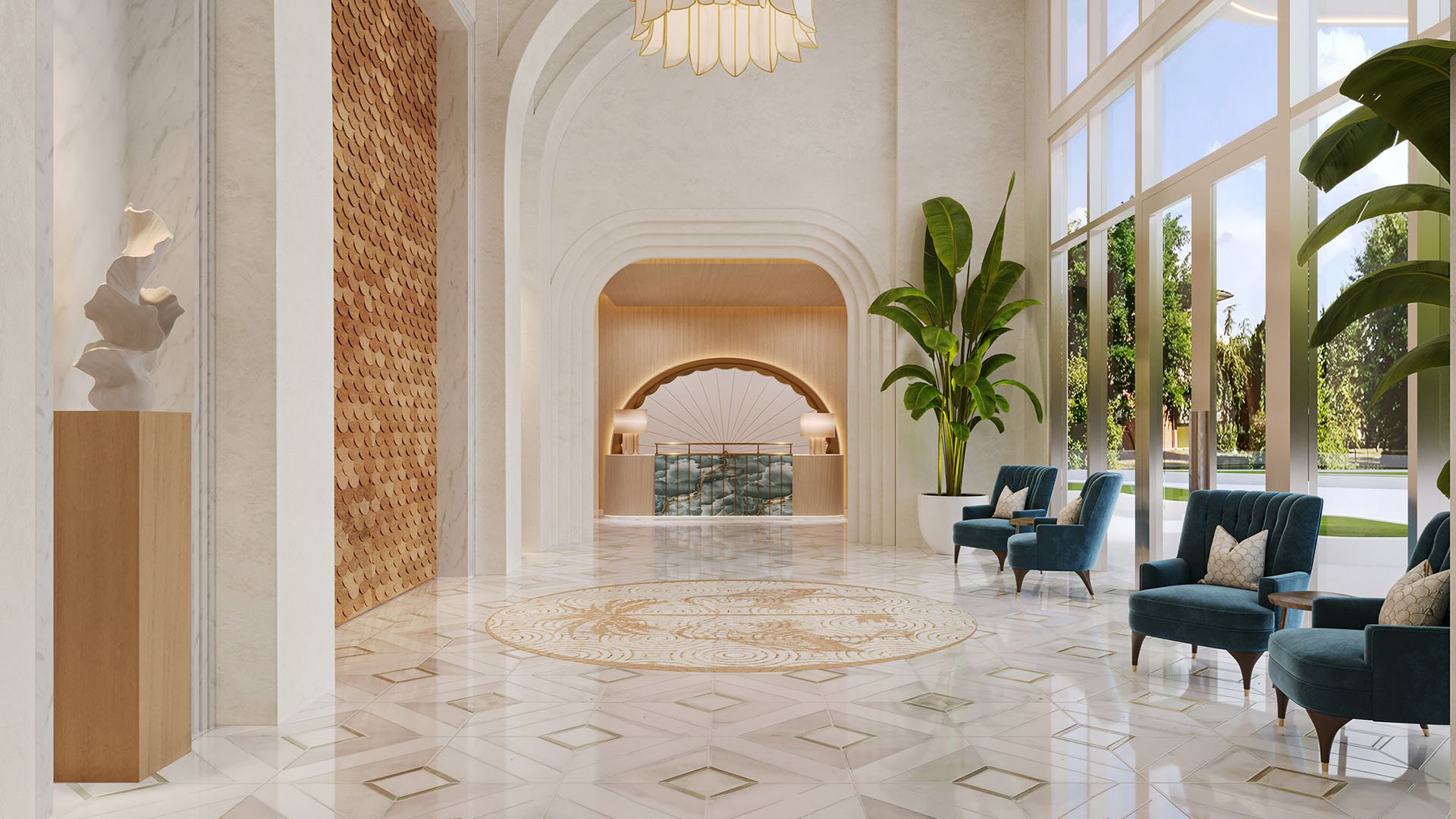
For privacy-minded buyers, the appeal of Maison D'Or South Flagler begins with a simple proposition: one residence per floor. This format is designed to reduce immediate neighbors, limit shared residential corridors, and create greater separation between the home and the rest of the building.
Private elevator entry reinforces that proposition. It can give an owner greater control over arrivals while reducing circulation immediately outside the residence. A full-floor plan may also provide wraparound exposures and broad water views, making the home feel more like an elevated estate than a conventional condominium.
That distinction matters in West Palm Beach, where buyers may seek proximity to Palm Beach and views across the Intracoastal Waterway without the maintenance demands of a detached property. Maison D'Or addresses that preference through boutique scale and a privacy-oriented residential format rather than a resort-scale environment.
Yet the premium should attach to performance, not terminology. “Full-floor” describes the layout. On its own, it does not establish how elevators are controlled, how sound travels, where staff circulate, or who can access common systems.
A rigorous review should consider visual, acoustic, physical, digital, and social privacy. Each dimension can expose a different gap between an elegant plan and the daily experience.
Visual privacy
concerns sightlines. Buyers should study what is visible when elevator doors open, whether service access can be seen from principal rooms, and how neighboring buildings or public areas relate to terraces, bedrooms, and glazing.
Acoustic privacy
extends beyond the absence of a shared party wall. Elevator equipment, service doors, mechanical systems, plumbing, and emergency circulation can all affect quiet. Request details on acoustic assemblies, glazing specifications, door seals, and the treatment of walls surrounding vertical building systems.
Physical privacy
depends on access control. Ask how an elevator recognizes residents, guests, staff, vendors, and emergency personnel. Confirm whether it opens directly into the home or into a controlled vestibule, and determine what occurs during maintenance, deliveries, or a system override.
Digital privacy
encompasses surveillance policies, access logs, resident directories, and the handling of owner or guest information. Social privacy concerns staff discretion, visitor procedures, leasing rules, and the likelihood of encounters in shared amenity or arrival spaces.
This broader lens belongs equally in buyer's guides and design and architecture discussions. Privacy is not a single feature; it is the cumulative result of planning, technology, staffing, and governance.
A private elevator arrival can be persuasive, but buyers should trace every operational route through the building. Where do packages wait? How does housekeeping enter? Which path do contractors use? Can staff reach a residence through a service elevator or emergency corridor? Who controls those permissions?
Mechanical and life-safety systems necessarily introduce shared components. The objective is not to eliminate them, but to understand how they are separated, secured, and managed. Buyers should request elevator-control details, service-route plans, staff-access protocols, surveillance policies, and emergency-access procedures.
Apply the same scrutiny to sound isolation. Review walls around elevator shafts, service areas, and mechanical rooms, as well as glazing and exterior exposure. A calm showing is no substitute for technical documentation. If privacy represents a meaningful portion of the asking price, specialist review of relevant plans and assemblies may be prudent.
Architecture establishes the framework, but condominium governance determines how it operates. The declaration and bylaws may address access easements, guest procedures, leasing, staff authority, maintenance entry, and the treatment of owner information. These provisions merit legal review before a buyer assigns value to exclusivity.
Operational questions can be equally revealing. Determine how guests are announced, whether vendors are escorted, how access credentials are issued and revoked, and whether staff can enter a floor without owner approval. Ask how emergency overrides are documented and which privacy protections apply to camera footage or entry records.
Boutique service can feel more personal, but a smaller residence count does not automatically guarantee discretion. Procedures, training, and enforcement matter. Even a well-designed arrival sequence can be undermined by casual credential management or unclear policies.
Maison D'Or occupies a South Flagler setting defined by waterfront appeal, Intracoastal views, and proximity to Palm Beach. Buyers comparing local options can use Forté on Flagler West Palm Beach, South Flagler House West Palm Beach, and The Ritz-Carlton Residences® West Palm Beach as reference points for a more disciplined question: Which residential model best aligns with the buyer's preferred balance of separation, service, amenities, and operational control?
The comparison should extend beyond residence count. Examine arrival choreography, elevator access, corridor configuration, service circulation, staff protocols, amenity sharing, and governance. A larger building may offer a different service structure, while a smaller one may concentrate access among fewer households. Neither outcome should be presumed without documentation.
The premium becomes more defensible when several elements work in concert: controlled elevator access, limited exposure at the residence threshold, credible acoustic separation, discreet service routes, carefully managed information, and condominium rules that reinforce owner expectations.
Buyers should translate every privacy claim into a document request or operational question. “Private elevator” should prompt a review of credentialing and override procedures. “One residence per floor” should lead to an analysis of service, mechanical, and emergency access. “Estate-like living” should be tested against deliveries, guests, staffing, maintenance, and governance.
The strongest purchase decision is not based on scarcity alone. It reflects how consistently the building protects privacy on an ordinary day, during service activity, and under exceptional circumstances. At Maison D'Or, the full-floor format provides a compelling foundation. Due diligence determines what that foundation is worth.
Does one residence per floor guarantee complete privacy? No. Elevator, service, mechanical, and emergency-access systems may remain shared.
Why does private elevator entry matter? It can reduce corridor traffic and provide greater control over arrivals immediately outside the home.
What elevator details should a buyer request? Ask about credentials, guest permissions, staff access, maintenance procedures, access logs, and emergency overrides.
How should acoustic privacy be evaluated? Review acoustic assemblies, glazing, door seals, shaft-adjacent walls, and the location of service and mechanical spaces.
What is visual privacy in a full-floor residence? It encompasses views into the home from elevator, service, neighboring, public, or exterior vantage points.
Do staff procedures affect residential privacy? Yes. Vendor escorting, package handling, credential control, and maintenance access can materially shape daily discretion.
Why review condominium documents? They can govern access easements, guest rules, leasing, staff authority, maintenance entry, and owner-information policies.
Is a boutique building automatically more private? No. Lower residence density can help, but architecture, systems, staffing, and enforcement determine privacy in practice.
How should buyers compare Maison D'Or with other projects? Compare access controls, sound isolation, service circulation, sightlines, amenity sharing, and governance rather than unit count alone.
When is a full-floor premium most persuasive? It is strongest when documented building performance and operating rules support the privacy promised by the layout.
For a confidential assessment and a building-by-building shortlist, connect with MILLION.
If branded residences are on your mind — as a home or as an allocation — we would be glad to share what we are seeing, privately.
Begin a quiet conversation