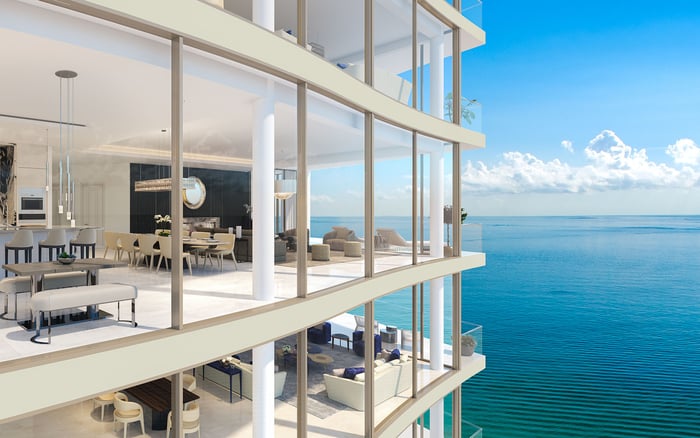
A practical framework for New Jersey households evaluating Jade Ocean as a primary residence, second home, or investment-oriented South Florida base.

For a New Jersey household considering Jade Ocean Sunny Isles Beach, the first decision is not about floor height, views, or furnishings. It is about purpose. Will the residence serve as a primary home, a second home, or an investment asset with periods of personal use?
Jade Ocean is a luxury condominium tower in Sunny Isles Beach, set directly on the ocean with beachfront exposure. Its privately owned residences offer a tangible South Florida base, but the same unit can deliver very different ownership experiences depending on how it is used. An owner-occupant may value consistency and day-to-day ease. A seasonal resident may prioritize effortless arrivals, secure absences, and low-friction maintenance. An investment-oriented buyer must reconcile rental objectives, availability, and personal-use expectations within one coherent plan.
Clarifying that role early helps prevent a beautiful acquisition from becoming an operational mismatch. It also gives legal, tax, insurance, and property advisers a more precise set of facts to evaluate.
Purchasing a Florida condominium does not, by itself, resolve domicile. Domicile is a legal and tax-planning matter shaped by a household’s circumstances, conduct, intent, and continuing connections. New Jersey and Florida professionals should advise on the steps relevant to the buyer’s situation before any assumptions are made.
The essential distinction is between owning a home in Florida and establishing Florida as one’s permanent home. A buyer can acquire Jade Ocean for seasonal use without necessarily changing domicile. Conversely, a buyer intending to make it a primary residence should align the ownership structure and broader personal record with qualified advice.
The planning conversation should reflect how the household actually lives: where important personal and professional ties remain, how time is divided, which residence functions as home, and whether family members follow the same pattern. These are questions for counsel and tax advisers-not conclusions to draw from a closing document or travel calendar.
For buyers comparing the local market, Jade Signature Sunny Isles Beach and Muse Residences Sunny Isles Beach can provide additional context for condominium ownership in the same city. That comparison should remain separate from the domicile analysis.
A New Jersey-to-South Florida plan should be modeled around actual behavior rather than an idealized calendar. Start with expected arrival periods, likely trip frequency, duration of stays, work obligations, family events, and the possibility of schedule changes. Do not assume travel times or service patterns without checking the options for each trip.
A resilient travel rhythm also accounts for the residence while it is vacant. Consider who will oversee access, routine checks, cleaning, deliveries, repairs, and pre-arrival preparation. An oceanfront condominium can simplify certain aspects of homeownership, yet a private residence still requires active oversight and clear authority for anyone acting on the owner’s behalf.
The lifestyle question is equally important. Some households want a familiar base ready for frequent use. Others prefer longer seasonal stays with fewer transitions. Owners anticipating guests or multigenerational visits should test whether their proposed use remains comfortable as occupancy expands.
Within Sunny Isles Beach, buyers might also examine The Ritz-Carlton Residences® Sunny Isles when refining their preferences. The objective is not to pursue a universal definition of luxury, but to identify the ownership environment that best supports the household’s actual travel pattern.
The purchase price is only one line in a condominium model. Before committing, buyers should request and review the unit-specific and association materials relevant to the contemplated transaction. Costs should be separated into recurring obligations, variable operating expenses, transaction-related items, and reserves for events that may not follow a predictable schedule.
Recurring categories can include association obligations, property-related charges, utilities, interior upkeep, professional management, and owner-selected services. Insurance warrants a separate review because responsibilities and coverage can differ between the condominium association and the individual residence. Qualified professionals should examine applicable policies, deductibles, exclusions, and the coverage appropriate to the buyer’s intended use.
Association budgets, governing documents, reserves, planned work, and potential assessments deserve close attention. No single estimate should be treated as permanent. A stronger model includes a base case, a higher-cost case, and a scenario in which the residence is used less than expected while fixed obligations continue.
For resale planning, consider eventual liquidity without predicting future returns. Unit condition, the building’s positioning, its oceanfront setting, and the broader luxury condominium market may all matter to a future buyer, but none eliminates carrying costs or guarantees an outcome.
Rental availability makes potential income relevant, but it should not blur the distinction between a personal residence and an investment-oriented asset. Buyers should first determine how much access they want, which periods are non-negotiable, and whether they are comfortable operating within rental requirements and building rules.
Any rental model should be based on the specific residence, governing documents, applicable regulations, management arrangements, and professionally reviewed assumptions. Gross revenue is not net income. Vacancy, management, preparation, wear, repairs, insurance, and periods reserved for the owner can all affect the result.
A buyer exploring alternatives such as Bentley Residences Sunny Isles should apply the same discipline: compare intended use, restrictions, operating responsibilities, and total ownership exposure rather than relying on branding or waterfront appeal alone.
The strongest model is transparent about trade-offs. Personal use can reduce rentable availability. A highly managed approach may improve convenience while adding expense. A primary-home decision may emphasize continuity, while a seasonal plan may place greater weight on remote oversight. Jade Ocean can suit multiple objectives, but the buyer’s chosen objective should lead the analysis.
Does buying at Jade Ocean establish Florida domicile? No. Ownership and domicile are separate matters that require advice from qualified New Jersey and Florida professionals.
Can a Jade Ocean residence be considered a primary home? Yes. A residence may be evaluated for primary occupancy, subject to the buyer’s legal, financial, and practical planning.
Can it function as a second home? Yes. Buyers should model seasonal access, periods of absence, and the services required to maintain the residence.
Is Jade Ocean directly on the ocean? Yes. The luxury condominium tower has an oceanfront setting with direct beachfront exposure.
Should travel time be included in the model? Yes, but buyers should verify current options rather than rely on a fixed or generalized travel-time assumption.
Which ownership costs deserve attention? Review association obligations, unit expenses, insurance, upkeep, management, and reserves for less predictable costs.
Why review condominium documents before purchasing? They can clarify governance, owner responsibilities, use parameters, budgets, and other matters relevant to the residence.
Can rental income offset ownership costs? Potential income may be relevant, but it should be modeled net of operating expenses and based on unit-specific rules and assumptions.
How should a buyer compare nearby projects? Compare intended use, ownership obligations, residence characteristics, and alignment with the household’s travel rhythm.
What should happen before making an offer? Define the residence’s purpose, assemble qualified advisers, and review the available materials for the specific unit and association.
For a confidential assessment and a building-by-building shortlist, connect with MILLION.
If branded residences are on your mind — as a home or as an allocation — we would be glad to share what we are seeing, privately.
Begin a quiet conversation