A practical framework for Los Angeles buyers evaluating Bal Harbour taxes, Florida homestead portability, nonhomestead assessment growth, and eventual resale.
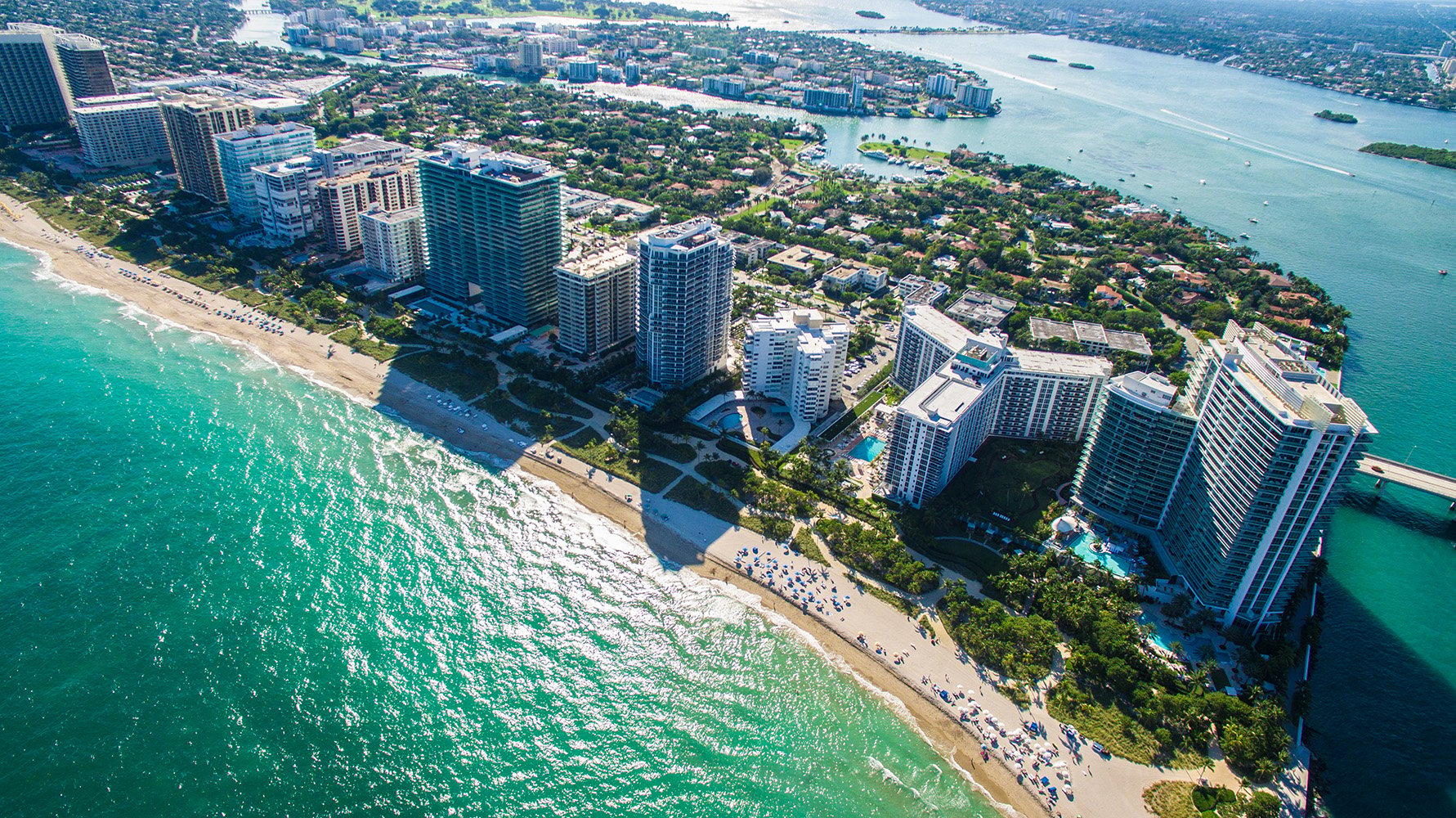
For a Los Angeles owner considering Bal Harbour, property-tax planning begins with a clear distinction: California benefits do not cross state lines. Florida portability transfers a Save Our Homes assessment differential only from one Florida homestead to another. A California assessment history, however favorable, cannot be carried into a new Florida residence.
That makes intended use the first consequential decision. Will the acquisition become a qualifying primary residence, or will it remain a pied-à-terre, vacation property, or rental? The answer determines whether the property may enter Florida’s homestead framework or generally remain nonhomestead. It should be settled early-alongside title, financing, and estate-planning discussions-rather than treated as a filing detail after closing.
The seller’s tax bill is a record of past ownership, not a forecast for the buyer.
Within MILLION's Buyer's Guides coverage, the most useful principle is straightforward: underwrite the residence for the next owner, not as an extension of the seller. Whether considering Oceana Bal Harbour or another oceanfront address, the current tax bill may reflect years of capped assessment growth that will not survive a change in ownership.
A buyer with no prior Florida homestead generally begins without a portable Save Our Homes differential. For someone who previously owned and abandoned a Florida homestead, however, the transferable differential can be as much as $500,000. The new Florida homestead must be established within three assessment years after the earlier homestead is abandoned.
The timing standard is tied to assessment years, not simply the date of a sale closing. Owners should therefore document when the prior Florida homestead was abandoned and confirm the applicable window before structuring a move. Portability is not automatic. It must be requested when establishing the new homestead exemption, with Form DR-501T identified as the transfer application.
If the move crosses Florida county lines, the former county must certify the transferable differential for the new county. That administrative step can matter for buyers relocating from Palm Beach, Broward, or another Florida jurisdiction to Miami-Dade.
Once a Bal Harbour home qualifies for homestead treatment, annual assessed-value growth is limited to 3% or the applicable inflation measure, whichever is lower. For 2025, the homestead assessment increase in Miami-Dade was limited to 2.90%. Over a long holding period in an appreciating market, the gap between assessed value and just value may become increasingly meaningful.
A Bal Harbour condominium reserved as a pied-à-terre, seasonal retreat, or investment residence generally follows nonhomestead rules. Qualifying nonhomestead property receives a 10% annual limit on assessment growth, applied automatically without a separate owner application.
The crucial qualification is that the 10% limit does not apply to school-district taxes. The total tax bill, therefore, is not necessarily restricted to 10% annual growth. Bal Harbour taxes combine village, county, school-board, and other taxing-authority millage components, each interacting with taxable value. Sophisticated underwriting should separate school taxes rather than apply a single growth assumption to the entire bill.
A reduction in the nonhomestead assessment cap from 10% to 5% is scheduled to begin January 1, 2027. Because the change is prospective, buyers should confirm its effective terms with the relevant authorities and under current Florida law before incorporating it into an acquisition model or resale projection.
For a second-home search, this distinction can shape comparisons between a Bal Harbour property such as Rivage Bal Harbour and residences in nearby enclaves. Architecture and service may lead the search, but occupancy classification determines the assessment-growth framework.
A change in ownership generally triggers reassessment and removes the prior owner’s accumulated homestead or nonhomestead cap benefit. A seller’s existing bill can therefore materially understate what a purchaser may owe after acquisition. Multiplying that bill by the percentage increase in purchase price is not a dependable substitute for a parcel-specific estimate.
Instead, begin with the anticipated post-purchase assessment and apply the relevant millage components. When the intended use is not final, model at least two occupancy cases: qualifying homestead and nonhomestead. For the latter, isolate the school-tax portion because it falls outside the general cap. Parcel-level tax-comparison tools can help test assessed values, estimates, and applicable growth limits, but professional tax and legal advice should complete the analysis.
This discipline also strengthens cross-neighborhood comparisons. A buyer weighing Bal Harbour against Alana Bay Harbor Islands and The Surf Club Four Seasons Surfside should model each parcel separately. Similar purchase prices do not ensure identical tax bills because taxable values, exemptions, cap histories, and taxing components can differ.
For investment analysis, the tax line should also be stress-tested independently of operating costs. Association charges, insurance, financing, and property taxes follow different mechanics. Combining them into a single assumed annual escalation can obscure the specific exposure created by reassessment and school taxes.
Resale planning begins at acquisition because a capped assessment is personal to an ownership history, not a benefit that can simply be advertised as transferable to the next buyer. After a long hold, an owner’s tax bill may appear unusually low relative to market value. Following the transaction, a purchaser can face reassessment closer to just value.
That divergence has two practical implications. First, sellers and their advisers should clearly distinguish the current bill from a buyer’s likely post-sale position. Second, buyers may evaluate carrying costs using their own estimated assessment rather than the figure in the listing package. Transparent framing can reduce surprises during diligence without diminishing the residence’s appeal.
For readers monitoring pricing and trends, there is no universally optimal resale year created by the caps alone. Timing depends on intended occupancy, the accumulated assessment differential, market conditions, and whether another Florida homestead is contemplated. An owner who establishes a qualifying Bal Harbour homestead can begin building a Save Our Homes differential that may later be portable to another Florida homestead, subject to the $500,000 ceiling, the three-assessment-year window, and a timely application.
Before signing, determine whether the residence will be primary or nonhomestead. Obtain a parcel-specific post-purchase estimate, separate school taxes in any nonhomestead model, and avoid relying on the seller’s capped bill. If a prior Florida homestead exists, record when it was abandoned, assess portability eligibility, and prepare the required application rather than assume an automatic transfer.
Finally, revisit the model before a future sale or change in use. Homestead status can establish the lower annual assessment-growth cap, while nonhomestead treatment follows a different path. The most elegant purchase strategy is not the one with the smallest historical tax bill, but the one that makes the next decade of ownership legible.
For discreet guidance on Bal Harbour acquisition strategy and future positioning, connect with MILLION.
If branded residences are on your mind — as a home or as an allocation — we would be glad to share what we are seeing, privately.
Begin a quiet conversationNo. Florida portability transfers a Save Our Homes differential only between qualifying Florida homesteads.
The maximum differential transferable to a new Florida homestead is $500,000.
The new homestead must be established within three assessment years after the previous Florida homestead is abandoned.
No. The owner must apply when establishing the new homestead exemption, with Form DR-501T identified for the transfer.
Annual assessed-value growth is limited to 3% or the applicable inflation measure, whichever is lower.
Qualifying nonhomestead residences generally receive a 10% annual assessment-growth limitation.
No. It does not apply to school-district taxes, so the total bill is not necessarily limited to 10% growth.
No. The qualifying nonhomestead assessment cap is applied automatically.
A change in ownership generally triggers reassessment and removes the seller’s accumulated cap benefit.
Sellers should distinguish their current capped bill from the next owner’s potential post-purchase assessment.