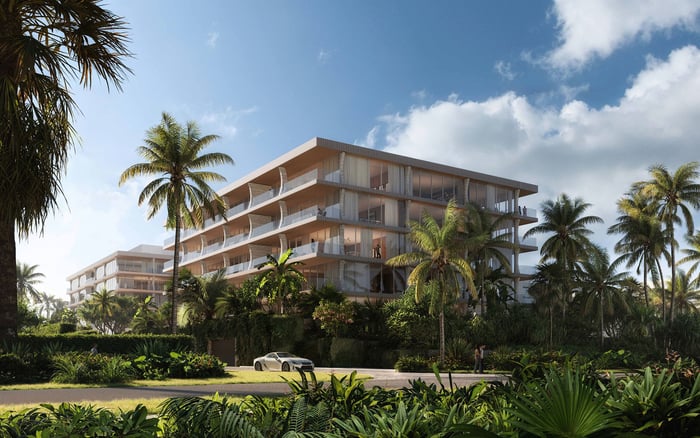
A disciplined framework for selecting an estate manager, defining absence-care authority, preparing for storms, and planning safety-led re-entry in Palm Beach Gardens.

For an owner dividing time between Beverly Hills and Palm Beach Gardens, property management is about continuity. The South Florida residence needs a clear operating plan for routine care, controlled access, severe-weather preparation, and the owner’s return.
The property type shapes the assignment. A private estate, condominium, or gated-community home may involve different maintenance responsibilities and access procedures. At The Ritz-Carlton Residences® Palm Beach Gardens, for example, a buyer should clarify which services belong to the broader residential setting and which responsibilities remain specific to the individual residence.
Give every candidate the same written brief. Ask how the firm handles scheduled inspections, owner arrivals and departures, urgent calls, severe-weather preparation, post-event assessments, and vendor coordination. Any promise of continuous support should be translated into a written process identifying the responsible contact, expected communication method, and boundaries of authority.
Review credentials relevant to the proposed work, insurance documentation, references, reporting practices, subcontractor controls, and emergency procedures. A sample inspection report should show how the manager records observations, photographs conditions, identifies changes, and tracks unresolved items.
The same evaluation discipline applies across Palm Beach County. Buyers considering Palm Beach Residences or The Residences at Mandarin Oriental Boca Raton should examine the management arrangement for the specific residence rather than assume every luxury property operates alike.
The agreement should address inspection scheduling, reporting, key custody, alarm notifications, climate and leak observations, vendor access, delivery handling, arrival preparation, and departure procedures. It should also explain whether subcontractors may be retained and what documentation or supervision the owner expects.
Decision rights deserve a separate schedule. Identify who may initiate protective work, contact the insurer, admit contractors, approve urgent repairs, and communicate with the association or gate. Define approval limits and a backup chain for situations in which the owner or primary representative cannot be reached.
Maintain a concise contact hierarchy for the owner, local representative, insurance contact, preferred vendors, security provider, association contact, and alternate decision-maker. Store the current version somewhere accessible away from the residence as well as in a secure digital location.
Do not rely on a generic Palm Beach County checklist. The manager should identify the property’s municipality, association, condominium structure, gated-access procedures, and any other requirements relevant to the home. Current instructions should be confirmed directly with the responsible entities before storm season and again when conditions change.
This review should distinguish the manager’s duties from association responsibilities and owner obligations. It should also cover contractor entry, temporary protective measures, debris handling, exterior maintenance, and any documentation needed for access. Legal or insurance questions should be directed to appropriately qualified advisers rather than resolved through assumptions.
A storm plan should identify monitoring responsibilities, preparation triggers, authorized vendors, protective-measure decisions, outdoor-item handling, equipment responsibilities, emergency approvals, and communication procedures. Before-and-after records can help the owner understand what work was completed and what conditions were observed.
The plan should be specific to the residence. A waterfront estate may require a different vendor and access structure from a managed urban home such as The Ritz-Carlton Residences® West Palm Beach. In either setting, the owner should know who handles each component, who confirms completion, and who reports exceptions.
A manager should not promise immediate access after a storm. Re-entry must wait for permission from the relevant authorities and must account for conditions at the property, on surrounding roads, and within any private community or building.
Once access is allowed, the first visit should follow a safety-led checklist. The manager should observe from a safe position, avoid hazards, document visible conditions, and engage qualified specialists when technical assessment is required. Reports should distinguish direct observations from conclusions that require professional inspection.
The owner and manager should decide in advance which identity, ownership, authorization, or access records may be needed for the specific property. Those materials should be kept current and available away from the residence.
Create a secure estate file containing relevant identity and ownership records, insurance documents, vendor contacts, inspection reports, access authorizations, equipment information, and the current operating plan. Review the file before storm season and whenever ownership, insurance, vendors, staffing, or decision-makers change.
What should an absentee owner ask a property manager first? Request a written service scope explaining inspections, reporting, urgent communication, vendor oversight, and decision authority.
How should competing managers be compared? Give each candidate the same brief and compare credentials, insurance documentation, references, sample reports, and operating procedures.
What belongs in an absence-care agreement? Cover access control, routine observations, reporting, vendor entry, delivery handling, arrival preparation, departure procedures, and escalation.
Who should approve urgent spending? The owner should designate primary and backup decision-makers and document approval limits in the management agreement.
Does one storm plan suit every South Florida residence? No. The plan should reflect the property type, municipality, association structure, access arrangements, and assigned responsibilities.
Should a manager promise immediate post-storm access? No. Any visit must depend on official clearance, community access, and safe conditions.
What should the first post-storm report include? It should record visible conditions, photographs when safely obtainable, urgent concerns, restricted areas, and recommended specialist follow-up.
How should technical damage be evaluated? The manager should document observations and refer technical conclusions to appropriately qualified contractors or consultants.
Which records should be stored away from the home? Keep relevant identity, ownership, insurance, authorization, vendor, inspection, and operating documents in a secure off-site or digital location.
When should the operating plan be reviewed? Review it before storm season and whenever the residence, insurance, vendors, staffing, access rules, or decision-makers change.
For a tailored shortlist and next-step guidance, connect with MILLION.
If branded residences are on your mind — as a home or as an allocation — we would be glad to share what we are seeing, privately.
Begin a quiet conversation