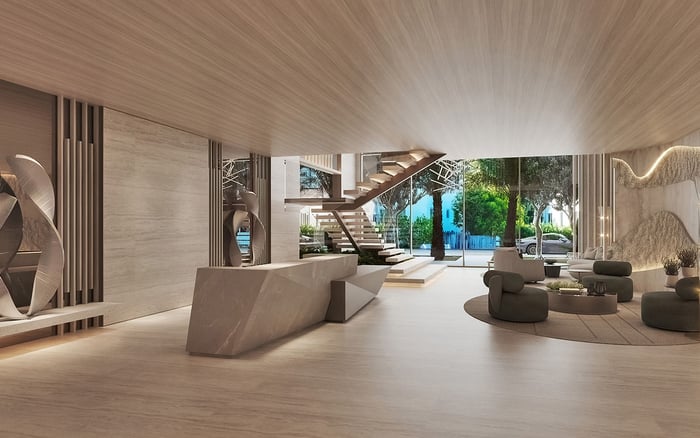
Select residences at Frida Kahlo Wynwood Residences include deeded private offices, but rental-period access is not established by that description alone. Buyers should resolve ownership, permitted use, and lease terms before assuming either owner or tenant access.

At Frida Kahlo Wynwood Residences, select homes are marketed with deeded private office suites. For a buyer envisioning a furnished Miami residence alongside a dedicated workplace, the appeal is clear. But when the home is rented, neither automatic tenant access nor continued owner access should be assumed.
The answer depends on the office's ownership structure, the condominium documents, applicable office-use rules, and the lease. Access during a residential rental has not been definitively established. “Deeded” describes an ownership proposition; it does not, on its own, determine who may enter, work, or receive clients while someone else occupies the home.
For a buyer, that uncertainty belongs on the pre-purchase or leasing checklist-not among the details left until keys change hands.
Planned at 119 NW 29th Street in Wynwood, the development calls for 244 residences across two proposed buildings of eight and 12 stories. PMG and LNDMRK are introducing fully finished and furnished homes ranging from studios to three bedrooms.
Deeded office suites accompany select residences, not every home. The offices are described as fully furnished, with glass-enclosed workspaces and lockable entry. Marketed office facilities also include conference rooms and coffee stations. The development plans include approximately 15,460 square feet of office space.
These details distinguish the concept from an ordinary shared coworking seat. They do not establish whether an individual suite is a separate condominium unit, an interest attached to a residence, or another legal arrangement. Buyers should establish precisely what is being conveyed before assigning value to its flexibility.
Start with the office's legal identifier. Ask counsel to reconcile the purchase documents, deed or proposed conveyance, condominium declaration, office allocation schedule, and current association rules. The objective is to connect the marketed suite to an identifiable legal interest and a defined set of use rights.
Three questions deserve separate answers: What is owned? Who is permitted to use it? Can its use be allocated separately from occupancy of the home? A reassuring answer to the first does not necessarily answer the other two.
For buyers also considering Miami Tropic Residences, the useful comparison rests on documents, not assumptions: evaluate each property's actual offering on its own terms. Do not carry an office-access assumption from one development into another.
Written clarification should identify the relevant provisions, not simply repeat that an office is deeded. If the transaction depends on retaining a workplace during a residential rental, have counsel determine whether the documents support that intended use.
The lease should address the office directly, subject to the governing documents. Silence leaves access unresolved even when the residential premises are clearly described.
If office use is intended to accompany the rental, identify the suite and specify the permitted users, whether access is exclusive, and whether the owner retains any access. Address responsibility for office-related charges and arrangements for keys or access credentials. These are proposed terms to verify, not established project policies.
If the intended arrangement excludes the office, ask counsel whether that exclusion is permitted and how it should be documented. An owner should not promise to retain the suite simply because the residential lease omits it.
Shared use requires its own scrutiny. An arrangement that sounds convenient in conversation may leave questions about privacy, schedules, client visits, and access control unresolved. Confirm that any proposed division is allowed before negotiating its details.
The project is marketed with short-term rental flexibility. That description does not establish that every short-stay guest can use a deeded office, that office access automatically follows a booking, or that an owner can continue working there throughout a guest's stay.
Before advertising a residence with a private office, confirm the applicable registration requirements, permitted users, access procedures, and termination arrangements. Ask whether different occupancy arrangements receive different treatment; that point remains unresolved.
A buyer comparing ORA by Casa Tua Brickell with the Wynwood offering should apply the same discipline: distinguish the advertised residential proposition from the specific rights established in the documents. No rental or workplace rule should be inferred from another project's positioning.
For an owner expecting frequent changes in occupancy, administrative clarity matters. Establish who requests credentials, who authorizes access, and how access ends. Do not promise a seamless office handover without confirming the procedure.
A furnished, lockable workspace does not by itself establish permission for every business activity. Verify guest and client access, permitted activities, tenant registration, and any applicable operating restrictions separately.
Conference rooms and coffee stations are part of the marketed office facilities, but their presence does not establish booking rights, availability, or terms of use. A buyer who needs regular meetings should ask specifically how those facilities relate to the private suite.
Independent office leasing is a separate question. Do not assume the suite may be rented to someone who does not occupy the residence. Nor should retaining ownership be taken to guarantee continuing access while the home is leased. Both propositions require documentary confirmation.
The office's appeal lies in the possibility of separating domestic life from focused work without treating a dining table as a desk. Its value to a particular purchaser, however, depends on the use that purchaser can actually secure.
A buyer seeking personal workspace during rental periods needs confirmation of retained access. A buyer offering the office to residential tenants needs confirmation of transferable use. A buyer contemplating separate office income needs confirmation that independent leasing is allowed. These are different objectives, not interchangeable benefits of the word “deeded.”
Before committing, obtain written answers covering the legal interest, permitted occupants, lease allocation, charges, and access termination. Have counsel reconcile those answers with the governing documents. The strongest purchase decision is one in which the intended use survives that review.
For a discreet conversation about matching a South Florida residence to your ownership priorities, connect with MILLION.
If branded residences are on your mind — as a home or as an allocation — we would be glad to share what we are seeing, privately.
Begin a quiet conversationNo. Deeded private office suites accompany select residences, rather than every home.
Automatic access is not established by the available project information. The governing documents, office-use rules, and lease need to be reviewed together.
Continued owner access should not be assumed. Buyers need documentary confirmation that the intended arrangement is permitted.
Not necessarily. The description alone does not establish whether the office is a separate unit, an interest attached to a residence, or another ownership arrangement.
Request the office's legal identifier, ownership documents, condominium declaration, office allocation schedule, and current association rules. Have counsel reconcile them with the intended lease arrangement.
It should identify whether office use is included, the permitted users, exclusivity, retained owner access, and responsibility for charges. Those terms must be consistent with the governing documents.
Independent office leasing is not established by the available information. Confirm that it is permitted before offering or valuing that use.
No. The promotional description does not establish a particular guest's office rights, registration requirements, or access procedures.
The suites are described as fully furnished, glass-enclosed workspaces with lockable entry. Marketed office facilities also include conference rooms and coffee stations.
Those permissions are not established by the available information. Guest access, client visits, and permitted business activities should be verified separately.