A discreet buyer’s guide to weighing hotel-style hospitality against quiet residential service for South Florida families with school-age children.
For buyers with school-age children, the choice between formal hospitality and quiet residential service is rarely a simple preference for glamour or understatement. It is a question of rhythm. A residence may offer a polished arrival, attentive staff, and a full suite of amenities, yet still feel misaligned if morning departures are congested, elevators are unpredictable, or common spaces feel too public for a family’s daily routine.
In South Florida, luxury often announces itself through hospitality language: valet, concierge, doorman, spa, club rooms, dining, and branded service. These can be meaningful advantages. But families tend to evaluate them through a different lens than seasonal buyers or empty nesters. The issue is not whether the service is impressive. The issue is whether it reduces friction between school, sports, tutoring, family dinners, visiting grandparents, pets, and the inevitable logistics of childhood.
That is why the strongest family purchase is often not the most theatrical. It is the one where service is steady, privacy is respected, and the building’s daily cadence supports a household that must be out the door on time.
Formal hospitality can be highly valuable when it is organized around efficiency rather than ceremony. A well-managed arrival can help with school drop-off timing, after-school pickups, deliveries, guests, drivers, and last-minute household needs. For families managing multiple calendars, a capable front desk becomes less of a luxury flourish and more of a time-saving infrastructure.
The distinction is subtle. A hospitality-forward building that feels like a hotel may not always suit children who need routine and familiarity. But a building with professional staff, clear protocols, and gracious discretion can be exceptionally useful. The best service is not the service that inserts itself into family life. It is the service that removes small complications before they become daily irritants.
This matters especially for families considering urban neighborhoods. In Brickell, for example, a buyer looking at 2200 Brickell is not only thinking about design and address. The deeper question is how the residence fits a school-week pattern in a more vertical, city-oriented environment. If the building’s service helps a family move cleanly between home, car, school, and activities, hospitality has real practical value.
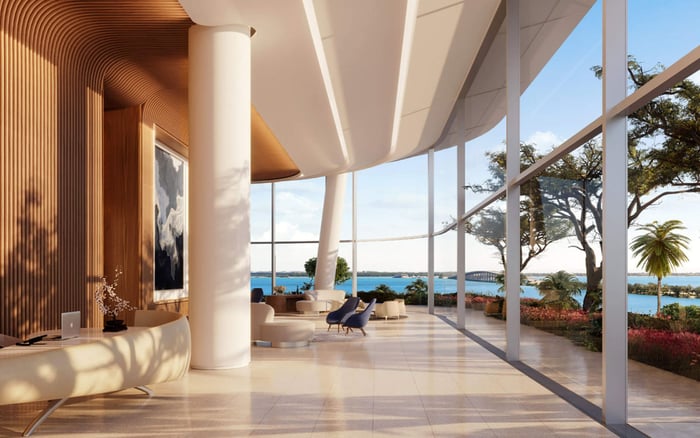
Quiet residential service is different. It is less about visible formality and more about household ease. It may show up as a calm lobby, thoughtful security, predictable access, well-kept shared areas, responsive management, and staff who know residents without over-performing familiarity. For families, this kind of service can feel more durable than grand gestures.
Children amplify the importance of predictability. They notice whether the building feels calm after a long school day. Parents notice whether arrivals are crowded, whether guests are managed smoothly, whether packages and equipment are handled without confusion, and whether the atmosphere supports early mornings and early nights. A residence that feels serene at 7:15 a.m. on a weekday may be more valuable than one that dazzles at 7:15 p.m. on a Saturday.
This is where Coconut Grove remains an important reference point for family buyers who want a softer residential atmosphere. At Four Seasons Residences Coconut Grove, the brand association may attract attention, but the family buyer’s evaluation is more nuanced: setting, privacy, neighborhood rhythm, and whether the service model can remain composed in daily use.
Once children enter school, luxury becomes less abstract. It is no longer only about views, finishes, and amenity decks. It is also about the weekday. How long does it take to get downstairs? How intuitive is the parking or arrival sequence? Is there a calm place for a child to wait? Does the home have enough separation for homework, calls, and rest? Does the building feel residential rather than transient?
Private-school planning adds another layer. Private-school calendars, activity schedules, and family networks often influence where buyers focus, even when they do not speak about it openly. The residence must support the ecosystem around the child, not simply the preferences of the adults.
This is why Coral Gables remains compelling for families who value a traditional residential language. A buyer considering The Village at Coral Gables may be drawn to a setting that feels more neighborhood-driven than spectacle-driven. The appeal is not only architectural. It is the possibility of a calmer relationship between home, school, and everyday life.
The most useful exercise is to test the building against a real school week. Imagine Monday morning, not a holiday weekend. Imagine a rainy pickup, a visiting tutor, a grandparent arriving from the airport, a sports bag left in the car, and a child who needs quiet before a test. The question becomes direct: does the residence make the day easier?
This lifestyle test often favors quiet residential service, but not always. Some families need formal hospitality because their schedules are complex and staff coordination matters. Others prefer a lower-profile environment because children settle better when the building feels like a true home rather than a destination.
The right answer depends on household structure. A family with frequent travel, drivers, staff, and guests may benefit from a more formal service platform. A family that prioritizes privacy, early routines, and neighborhood familiarity may prefer a more subdued building. The shared principle is that service should protect the family’s time and composure.
This perspective is especially relevant in Boca Raton, where many luxury buyers are evaluating residences through a family-first lens. At The Residences at Mandarin Oriental Boca Raton, the decision is not simply brand versus no brand. It is whether the service culture aligns with the family’s preferred level of privacy, structure, and day-to-day convenience.
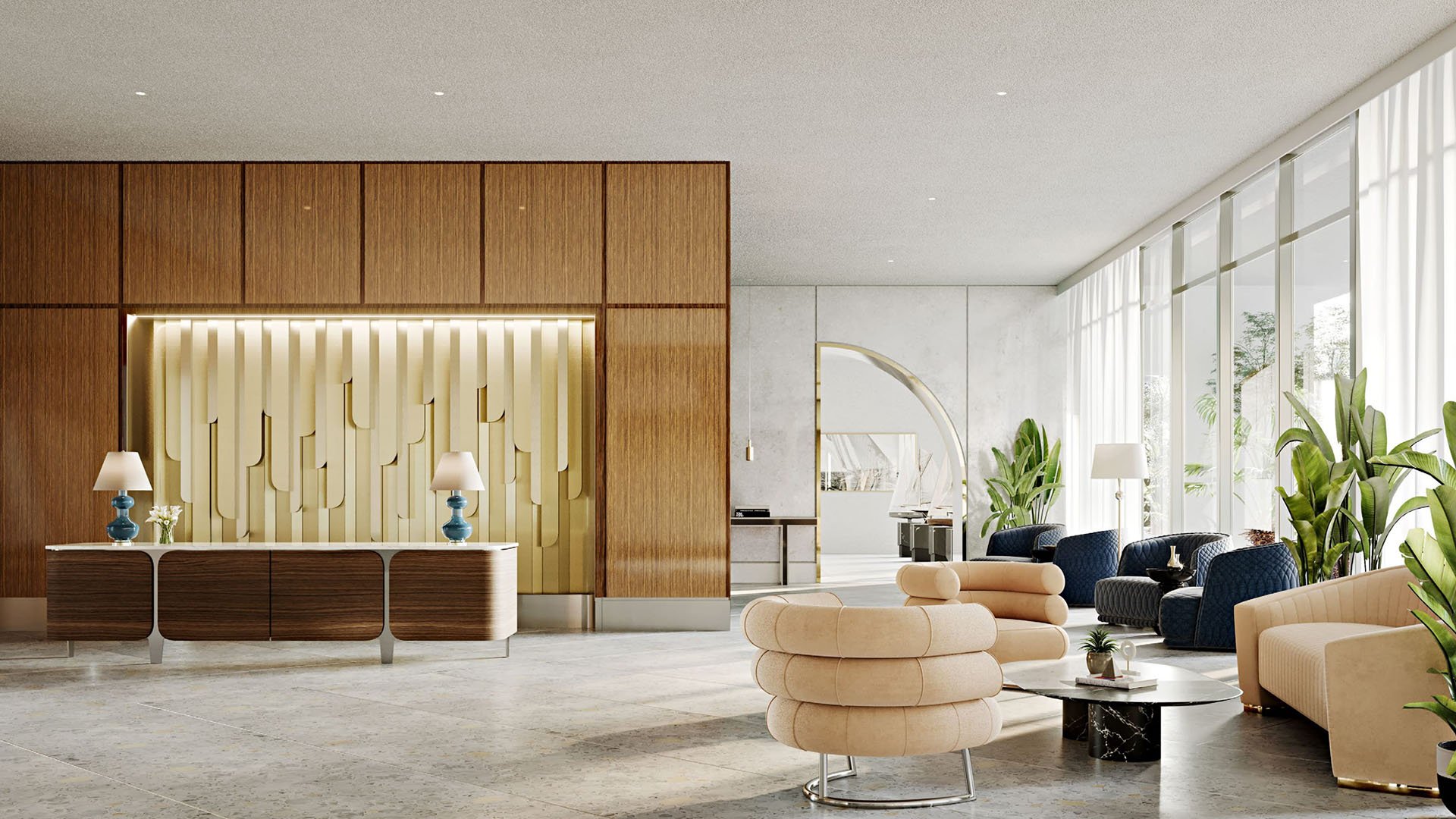
Family buyers should be careful not to overvalue the most visible amenity. A grand lobby photographs well, but a smooth daily arrival may matter more. A club room may impress during a tour, but acoustic control, elevator reliability, and resident culture may shape satisfaction over years. A concierge desk is valuable when it solves practical problems, not when it merely signals prestige.
Ask how the building feels during transition hours. Morning and late afternoon reveal more than a quiet midday tour. Notice whether the staff appears attentive without being intrusive. Observe how residents move through the property. Consider whether children would feel comfortable, respected, and safe without turning the building into a playground.
Also consider the home itself. Families often need storage, flexible rooms, durable finishes, and enough separation between entertaining spaces and bedrooms. Formal hospitality cannot compensate for a floor plan that strains family life. Quiet service cannot overcome a home that lacks functional depth. The residence and the building must work together.
South Florida’s best family residences tend to balance both ideas. They offer enough service to make life easier, but not so much public theater that the home feels exposed. They provide access to the region’s pleasures without sacrificing the dignity of routine. They let parents host beautifully, then return the household to calm.
For school-age children, the ideal building is rarely the loudest expression of luxury. It is the one that understands privacy, timing, security, and continuity. Formal hospitality has its place, especially when it is disciplined and discreet. But quiet residential service often becomes the lasting advantage because it supports the ordinary days, and ordinary days are where family life is actually lived.
The buyer who recognizes this will tour differently. They will look past spectacle and ask better questions. They will measure luxury not only by what is offered, but by what is made effortless.
Does formal hospitality matter for families with school-age children? Yes, when it improves timing, security, guest handling, and household coordination without making daily life feel overly public.
Is quiet residential service usually better for family buyers? Often, because predictable routines, calm common areas, and privacy can matter more than highly visible service rituals.
What should parents observe during a building tour? Visit near morning or afternoon transition times if possible, and watch arrivals, elevators, staff flow, and lobby atmosphere.
How important is the surrounding neighborhood? Very important, because school commutes, activities, errands, and family networks shape how a residence actually lives.
Should branded residences be avoided by families? No. The key is whether the brand’s service culture feels discreet, residential, and practical for children’s routines.
What floor plan features matter most for school-age children? Flexible rooms, storage, bedroom separation, study space, and durable everyday circulation are especially valuable.
Can an urban condo work well for a family? Yes, if access, parking, elevators, security, and service are strong enough to support school-week logistics.
What is the biggest mistake family buyers make? Overweighting dramatic amenities while underweighting daily friction, privacy, acoustics, and the morning departure experience.
How should buyers compare Coconut Grove, Coral Gables, and Boca Raton? Compare lifestyle rhythm first, including commute patterns, school ecosystems, neighborhood feel, and preferred privacy level.
What is the best service model for a family residence? The best model is attentive but quiet, with enough structure to solve problems and enough restraint to feel like home.
To compare the best-fit options with clarity, connect with MILLION.
If branded residences are on your mind — as a home or as an allocation — we would be glad to share what we are seeing, privately.
Begin a quiet conversation