For families relocating from Westchester County, residential privacy in Coconut Grove depends on the entire route home. This guide explains how to assess arrivals, lobby access, elevator credentials, private foyers, staff circulation, deliveries, and contingency procedures before purchasing.
For Westchester County families accustomed to a gated drive, side entrance, mudroom, or household staff arriving without crossing the principal rooms, a Coconut Grove condominium requires a different privacy plan. The relevant question is not simply whether a residence has a private elevator. It is whether each transition-from curb or garage to foyer-remains controlled, discreet, and practical in daily family life.
That sequence may involve a covered arrival, valet podium, garage door, lobby, elevator credential, private landing, and residence entry. Every handoff introduces a decision: who recognizes the vehicle, who verifies the passenger, where an unannounced guest waits, and whether staff or delivery personnel share the family’s route.
Privacy is only as strong as the least controlled handoff between the curb and the home.
A beautifully designed elevator foyer can separate the living areas, but it does not by itself determine how catering teams, packages, contractors, or household employees reach that foyer. Architecture and management procedures must work together.
Begin with separate diagrams for resident vehicles, chauffeured arrivals, guests, household staff, contractors, and deliveries. For each route, identify the arrival point, first security interaction, waiting location, elevator used, required credential, and final authorization step. Request current floor plans and written management policies rather than relying on descriptive language alone.
Families considering Four Seasons Residences Coconut Grove should use the same route-mapping exercise they would apply to any residence. Trace how each household category moves through the building and identify every point where authorization changes hands.
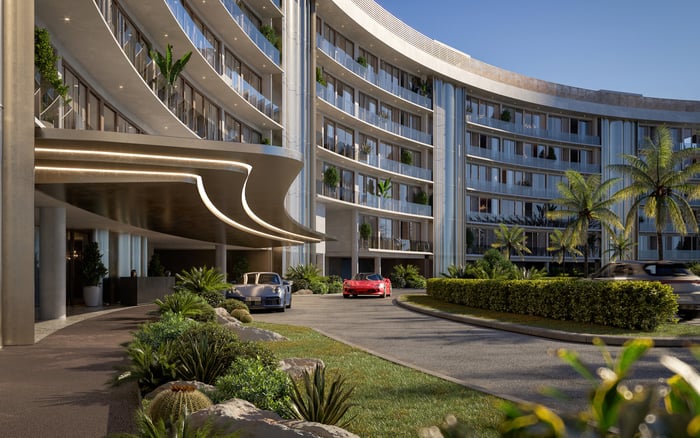
A covered arrival may protect passengers from weather and street exposure, but practical discretion also depends on queue management, sightlines, lobby traffic, and the point at which elevator access is granted. Observe rather than assume how those elements function together.
The term can describe different arrangements: a dedicated cab, a shared cab programmed for controlled stops, or an elevator opening into a private foyer. Buyers should establish which configuration applies, who may share the cab, whether another resident can reach the same landing, and how temporary credentials are managed.
When evaluating Vita at Grove Isle, ask management to demonstrate the complete access sequence rather than evaluating the elevator in isolation. Determine who issues permissions, how access can be revoked, and what happens when several expected arrivals overlap.
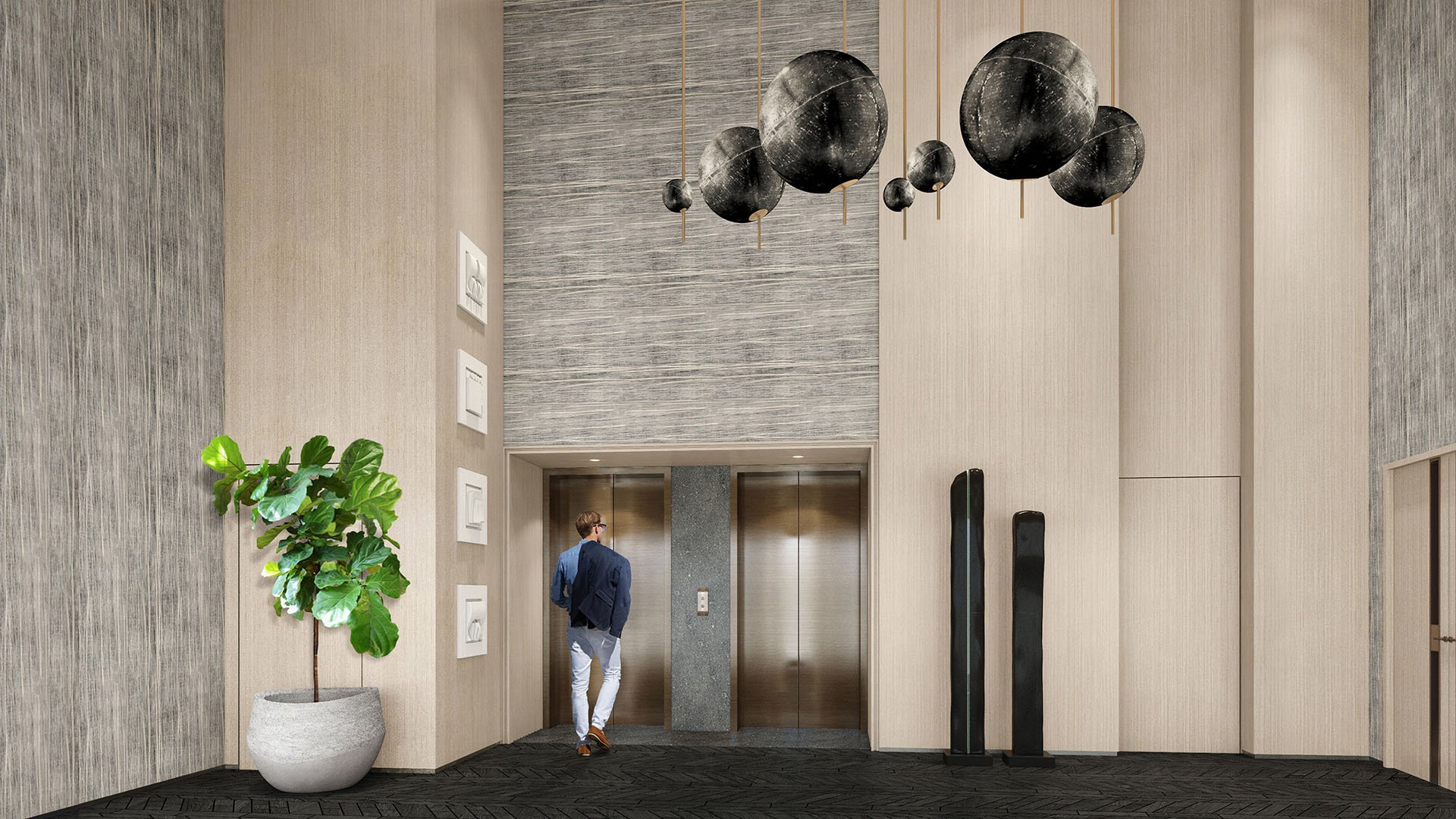
A private foyer can provide a useful buffer before the principal living spaces, but its value depends on the access rules behind it. Families should verify who may enter the foyer, whether access activity is recorded, and how building personnel handle an unexpected visitor or failed credential.
Boutique scale can change the social character of circulation, but it does not eliminate the need for clear procedures. Buyers exploring Opus Coconut Grove should confirm how the arrival sequence, elevator access, guest waiting, and vendor movement would operate for the specific residence under consideration.
Household staff should not have to improvise their route after move-in. Before purchasing, ask management to document the approved path for a nanny, housekeeper, private chef, driver, security professional, and estate manager. Determine whether each person may receive an individual credential, a time-limited credential, or resident-by-resident authorization.
The credential should match the role. A recurring employee may require predictable access during defined hours, while a temporary vendor may need one-time approval. Ask whether credentials can be assigned by name, whether their use is recorded, who can change permissions, and how access is terminated when an engagement ends.
Also examine where staff wait if a resident is delayed, where belongings can be screened or stored, and whether entry through the principal foyer is mandatory. Confirm any service elevators, loading routes, or staff entrances in writing for the specific residence and building under consideration.
Privacy is not achieved by making household operations difficult. A strong protocol should let trusted employees perform their roles efficiently while limiting unnecessary access and keeping the family informed.
“Delivery” is too broad a category for a serious privacy plan. A small package, prepared meal, floral installation, catered dinner, and full furniture move each create different security and circulation needs. Ask where each is received, who signs for it, whether it is held, and who completes the final trip to the residence.
For food deliveries, establish whether couriers remain outside, wait at a desk, or may proceed beyond the lobby after authorization. For catering, confirm the unloading point, staging area, elevator reservation process, and route into the home. For furniture and art handling, request the applicable move rules, protective requirements, approved hours, insurance conditions, and elevator procedures.
A private foyer can become less private if vendors are routinely sent directly upstairs. Families seeking stronger separation may prefer a procedure in which building personnel control the final handoff, if management rules and staffing support that arrangement. The objective is not maximum restriction, but a repeatable process understood by the family, staff, and building team.
A scheduled quiet-hour tour reveals finishes, not operations. Revisit during periods that resemble the family’s actual schedule. Observe vehicle queues, guest overlap, lobby seating, garage entry, and the time required to reach the elevator. If management permits, rehearse a resident arrival while a guest, staff member, and delivery are expected.
Notice how personnel communicate. A discreet system should not require residents to repeat personal details publicly or resolve routine access questions in a crowded lobby. Ask how arrival notes are recorded, which team members can view them, and how instructions are handed from one shift to another.
Testing should also cover ordinary friction. Consider what occurs when two cars arrive together, a child returns with a friend, a caregiver changes schedule, or a vendor reaches the property earlier than expected. These moments reveal whether the system can accommodate family life without sacrificing control.
Ask what happens during elevator maintenance, a power interruption, a credential failure, or an emergency override. Identify who can override permissions, whether the resident is notified, and which alternate route is used. Privacy procedures should remain understandable when the primary system is unavailable.
Clarify how management verifies someone whose phone, key, or access device is missing. Ask how temporary permissions expire and how quickly a lost credential can be disabled. Families should understand both the routine process and the exception process before relying on either.
Emergency access deserves separate treatment. Buyers should distinguish emergency procedures from daily guest and employee access, then determine how management communicates an incident to residents. Safety must take priority while the process remains accountable.
Before closing, assemble the relevant floor plans, access policies, delivery rules, move procedures, credential instructions, and written explanation of alternate circulation. Record unresolved questions and identify whether management, security, or another building representative is responsible for each answer.
Convert the final information into a household playbook. It can identify approved employees, regular schedules, guest authorization preferences, delivery instructions, escalation contacts, and procedures for changing access. Review that playbook whenever staffing or family routines change.
The strongest choice will be the residence whose architecture and management practices support the family’s actual rhythm, from morning departures to staffed dinners and late arrivals. For discreet guidance comparing Coconut Grove residences and their privacy protocols, connect with MILLION.
If branded residences are on your mind — as a home or as an allocation — we would be glad to share what we are seeing, privately.
Begin a quiet conversationEvaluate the complete route through vehicle arrival, security, lobby access, elevator authorization, private foyer, and residence entry.
Not necessarily. Buyers should ask the building to explain the exact elevator and landing configuration for the residence.
Residents, guests, employees, contractors, and deliveries may face different checkpoints and authorization requirements.
Ask who issues, changes, records, and revokes access, as well as how temporary permissions expire.
A private foyer can create separation between the elevator landing and the home, depending on the building’s access procedures.
Each role should have a documented route and a form of authorization suited to its schedule and responsibilities.
No. Packages, meals, catering, floral work, furniture, and art handling can require different receiving and circulation plans.
Visit at times that resemble the family’s normal routine so that traffic, waiting, and access procedures can be assessed realistically.
Ask about maintenance, power interruptions, credential failures, emergency overrides, resident notification, and alternate routes.
Include relevant floor plans, access policies, delivery and move rules, credential instructions, contingency procedures, and unresolved questions.