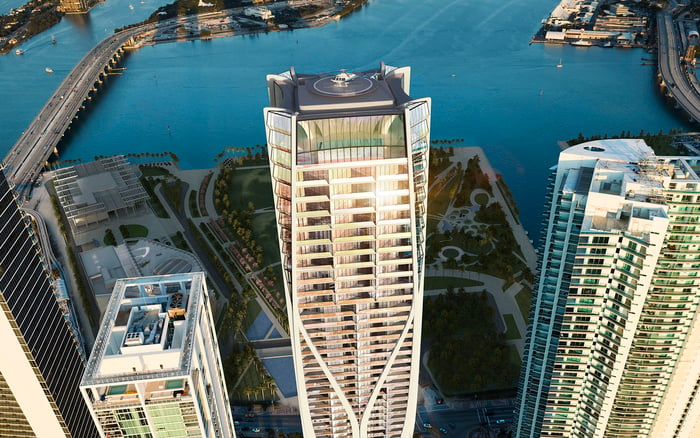
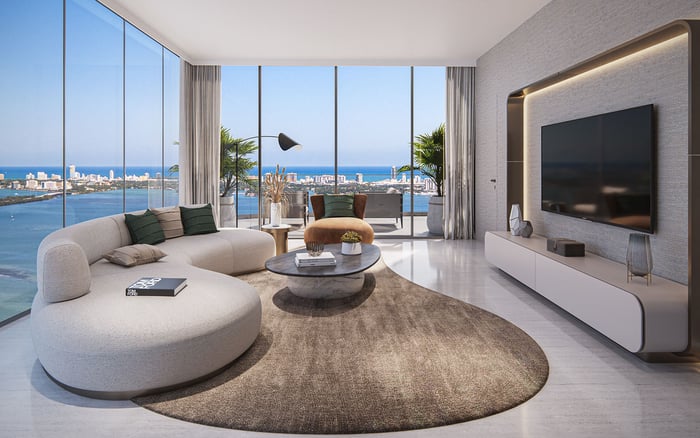
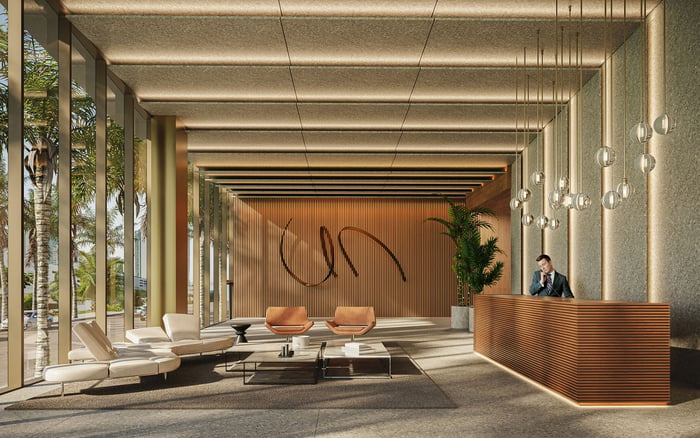
For families relocating from Singapore, residential privacy in Edgewater depends on an operating plan as much as architecture. The strongest approach coordinates covered arrival, staffed screening, elevator permissions, household staff, guests, and delivery handoffs.
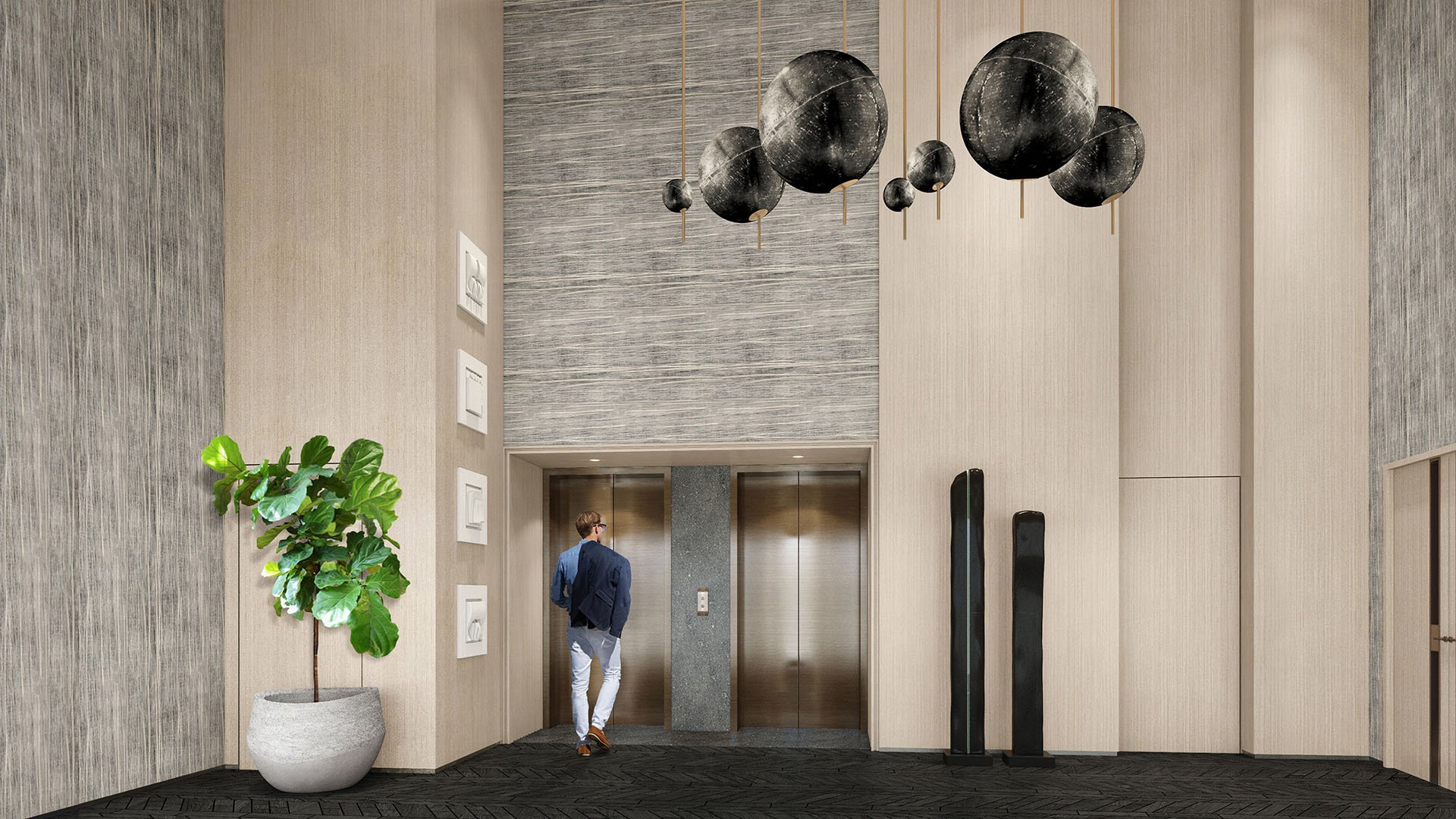
For Singapore families moving to Edgewater, the phrase “private elevator” can sound like a complete privacy solution. It is not. Discretion depends on a sequence that begins when a vehicle reaches the property and continues through unloading, identification, lobby screening, elevator release, foyer entry, staff circulation, and delivery retrieval.
The preferred sequence is straightforward: occupants unload at the designated arrival point, building personnel manage the handoff, the attended checkpoint confirms authorization, and the appropriate elevator carries the family to a controlled landing or foyer. Every transition should have an owner, and no visitor should be left to improvise.
The most private residence is supported by a repeatable arrival protocol.
This approach suits a family home because privacy must remain practical through school runs, guest arrivals, tutoring sessions, staff changes, and parcels. It is less about creating a fortress than about eliminating ambiguity.
A covered arrival area can provide a defined place to unload children, luggage, shopping, and personal items while building personnel manage vehicle movement. For school runs, the family can give security a current list of adults permitted to collect or accompany children and follow the building’s designated loading procedure.
When reviewing EDITION Edgewater or another Edgewater residence, examine the entire route rather than isolating one feature. Walk from the vehicle handoff to the first controlled entrance, then continue through the lobby, elevator, and residential foyer.
A driver should also have a defined boundary. Unless individually credentialed under current building rules, the driver can complete the handoff at valet or the attended entrance rather than circulating through parking or residential levels.
The attended lobby or security desk should function as the household’s primary checkpoint. Management needs clear instructions for family members, recurring staff, relatives, playdate guests, tutors, therapists, vendors, and couriers. The objective is not to treat every arrival equally, but to apply the appropriate access level consistently.
A simple three-tier model can help. Trusted recurring staff may receive individual credentials if management permits. Occasional vendors can check in and remain escorted or await resident authorization. General couriers and food-delivery riders can remain at the designated handoff area.
For families considering Aria Reserve Miami, ask management to demonstrate the actual path from vehicle arrival to residence entry. A live review of doors, desks, elevator controls, waiting areas, and handoff points is more useful than relying on broad descriptions.
Buyers should distinguish among a dedicated elevator cab, a shared secure cab, a semi-private landing, and a private foyer. These configurations are not interchangeable. A foyer described as private may still be reached by a shared cab, while controlled elevator access does not necessarily mean that one cab serves only one household.
Request written confirmation for the precise residence under consideration. Ask which floors the cab serves, how destinations are released, whether guests can call the elevator independently, and what procedure applies during maintenance or service interruptions.
The relevant configuration may depend on the selected residence, so verify unit-specific details rather than relying on building-level language. Also ask whether service personnel use the same route as residents and how access changes after staffed hours.
Household staff need predictable access without receiving broader permissions than their roles require. A nanny or helper who arrives regularly may qualify for an individual credential if current rules allow it. A temporary replacement, contractor, or visiting service provider can check in at the attended desk and receive limited or escorted access according to management procedures.
Maintain an internal roster with each person’s role and approved access tier. When employment ends or schedules change, notify management promptly and request confirmation that credentials have been deactivated. Until management formally grants separate access, the attended checkpoint should remain the standard entry point.
Also determine where visitors can wait comfortably without entering residential floors. A lobby or approved common area may serve as an intermediate zone for tutors, therapists, playdate guests, and service providers while the household decides whether elevator access is necessary.
A controlled elevator foyer loses much of its practical value if food riders and general couriers routinely travel upstairs. A more privacy-focused procedure uses the building’s designated handoff location, with a family member or household employee retrieving eligible items.
Ask how refrigerated food, signature-required items, oversized parcels, flowers, and late-night orders are handled. Current rules may assign different handoff locations, storage areas, notification methods, or service routes to different delivery types.
Residents reviewing The Cove Residences Edgewater should request the current delivery policy in writing. The key questions are who may accept an item, how the resident is notified, how long an item may remain at the handoff point, and whether any courier can reach a residential elevator.
Social guests and service personnel should not automatically follow identical routes. A relative may be pre-registered and released after identification. A tutor may wait until collected. A contractor may need proof of appointment, an assigned route, or an escort. A courier can stop at the designated delivery point.
For dinner guests or playdates, send the desk a current guest list and specify whether the household will meet arrivals below or authorize elevator release. A coordinated vehicle handoff can keep guests from navigating parking or service areas independently. The result can feel gracious rather than conspicuous: guests receive a clear welcome while residential access remains deliberate.
Privacy due diligence should be conducted as an operational rehearsal. Arrive by car, observe the unloading process, identify the first staffed checkpoint, and follow the exact route to the residence. Then consider the experience from the perspective of a nanny, driver, tutor, dinner guest, contractor, and courier.
A waterfront setting or dramatic foyer cannot compensate for unclear controls. When comparing Villa Miami with other Edgewater possibilities, ask for current written rules covering guest registration, staff credentials, package storage, food delivery, service elevators, move-ins, and oversized items. For a new-construction purchase, distinguish among procedures documented for the property, procedures that remain proposed, and matters that may later be governed by the association.
The decisive question is simple: can every routine arrival be assigned to a specific checkpoint, person, and permission level? If the answer is yes, privacy becomes a calm daily system rather than an occasional feature.
For discreet guidance on selecting an Edgewater residence and reviewing its full arrival protocol, connect with MILLION.
If branded residences are on your mind — as a home or as an allocation — we would be glad to share what we are seeing, privately.
Begin a quiet conversationNo. Privacy also depends on arrival management, lobby screening, elevator controls, foyer configuration, staff credentials, and delivery procedures.
Confirm in writing whether the residence has a dedicated cab, shared secure cab, semi-private landing, or private foyer only.
The attended lobby or security desk should remain the normal check-in point unless management grants individual credentials under current rules.
Recurring staff may qualify for individual credentials, while occasional vendors should generally be registered, escorted, or authorized for limited access.
A privacy-focused protocol can keep general couriers and food riders below residential floors, using the designated delivery area for handoff.
They can check in at the staffed lobby and wait in an approved area until the household authorizes access.
Follow the building’s designated arrival procedure and give security a current list of adults authorized to collect or accompany the children.
Building-level descriptions may not apply identically to every residence, so buyers should confirm the selected home’s precise configuration.
Request current rules for credentials, guest registration, food delivery, package storage, service elevators, move-ins, and oversized deliveries.
Walk the entire route from vehicle arrival to the residence, then assess it from the perspective of staff, guests, vendors, and couriers.