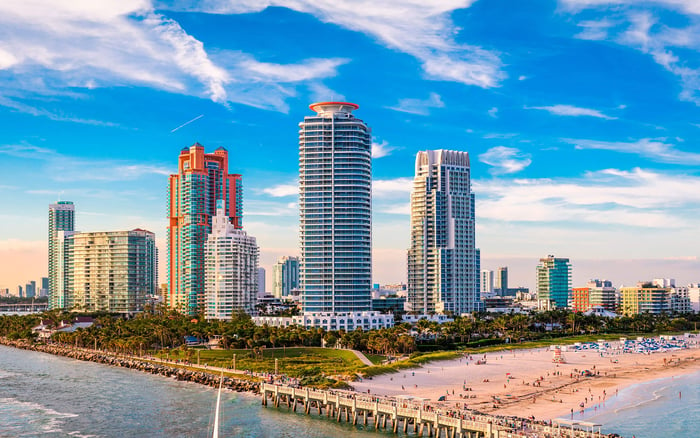
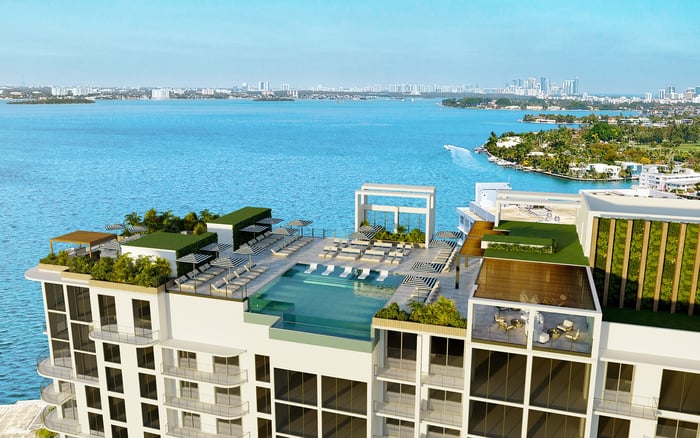
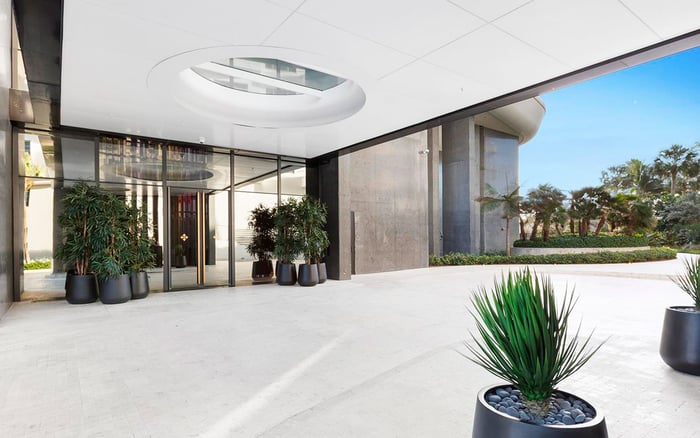
For seasonal South Beach owners, the most consequential purchase decisions often concern the unit itself: its line, view, building identity, and eventual resale competition. Amenities may shape the experience, but scarcity and liquidity can shape value.
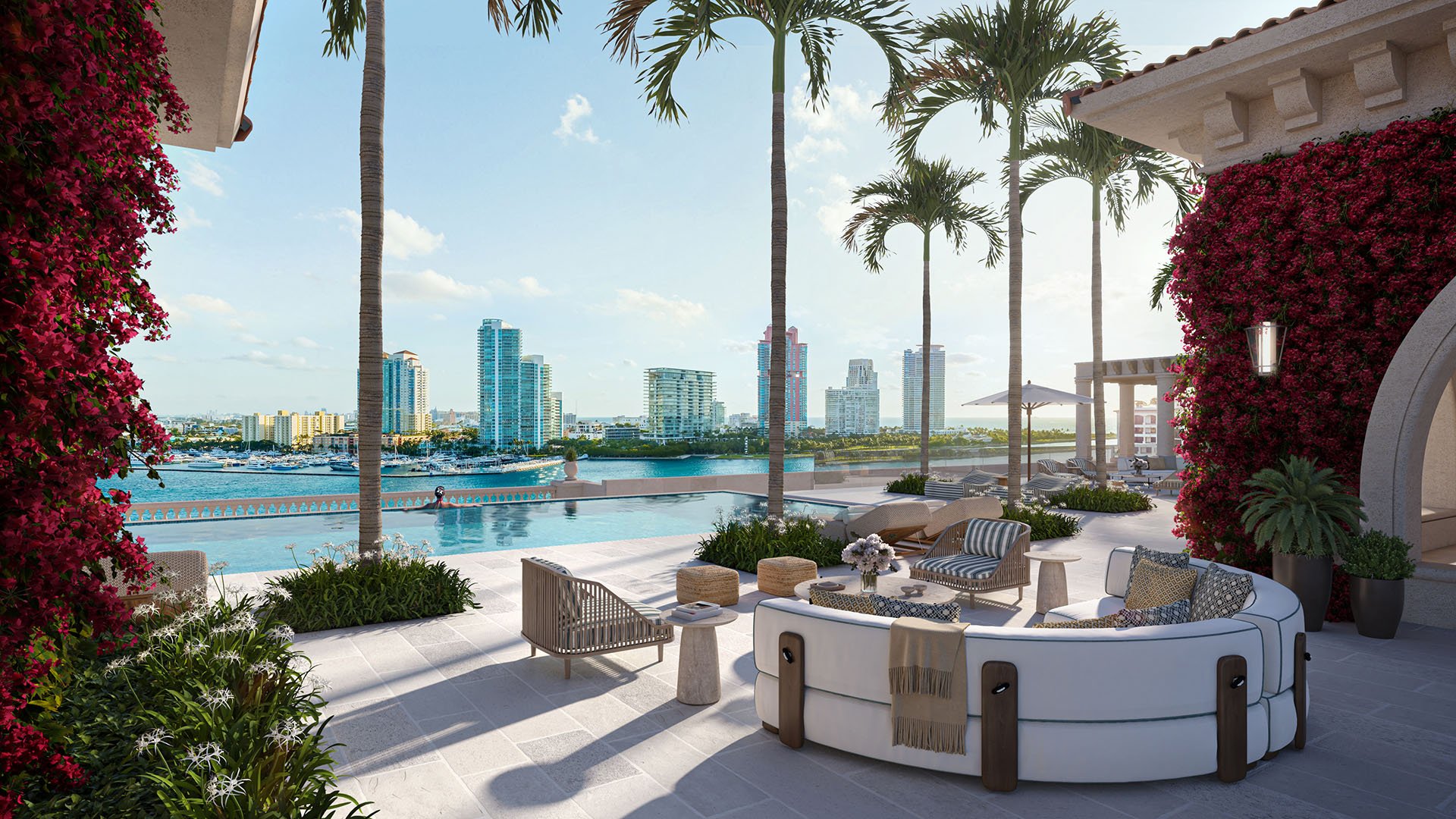
A South Beach residence purchased for several months of annual use must perform two roles at once: feel effortless when the owner arrives and remain legible to the resale market when priorities change. That dual mandate shifts attention from the longest amenity inventory to qualities that cannot be easily replicated: building identity, micro-location, unit line, elevation, outlook, and the number of credible substitutes.
South Beach is not a uniform condo market. Buyers distinguish among direct-ocean access, the Art Deco district, South of Fifth, branded residences, boutique properties, and larger towers. Across that spectrum, offerings range from roughly $400,000 studios to trophy penthouses above $60 million. A broad neighborhood average therefore says little about the competitive position of a particular residence.
For a second-home buyer, the more useful question is not simply whether the building is luxurious. It is whether the chosen unit will remain distinctive when several comparable residences reach the market at once.
South Beach has relatively deep resale inventory, giving buyers more evidence for evaluating pricing, layouts, views, renovation quality, and time on market. It also reveals where sameness may weaken an owner’s position. If numerous units share a similar floor plan and outlook, a future seller may need to compete more directly on price and condition.
Building-specific comparison is essential. The South Beach median has been near $1,045 per square foot, while a broader Miami Beach benchmark has been approximately $1,063 per square foot, with an average listing price near $2.7 million. These figures are directional snapshots, not substitutes for reviewing current sales, pending deals, and active competition within the relevant building.
Established properties such as Apogee South Beach and Continuum on South Beach are useful reference points for building-level analysis. The names alone do not answer the value question. Buyers must still compare the exact line, floor, exposure, interior condition, and available alternatives.
A unit line determines much of what an owner experiences each day: orientation, outlook, privacy, and the relationship between principal rooms and exterior scenery. Those attributes can also shape the future buyer pool. Two residences in the same building may share services and common areas while presenting markedly different ownership propositions.
The strongest analysis begins by mapping every competing line, not merely comparing bedroom count and interior square footage. A buyer should identify how often similar units are offered, whether the view is genuinely differentiated, and whether another line presents a more compelling composition at a nearby price.
High elevation can be desirable, but floor alone is not a complete proxy for quality. A lower residence with a protected, well-framed outlook may be more memorable than a higher unit with a less distinctive principal view. The investment case is strongest when the premium corresponds to an attribute future buyers can recognize quickly.
At The Ritz-Carlton Residences® South Beach, as with any branded residence, service and identity belong in the evaluation. Yet the final selection must still be tested at the individual-unit level. Brand appeal can support attention, but it does not make every line equally scarce.
Oceanfront positioning is often treated as a single category, though the lived experience can vary materially. A buyer should distinguish among a direct-water panorama, an oblique glimpse, a city composition, and an outlook vulnerable to visual competition. The relevant issue is not simply whether water is visible, but whether the view gives the residence a durable identity.
Scarcity becomes especially important at the top of the market. South Beach oceanfront towers span an approximate range of $2 million to more than $40 million, while penthouse inventory begins near $10 million and can extend beyond $60 million. The breadth of those bands shows why labels alone are inadequate.
South of Fifth offers the clearest illustration. Its condo median is approximately $2.2 million, and the broader micro-market has been near $1,325 per square foot. Trophy buildings can trade above $3,000 per square foot, while penthouse transactions have exceeded $4,000 per square foot. These premiums reflect the interaction of location, product quality, and scarcity-not an interchangeable neighborhood rate.
Amenities matter most when they support the owner’s actual seasonal routine. Staffing, privacy, arrival experience, wellness spaces, and dependable service can make limited annual occupancy feel seamless. The mistake is paying a substantial premium for an extensive brochure before establishing whether the residence itself is defensible.
A practical hierarchy begins with micro-location and building identity, then line and view, followed by interior condition and operational fit. Amenities come after those fundamentals. At Setai Residences Miami Beach, for example, a buyer can consider the project within the wider Miami Beach luxury set while still asking the decisive question: How many credible substitutes exist for the specific residence under review?
That framework also sharpens pricing and trends analysis. Art Deco condominiums have occupied an approximate $800,000-to-$3 million band, boutique residences roughly $1.5 million to $8 million, and South Beach penthouses about $10 million to beyond $60 million. These categories attract different buyer pools and face different levels of resale competition.
Before making an offer, seasonal owners should assemble a compact building ledger. It should include recent same-line sales, comparable lines, active listings, pending transactions when available, and evidence of how view, floor, and condition affected pricing. The exercise should distinguish a building premium from a unit premium.
Buyers should also model an ordinary exit rather than an ideal one. If several similar residences were listed simultaneously, which would sell first-and why? A convincing answer will usually reference an enduring attribute, not a decorative finish or lengthy amenity menu.
The objective is not to eliminate emotion from a South Beach purchase. It is to direct that emotion toward qualities that are difficult to reproduce. For the seasonal owner, the best residence is often the one that feels singular on arrival and remains easy to explain at resale.
Why does building identity matter so much in South Beach? Buyer preferences vary among oceanfront towers, Art Deco properties, boutiques, branded residences, and South of Fifth buildings.
Is deep resale inventory beneficial to a buyer? Yes. It provides more comparisons while revealing how much competition a unit may face later.
What is a condo line? A line is a recurring unit position and layout within a building, typically sharing orientation and exposure across floors.
Does a higher floor always command better resale? No. Elevation matters, but view quality, privacy, layout, condition, and competing supply can be equally consequential.
How should buyers value an ocean view? Assess its breadth, composition, distinctiveness, and the number of comparable residences with a similar outlook.
Are South Beach price-per-square-foot averages reliable? They are useful directional benchmarks, but building- and line-specific evidence is more relevant to an individual purchase.
Why is South of Fifth priced differently? It is one of South Beach’s most premium micro-markets, with scarcity and trophy product supporting higher pricing.
Should amenities influence an offer? Yes, but only after the buyer has assessed micro-location, building identity, unit line, view, condition, and resale competition.
What should seasonal owners review before buying? Review same-line sales, competing listings, pending activity when available, view differences, interior condition, and operational fit.
What makes a unit more defensible at resale? A scarce view, preferred line, recognizable building, strong condition, and limited direct competition can improve its position.
For a discreet conversation and a curated building-by-building shortlist, connect with MILLION.
If branded residences are on your mind — as a home or as an allocation — we would be glad to share what we are seeing, privately.
Begin a quiet conversation