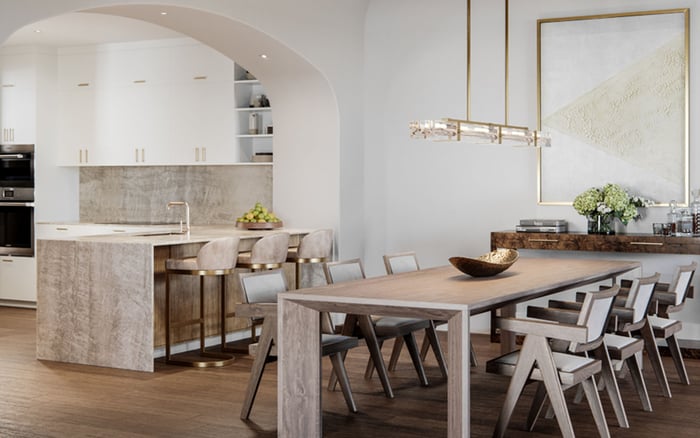
For seasonal buyers in Coral Gables, the most useful amenities are often those that support routines, recovery, convenience, and access to preferred medical care.

For seasonal owners in Coral Gables, a residence must work well during a concentrated period of use. It should support a smooth arrival, a quick return to familiar routines, and a comfortable stay without unnecessary arrangements. A striking pool deck may shape the first impression, but sleep quality, indoor comfort, quiet, shade, privacy, recovery spaces, and practical access to medical care may have greater day-to-day value.
The central question is not how many amenities appear in a brochure. It is whether the residence supports the owner’s actual schedule, from an early workout or afternoon appointment to a quiet evening at home.
A useful wellness review extends beyond fitness rooms and spa spaces. Buyers can assess ventilation, water quality, acoustic separation, lighting, temperature control, outdoor comfort, privacy, and the suitability of exercise and recovery areas for their routines.
These elements should be tested rather than assumed. Visit at the times when amenities are most likely to be used, listen for noise in the residence and common areas, observe direct sun and shade, and ask how shared spaces are managed.
For a Coral Gables comparison, buyers may consider Cora Merrick Park and The Village at Coral Gables. The purpose of touring multiple properties is to compare how each residence fits the buyer’s habits, privacy expectations, and preferred ownership experience.
Wellness also depends on how easily an owner can manage ordinary needs. Buyers should evaluate the routes they expect to use for dining, shopping, personal services, exercise, and medical appointments. The relevant measure is not proximity on a map alone, but how the location functions at realistic times of day.
A broader Miami-Dade comparison may include The Well Coconut Grove, while Ponce Park Coral Gables can remain part of a Coral Gables-focused search. Comparing different residential settings can help a seasonal buyer determine which location and service model best support a limited stay.
Medical access is a household-specific diligence category. One owner may prioritize a hospital, while another may care more about a specialist, urgent-care center, pharmacy, laboratory, imaging facility, or physical-therapy provider.
Map the complete route from each residence to the providers the household expects to use. Test travel at relevant hours, consider return trips and prescription needs, and account for transportation arrangements for a partner, relative, or guest. Avoid relying on generalized claims that a property is conveniently located for medical care.
Medical proximity should not be treated as a substitute for evaluating the quality or suitability of a provider. It is one practical factor in determining whether a seasonal residence supports the owner’s established care plan.
Shared amenities are only as useful as their operating conditions. Ask about hours, reservations, guest access, private-trainer rules, staffing, cleaning, maintenance, fees, and planned closures. Buyers should also determine which services are included and which depend on separate payment or an outside operator.
For an existing residence, request the available records relevant to amenity upkeep and building operations. For a pre-construction purchase, distinguish marketing concepts and planned programming from commitments contained in the governing purchase documents. Questions that materially affect the decision should be answered in writing when possible.
Seasonal logistics deserve equal attention. Confirm arrival procedures, access for household staff or guests, package handling, vehicle arrangements, and the process for reporting a maintenance issue while the owner is away.
Score each candidate across four categories: in-residence comfort, shared fitness and recovery spaces, neighborhood convenience, and personalized medical access. Then weight each category according to expected use. A modest feature used several times during every stay may deserve more weight than a dramatic space used only occasionally.
Revisit leading candidates under realistic conditions. Observe privacy, sound, sunlight, elevator demand, and the ease of entering and leaving the property. The strongest choice is the residence whose location, operations, and amenities consistently fit the owner’s seasonal routine.
Why can wellness amenities matter so much to a seasonal owner? A shorter period in residence can make convenient access to familiar exercise, recovery, and relaxation routines especially useful.
Which wellness features should receive close attention? Review indoor comfort, acoustics, lighting, shade, privacy, exercise areas, recovery spaces, and the operational rules governing shared amenities.
Is a larger amenity program necessarily better? No. A smaller program may be more useful if its facilities, hours, access rules, and upkeep align with the owner’s routine.
How should buyers evaluate medical proximity? Test realistic routes to the specific providers and facilities the household expects to use rather than relying on a general location claim.
Which medical destinations should be included in the review? Consider preferred hospitals, specialists, urgent-care centers, pharmacies, laboratories, imaging facilities, and therapy providers as relevant to the household.
What should buyers verify about shared wellness spaces? Ask about reservations, hours, guest policies, staffing, cleaning, maintenance, fees, private-trainer rules, and closures.
How should pre-construction amenities be assessed? Separate promotional concepts and planned programming from the terms stated in purchase and governing documents.
Why should a property be revisited at different times? Conditions such as traffic, noise, sunlight, privacy, elevator demand, and amenity use can vary throughout the day.
How can neighborhood convenience support wellness? Practical routes to routine services, exercise, dining, shopping, and appointments can reduce friction during a limited stay.
What is a useful final comparison method? Weight each residence according to expected use, operating reliability, neighborhood fit, and access to the household’s preferred care network.
For a discreet conversation and a curated building-by-building shortlist, connect with MILLION.
If branded residences are on your mind — as a home or as an allocation — we would be glad to share what we are seeing, privately.
Begin a quiet conversation