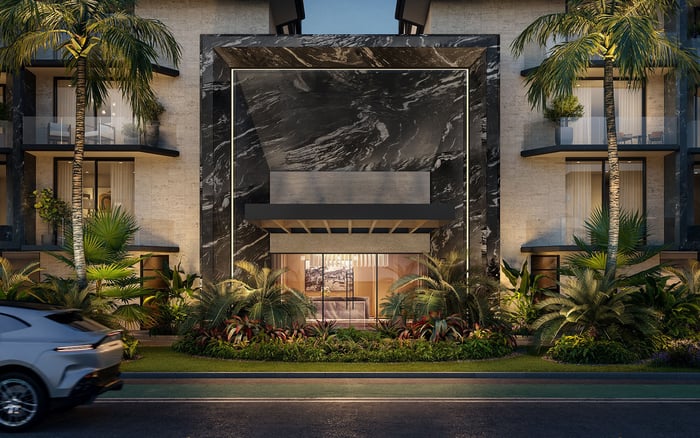
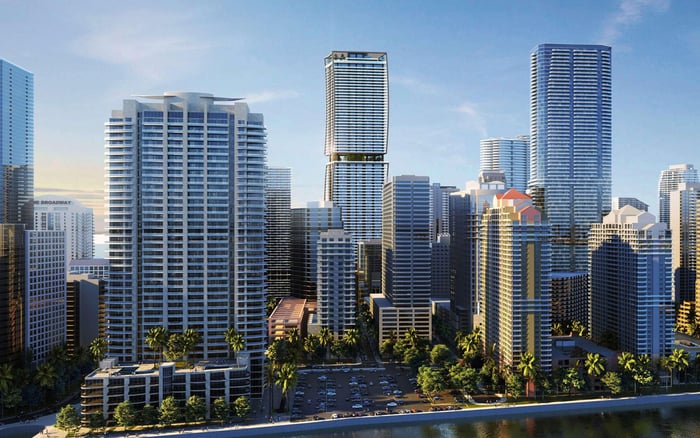
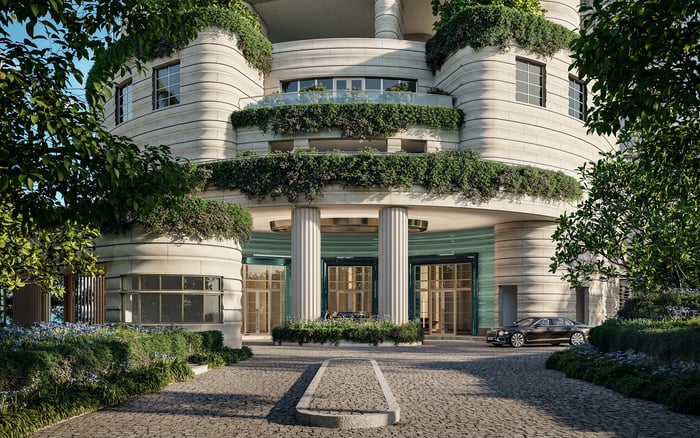
For seasonal Brickell owners, the most consequential luxuries are often operational: a discreet arrival, predictable elevator access, intuitive valet circulation and reliable service when the residence is occupied only intermittently.
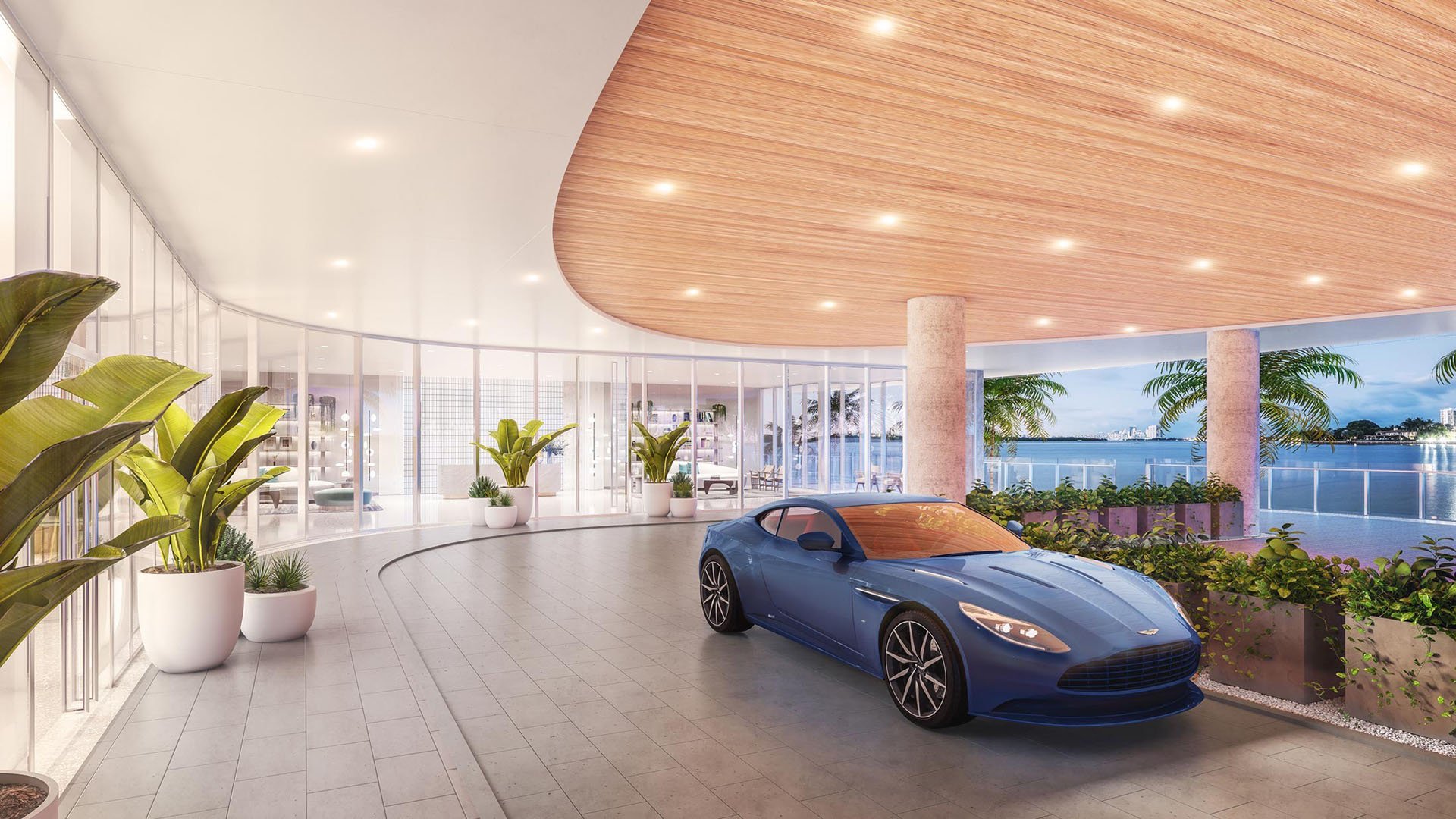
For a seasonal owner in Brickell, the defining experience of a residence may not be the pool deck, spa or private dining room. It may be the first few minutes after arriving: luggage at the curb, keys handed to the valet, guests guided through the lobby and an elevator ready without unnecessary exposure or delay.
That sequence is easy to overlook during a polished presentation. Yet it recurs every time an owner arrives, entertains, receives a delivery or leaves for dinner. Amenities create possibility. Circulation determines whether daily life feels composed.
This is especially relevant to second-home buyers whose stays may overlap with periods of greater demand. The building must do more than look serene. Its operational design should preserve that serenity when multiple residents want the same services at once.
“Private elevator” can describe materially different arrangements. A buyer should determine whether the elevator opens directly into the residence, a private vestibule or a small shared landing. That distinction shapes privacy, guest handling, deliveries and the transition from common space to home.
The more useful inquiry follows the entire route. How does a resident move from vehicle to elevator? Can visitors be cleared without confusion? Where do service personnel travel? Is there a practical place for luggage while doors, credentials and cars are managed? An elegant elevator foyer cannot compensate for an exposed or awkward approach.
Buyers considering high floors should also weigh the lived realities of vertical travel. The essential questions concern elevator allocation, redundancy, service access and performance during busy arrival periods or scheduled maintenance. These details should be verified through current plans, building materials and direct operational questions.
Valet is often presented as a hospitality flourish. For a seasonal owner, it can function as essential infrastructure. A successful arrival court should accommodate residents, guests, ride services, deliveries and staff without allowing the entrance to become a queue.
Buyers should observe lane geometry, stacking space, pedestrian crossings and the handoff between curb and lobby staff. They should ask where retrieved vehicles wait, how oversized vehicles are accommodated and how luggage moves in the rain. The objective is not simply fast parking. It is a calm, legible sequence that protects privacy and reduces friction.
Peak conditions matter most. A quiet weekday tour can reveal finishes, but not pressure. Returning at dinner hour, on a weekend or during poor weather may give a clearer impression of how the entrance performs. In an existing building, this observation can be particularly revealing. For a future residence, plans and proposed management protocols deserve equal scrutiny.
The Brickell market offers buyers multiple design and service propositions, but brochures should be the opening chapter, not the conclusion. When evaluating Baccarat Residences Brickell and Cipriani Residences Brickell, a seasonal purchaser can request a precise account of the route from arrival court to residence, including guest authorization and luggage handling.
The same discipline applies when considering The Residences at 1428 Brickell or St. Regis® Residences Brickell. Each is a starting point for comparison, not a substitute for project documents, plans and direct diligence. The relevant question is how the building’s proposed or current operating model aligns with the owner’s actual pattern of use.
Branded residences may carry strong service expectations, but buyers still need to examine the mechanics. Brand language and operational execution are related concepts, not interchangeable guarantees.
A focused review should begin with three journeys: owner arrival, guest arrival and service arrival. Ask the sales or management team to narrate each one step by step, then test that explanation against the physical plan.
For private elevator access, clarify the number of residences served, credential controls, backup procedures and separation from service movement. For valet, ask about overnight parking, retrieval requests, guest vehicles, staffing during peak periods and protocols for extended absences. Seasonal owners should also understand how a vehicle is handled when it remains unused for weeks.
The residence itself requires an absence plan. Determine how management communicates access requests, maintenance needs and unexpected conditions while the owner is away. Confirm who may enter, how authorization is documented and whether the owner can establish standing instructions for household staff or family.
This is where a buyer’s-guide mindset becomes more valuable than a feature checklist. The purchase should be evaluated as a system of recurring interactions, not a collection of photogenic rooms.
A useful hierarchy places privacy, predictability and ease ahead of amenity count. A spectacular residents’ lounge may be visited occasionally. The elevator and arrival court are used repeatedly while the owner is in town.
That does not make amenities irrelevant. It places them in context. Lifestyle value is strongest when the foundational experience works quietly: cars appear when expected, visitors know where to go, luggage moves discreetly and the path home feels protected.
The best choice will vary by household. An owner arriving with children and several bags may prioritize staging space and direct access. A buyer who entertains frequently may focus on guest processing. Someone who keeps multiple vehicles may care most about retrieval coordination. Luxury, in this sense, is not excess. It is the removal of repeated inconvenience.
What does private elevator access usually mean? It may mean direct entry, a private vestibule or a limited shared landing, so buyers should verify the exact configuration.
Why does valet flow matter to a seasonal owner? Arrivals and departures are repeated touchpoints that may involve luggage, guests and periods of concentrated demand.
Should buyers visit at different times of day? Yes. Multiple visits can reveal circulation patterns that a quiet scheduled tour may not show.
What should be reviewed on an elevator plan? Review elevator allocation, landing privacy, service routes, credential controls and backup access.
How can a buyer assess a future building’s valet operation? Study arrival plans and request a step-by-step explanation of proposed staffing, vehicle staging and guest handling.
Are more amenities always better? No. Their value depends on relevance, accessibility and whether core residential operations perform smoothly.
What valet questions apply to extended absences? Ask how parked vehicles are accessed, monitored and prepared for retrieval after long periods.
How should guest arrivals be evaluated? Confirm authorization procedures, waiting areas, wayfinding and the route from curb to residence.
Does a luxury brand guarantee seamless operations? No. Buyers should evaluate building-specific plans, protocols and management responsibilities directly.
What is the simplest decision rule? Prioritize the operational features the household will use on every stay, not merely the most impressive brochure pages.
For a discreet conversation and a curated building-by-building shortlist, connect with MILLION.
If branded residences are on your mind — as a home or as an allocation — we would be glad to share what we are seeing, privately.
Begin a quiet conversation