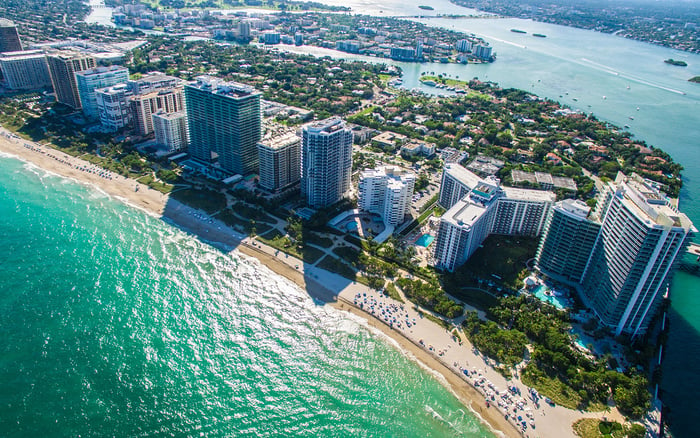
In Bal Harbour, a residence’s true seasonal value depends on the interaction among Village requirements, condominium rules, guest procedures, taxes, parking rights, and emergency obligations.

In Bal Harbour, the most consequential feature of a seasonal residence may never appear in a rendering. A private elevator, oceanfront pool, or polished residents’ salon may shape daily life, but the governing documents determine whether an owner can lend the home to family, accommodate recurring guests, or lease it during months spent elsewhere.
That distinction is central when comparing established condominiums with newer offerings such as Oceana Bal Harbour and Rivage Bal Harbour. Buyers should evaluate each property through its own documents and operating structure rather than assume that two residences in the same neighborhood offer equivalent flexibility.
Bal Harbour ownership sits at the intersection of second-home use, investment discipline, rental planning, and pet ownership. The legal ability to use a residence as intended deserves the same scrutiny as its view, floor plan, and finish package.
An association’s permission to lease does not eliminate municipal obligations. Before renting any portion of a dwelling as a vacation rental, an owner must obtain a Village Business Tax Receipt. A Vacation Rental Certificate is also required for each rental period, making compliance recurring rather than a one-time registration.
The current annual certificate limit should be confirmed directly with the Village before any rental-income projection is finalized. The available guidance conflicts: the maximum is described as either two certificates in 12 months or three. That discrepancy is material for an owner planning several seasonal occupancies.
Most Bal Harbour properties generally contemplate stays of six months, while shorter arrangements may require the Village’s vacation-rental compliance process. Buyers should have counsel and management clarify whether a proposed use is permitted, which approvals are required, and how the timing aligns with the intended calendar.
Rules differ sharply among buildings. One Bal Harbour permits daily rentals. St. Regis Bal Harbour Center has a 30-day minimum and allows as many as 12 rentals annually. By contrast, the North and South towers each have a six-month minimum and permit no more than two rentals per year. Bellini Bal Harbour likewise allows no more than two rentals annually, with no lease shorter than six months.
These distinctions can outweigh an extensive amenity comparison. A residence that accommodates frequent leasing serves a different ownership strategy from one designed around a single winter tenant or a longer private stay. Policy summaries may assist with initial screening, but buyers should rely on the latest declaration, bylaws, rules, application package, and written confirmation from management.
The same discipline applies when widening a search to nearby coastal addresses, including The Surf Club Four Seasons Surfside or The Well Bay Harbor Islands. Proximity does not imply identical rental, guest, or operational regimes.
Guest rules are not merely administrative. Associations can apply declarations, bylaws, and operating rules to tenants, making approval periods, deposits, interviews, move-in reservations, and access procedures relevant before any stay is promised.
Vacation-rental owners must provide occupants with written copies of the applicable ordinance section and local pet, noise, and garbage rules. Occupants may use only the parking areas identified on the certificate plan. They must also evacuate when Bal Harbour issues a nonresident evacuation order, making hurricane-season communication and departure planning part of responsible seasonal ownership.
For owners who host relatives or personal guests rather than paying tenants, the building’s definitions matter. Counsel and management should clarify registration procedures, length-of-stay limits, owner-presence requirements, service access, parking privileges, and whether repeated visitors are treated differently from lease occupants.
A projected monthly rent has limited meaning without a permissible lease term, an available annual rental slot, and sufficient lead time for approvals. A practical underwriting model should account for vacancy created by minimum terms, application processing, move-in scheduling, and any restriction on the number of leases.
Tax treatment also changes with duration. Rentals of six months or less are generally treated as transient rentals for tax purposes, while longer bona fide written leases are generally exempt from transient-rental taxes. Owners should confirm the applicable tax obligations for the proposed arrangement rather than assume that association approval resolves them.
A conventional condominium, hotel-condominium program, or mixed-use structure may offer a different operating model, even within the same neighborhood. The purchase analysis should identify not only whether leasing is allowed, but also who administers it, which documents control, and whether the owner’s desired dates remain available.
Before signing, request the current declaration, bylaws, rules, amendments, lease application, guest-registration forms, fee schedule, parking plan, pet provisions, and recent written guidance from management. Confirm the minimum lease term, annual rental cap, approval sequence, interview requirements, deposits, move procedures, taxes, and Village certificate obligations.
Then test the rules against an actual calendar. Map personal occupancy, family visits, any proposed lease, application lead time, and evacuation planning across 12 months. This exercise often reveals more about seasonal usability than the amenity brochure.
Does association approval replace Village approval? No. A qualifying vacation rental can require both building approval and municipal compliance.
Is a Village Business Tax Receipt required? Yes. An owner must obtain one before renting any portion of a dwelling as a vacation rental.
Is the Vacation Rental Certificate a one-time filing? No. A certificate is required for each rental period covered by the vacation-rental process.
How many certificates are available each year? The available guidance conflicts between two and three certificates per 12 months, so confirm the current cap directly with the Village.
Do all Bal Harbour condominiums have the same lease minimum? No. Policies range from daily rentals to six-month minimums, depending on the building.
Can a condominium association regulate tenants? Yes. Associations can enforce declarations, bylaws, and operating rules against tenants.
What information must vacation-rental occupants receive? Owners must provide written ordinance information and applicable pet, noise, and garbage rules.
Can occupants park anywhere assigned to the residence? Vacation-rental occupants must use only the parking areas designated on the certificate plan.
What happens during a nonresident evacuation order? Occupants must evacuate, making clear communication and departure arrangements essential.
How are shorter leases generally taxed? Rentals of six months or less are generally treated as transient rentals, while qualifying longer written leases are generally exempt from transient-rental taxes.
For a discreet conversation and a curated building-by-building shortlist, connect with MILLION.
If branded residences are on your mind — as a home or as an allocation — we would be glad to share what we are seeing, privately.
Begin a quiet conversation