A Beverly Hills-to-Bal Harbour move calls for more than a purchase budget. Compare complete operating costs, examine condominium reserves, and coordinate ownership, title insurance, and family funding questions before committing.
Choosing Bal Harbour after Beverly Hills is an opportunity to reconsider how a home should serve the family. The decision extends beyond a detached estate versus a condominium. It also concerns recurring expenses, responsibility for major repairs, and the funds available to support the residence over time.
For a buyer considering Oceana Bal Harbour, start with a single ownership brief: intended use, proposed purchaser, acquisition funding, annual operating budget, and long-term family intentions. Ask legal, tax, insurance, and financial advisers to work from that brief rather than separate assumptions.
Treat estate-plan liquidity, title insurance, and beneficiary coordination as transaction-specific matters for review. The objective is to identify questions before signing-not to assume that a move east produces a particular legal or tax outcome.
A Beverly Hills estate’s carrying costs extend beyond property taxes and insurance. Security, landscaping, pool service, utilities, maintenance, and potentially household staff all belong in the comparison. Condominium association charges may bundle services an estate owner pays for separately, making dues alone an unreliable measure of relative expense.
Build a side-by-side annual schedule. For the Florida residence, separate association charges, estimated property taxes, insurance, financing if applicable, and services paid directly by the owner. Add a distinct allowance for uncertain capital costs, informed by building documents and professional advice rather than a generic percentage.
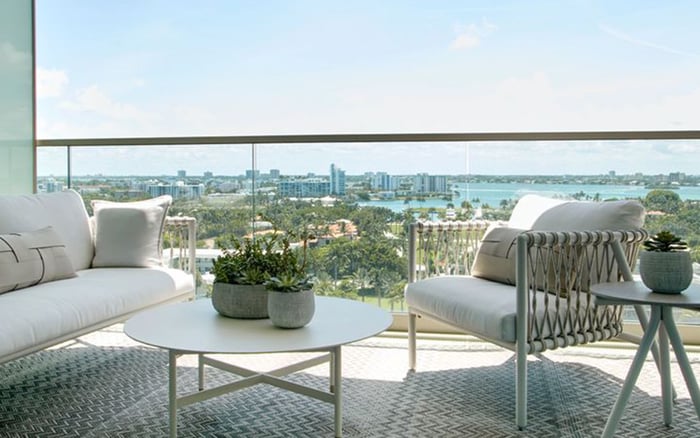
A property-specific illustration makes the distinction clear: Bal Harbour Tower, Unit 9J, had a $5.25 million asking price and approximately $10,140 in monthly association charges and taxes, excluding mortgage and insurance. That figure is neither a Bal Harbour average nor a verified current quote. Even a substantial monthly total may represent only part of the ownership budget.
Use current, residence-specific figures before making a purchase decision. Keep acquisition costs separate from the recurring budget so that a comfortable closing balance does not obscure the ongoing commitment.
Florida homestead portability is a Florida-to-Florida benefit. Moving from Beverly Hills does not transfer a California property’s assessed-value history into Florida.
For eligible homeowners with a prior Florida homestead, portability can transfer up to $500,000 of the prior homestead assessment difference to another qualifying Florida homestead. This is not a $500,000 tax credit. Generally, the new homestead must be established by January 1 of the third year after abandoning the previous homestead. The portability application deadline is March 1, alongside the new homestead exemption application.
Ask your tax adviser to confirm eligibility and dates for your circumstances. Do not build the acquisition budget around portability unless that review supports it.
Bal Harbour’s village levy accounts for only part of the total property-tax bill. Municipal budget figures also require care: proposed FY2025-26 operating-budget expenditures increased 5.4%, but that was not a projected increase in an individual homeowner’s tax bill. For a residence under consideration at Rivage Bal Harbour, request a property-specific tax estimate rather than applying a municipal expenditure percentage to expected ownership costs.
A condominium budget deserves the same attention as the residence’s interiors. Major reserve-funded expenses can include roofs, structural components, elevators, waterproofing, and exterior systems. These categories frame the questions that matter beyond the monthly payment.
Request budgets, reserve information, financial statements, insurance documentation, engineering and milestone-inspection materials, litigation information, existing assessments, and planned capital projects. Ask your advisers to reconcile the documents: does the financial plan address the identified work, and what remains uncertain?
Associations facing major repairs may use reserves, impose special assessments, or borrow and recover repayment costs through assessments. Examine both the expected work and its proposed funding rather than treating current dues as a complete picture.
If the search extends to Surfside and The Surf Club Four Seasons Surfside, use the same document checklist for the comparison. Do not assume that one building’s financial position, service inclusions, or capital needs describe another.
Bal Harbour’s flood-insurance requirements deserve explicit attention in acquisition planning. Federal law requires flood insurance for buildings in a Special Flood Hazard Area when obtaining federally related purchase or construction financing.
Ask the insurance adviser and lender, where applicable, to confirm how that requirement relates to the contemplated purchase. Separately, request a clear explanation of the association’s insurance and the protection proposed for your ownership situation, including exclusions, deductibles, and unresolved questions.
Keep insurance costs visible in the operating schedule. A monthly figure that excludes insurance should never be presented to the family as the full cost of carrying the residence.
For estate-plan liquidity, begin with a funding exercise rather than an assumed tax liability. Ask the financial adviser to model routine carrying costs and a separate major-repair scenario. Then ask estate counsel who would have authority to access the intended funds under the family’s proposed arrangements, including during incapacity or after death. Identifying assets does not necessarily resolve access to them.
Bring title insurance into the same conversation. Ask the closing attorney or title professional to explain the proposed policy, intended insured party, exceptions, exclusions, and unresolved ownership questions. Request confirmation that the proposed purchaser and intended ownership arrangement have been reviewed together. These are questions for the transaction team, not assurances of coverage.
Beneficiary coordination should be equally concrete. Give counsel a written account of who is intended to use the residence, who is expected to fund its expenses, and what the family would prefer if those intentions diverge. Ask whether the proposed documents reflect those wishes and what further decisions are needed.
Avoid prescribing a trust, entity, beneficiary designation, or reserve amount before that review. The appropriate arrangement requires advice tailored to the family and the purchase.
Before committing, assemble the current cost schedule, building financial and engineering materials, insurance review, title questions, and adviser-confirmed ownership instructions in one file. Mark estimates as estimates and identify who will resolve each open item.
The aim is not to eliminate every uncertainty. It is to distinguish the home’s purchase price from the financial and administrative obligations of keeping it. That clarity allows the family to choose the residence for its place in their lives, with its responsibilities understood.
Explore Bal Harbour residences and refine your South Florida shortlist with MILLION.
If branded residences are on your mind — as a home or as an allocation — we would be glad to share what we are seeing, privately.
Begin a quiet conversationNo. Portability is a Florida-to-Florida benefit and does not transfer a California property’s assessed-value history into Florida.
No. Eligible homeowners may transfer up to $500,000 of their prior Florida homestead assessment difference to another qualifying Florida homestead.
The new homestead generally must be established by January 1 of the third year after abandoning the previous homestead. The application deadline is generally March 1, alongside the new homestead exemption application.
No. The 5.4% figure concerned proposed FY2025–26 operating-budget expenditures, not an individual homeowner’s tax bill.
Compare complete operating budgets rather than association dues alone. Include taxes, insurance, utilities, maintenance, services, and financing where applicable, while checking which services dues already cover.
The listing showed a $5.25 million asking price and approximately $10,140 monthly for association charges plus taxes, excluding mortgage and insurance. It is not a market average or a verified current quote.
Request budgets, reserves, financial statements, insurance documentation, engineering and milestone-inspection materials, litigation information, assessments, and planned capital projects.
An association may use existing reserves, levy special assessments, or borrow and recover repayment costs through assessments. Review the proposed funding alongside the scope of work.
It applies to buildings in a Special Flood Hazard Area when obtaining federally related purchase or construction financing. Ask the lender and insurance adviser to confirm its application to the purchase.
Ask advisers to review operating-cost funding, authority to access funds, proposed title coverage, and intended ownership together. Give counsel written family intentions about use and expense responsibility rather than assuming a particular structure will fit.