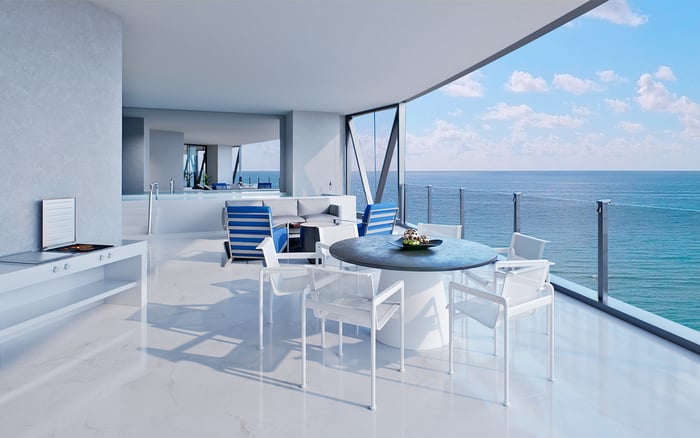
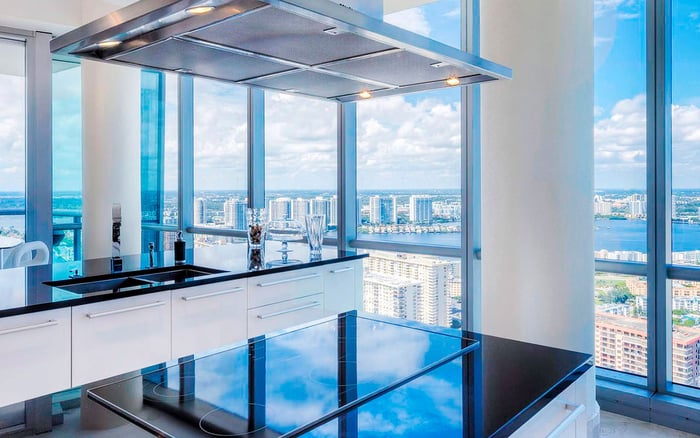
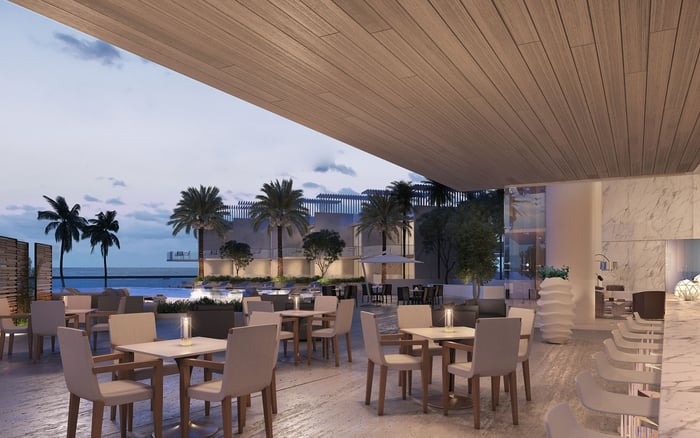
In Sunny Isles Beach, walkability is less a simple measure of distance than a layered lifestyle question. Jade Ocean and The Ritz-Carlton Residences pair oceanfront recreation and substantial private amenities with Collins Avenue settings that require careful evaluation on foot.
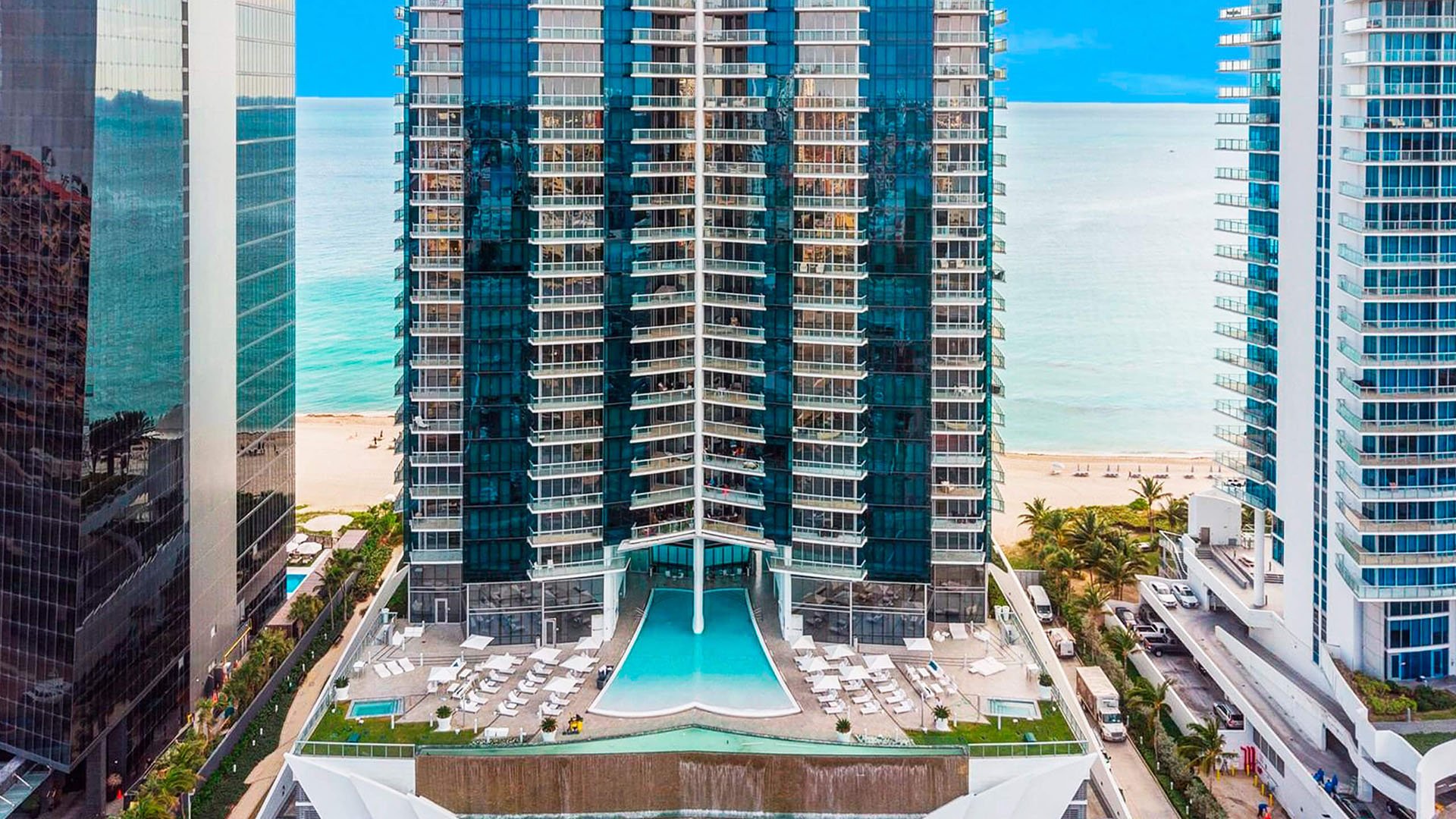
In Sunny Isles Beach, walkability is not simply a question of how many destinations appear nearby. For residents of ultra-luxury towers along Collins Avenue, it may mean a morning walk beside the Atlantic, direct access to beach-oriented recreation, an easy route to a café, or the ability to complete a practical errand without retrieving the car.
That distinction matters when comparing Jade Ocean Sunny Isles Beach with The Ritz-Carlton Residences® Sunny Isles. Both are ultra-luxury oceanfront properties on Collins Avenue, yet each shapes pedestrian life through a distinct combination of waterfront access, private amenities, and connections to the surrounding neighborhood. Neither should be assessed as though it occupied a conventional urban grid.
For MILLION's Buyer's Guides, the most useful lens is experiential: Where will an owner actually want to walk, at what time, and for what purpose?
Jade Ocean's appeal begins with its waterfront setting. Beach access and leisure walking are central to the proposition, giving residents an immediate recreational reason to step outside without turning every outing into an errand.
Its private wellness and social spaces also allow the building to function as a vertical neighborhood. When meaningful parts of the day can unfold within the property, fewer off-site trips may be necessary. That does not make the surrounding area irrelevant; it reframes the buyer's question from “How many places are close?” to “Which needs can be met comfortably within the building, on the beach, and in the neighborhood?”
Buyers comparing other Sunny Isles options, including Jade Signature Sunny Isles Beach, can apply the same framework without assuming that one tower's experience replicates another's. Oceanfront access, interior convenience, and the quality of the route beyond the entrance should be considered separately.
The Ritz-Carlton Residences presents another interpretation of coastal walkability. Its branded, resort-style environment and extensive in-building lifestyle can reduce the need to leave for wellness, leisure, or social time. Here, walking may be oriented more toward the waterfront and recreation than toward the continuous pedestrian rhythm of a dense city center.
That can be highly compelling for a buyer who wants daily movement without requiring every convenience to line a traditional main street. Yet the residence's internal completeness should not replace a careful examination of its outside connections. Restaurants, retail, parks, services, and public spaces remain part of the broader lifestyle calculation, particularly for an owner who expects to leave the car parked for portions of the week.
A broader tour might also include Turnberry Ocean Club Sunny Isles, not to create a ranking, but to clarify how strongly a buyer values in-building life relative to neighborhood circulation.
At both properties, Collins Avenue introduces a practical reality: Geographic proximity does not automatically produce a pleasant walk. Traffic, crossings, shade, streetscape comfort, weather, and time of day can change how a route feels. A destination that appears convenient may prove less appealing if reaching it involves an uncomfortable crossing or prolonged sun exposure.
This is why oceanfront and beach access should be treated as components of walkability, not complete answers. The beach may support effortless leisure walking, while a routine grocery or dining trip presents a different set of conditions. Buyers should distinguish recreational walking from functional walking and decide how much each matters within their own schedules.
A useful private tour therefore extends beyond the residence. Walk toward the destinations that shape real life: groceries, cafés, dining, recreation, parks, and services. Observe the entrance sequence, crossing points, sidewalk conditions, shade, and return journey. Repeat the exercise at the hours when those trips would normally occur.
Jade Ocean may resonate with buyers who view the building as a self-contained vertical neighborhood, complemented by beach recreation and access to the wider Sunny Isles environment. The Ritz-Carlton Residences may speak more directly to those who prioritize a branded, resort-style setting while retaining the option to engage with the neighborhood on foot.
The distinction is not a declaration that one is categorically more walkable. It is a question of fit. One buyer may value an oceanfront walk and private wellness spaces above all else; another may place greater weight on comfortably reaching dining, retail, public space, and everyday services without driving.
The most informed decision comes from separating three ideas: what is available inside the building, what is enjoyable along the waterfront, and what is genuinely convenient beyond the property line. When those layers align with a buyer's habits, walkability becomes a lived advantage rather than marketing shorthand.
Are both properties oceanfront? Yes. Jade Ocean and The Ritz-Carlton Residences are ultra-luxury oceanfront properties on Collins Avenue in Sunny Isles Beach.
Does either property offer conventional urban walkability? Their settings emphasize beach-oriented walking and private amenities more than a traditional dense-city pedestrian pattern.
Is one residence definitively more walkable? No categorical winner is established. The better fit depends on the buyer's preferred balance of beach access, building amenities, and neighborhood connections.
Why do internal amenities matter to walkability? Wellness, leisure, and social spaces within a building can reduce the number of trips that require walking or driving elsewhere.
What should buyers examine along Collins Avenue? Consider traffic, crossings, shade, streetscape comfort, weather exposure, and how the route feels at relevant times.
Should beach access count as walkability? Yes. In this coastal context, access to leisure walking and waterfront recreation is a meaningful part of daily pedestrian life.
Which everyday destinations deserve an on-foot test? Test routes to groceries, cafés, dining, recreation, parks, public spaces, and services that match your routine.
Can a nearby destination still feel inconvenient? Yes. A short distance can feel less practical when crossings, traffic, heat, or limited shade affect comfort.
How should second-home buyers assess the two properties? Focus on the trips made during actual stays, then determine how much of that lifestyle can unfold within the building or on foot.
What is the best way to compare the residences? Tour each building, experience its private amenities, walk the waterfront, and personally test representative neighborhood routes.
For a tailored shortlist and next-step guidance, connect with MILLION.
If branded residences are on your mind — as a home or as an allocation — we would be glad to share what we are seeing, privately.
Begin a quiet conversation