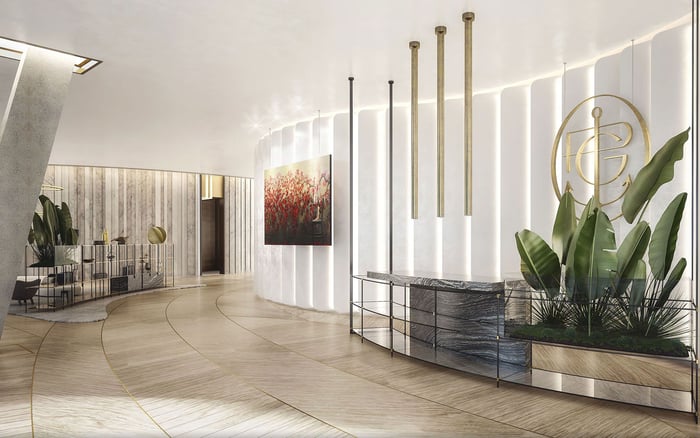
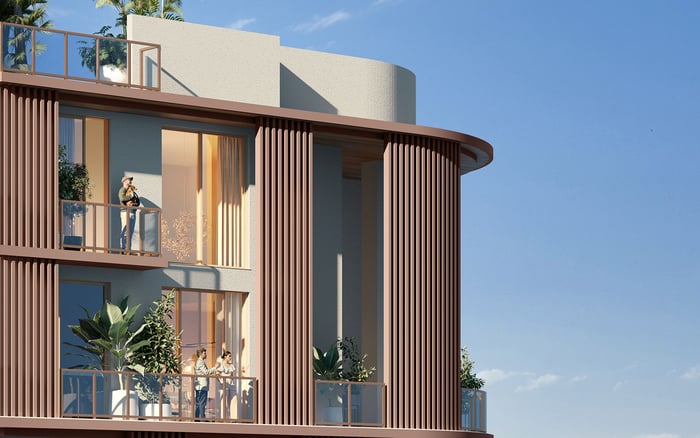
The Lincoln Coconut Grove and Vita at Grove Isle present distinct approaches to arrival and access: boutique front-desk service versus island security and electronic credentials. For privacy-minded buyers, the deciding question is how those features translate into everyday movement, not whether access control alone promises resident-only routes.
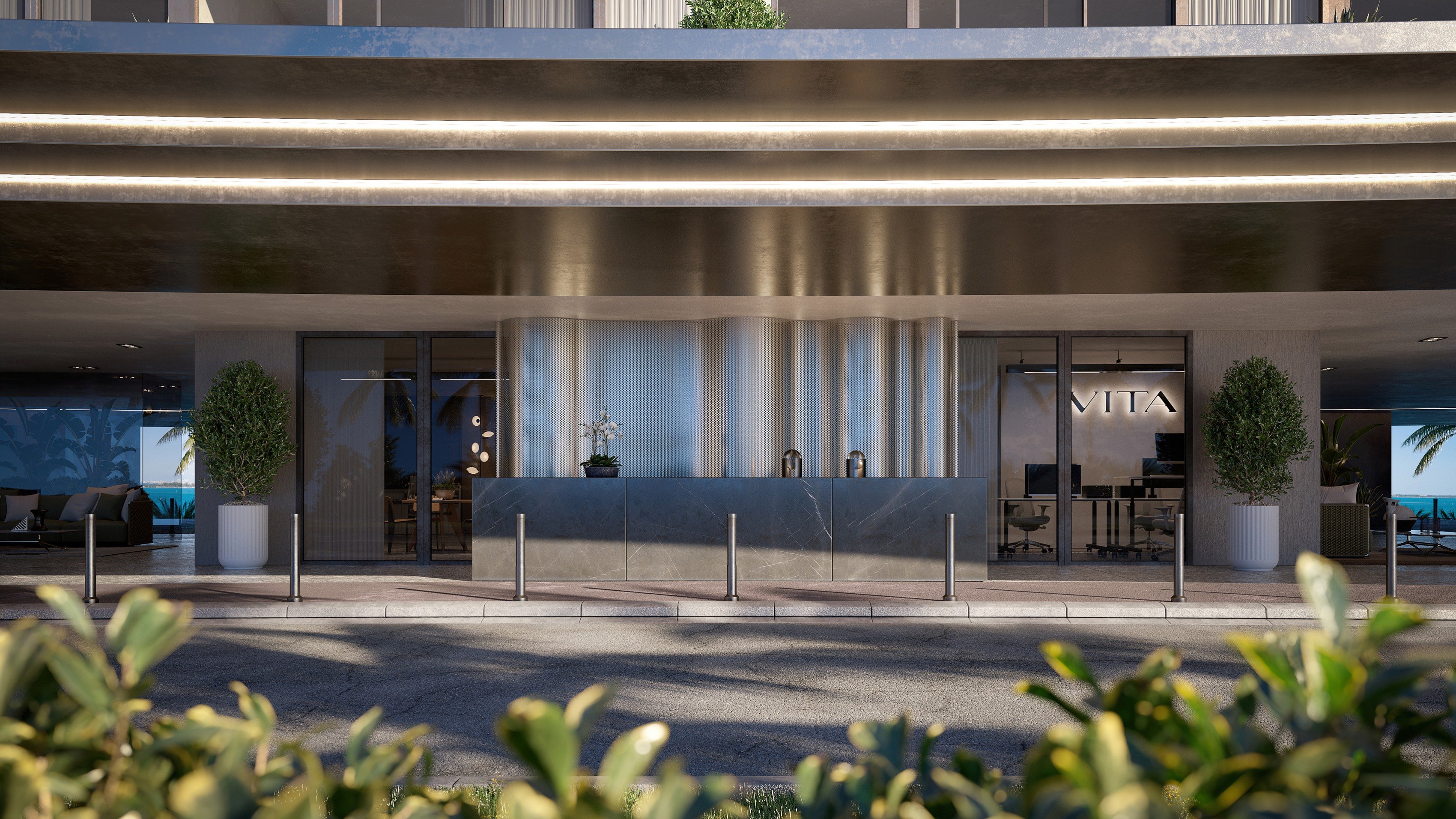
For buyers aligning a household's ownership priorities, privacy extends beyond a quiet residence. It encompasses the sequence from arriving by car to closing the front door: who can enter, where visitors wait, how deliveries move, and whether an owner's route intersects with guest or service traffic. Those details deserve the same attention as the residence itself.
The Lincoln Coconut Grove and Vita at Grove Isle offer distinct starting points. The Lincoln emphasizes a boutique building with continuous front-desk service. Vita combines an island setting with security and electronic access credentials. Neither project's disclosed features establish fully segregated resident and guest circulation. The distinction is essential: controlling entry is not the same as separating movement after entry.
For a household deciding together, the comparison is not simply which address sounds more private. It is which advertised provisions, once demonstrated and clarified, best meet the owners' expectations for hosting, daily arrivals, and service access.
At 2650 Lincoln Avenue, The Lincoln Coconut Grove comprises 48 residences across eight floors. Its advertised provisions include 24/7 front-desk service, night security, and monitoring and surveillance systems. The disclosed features center on a staffed residential building rather than an island arrival threshold.
That scale may appeal to buyers who prefer a smaller condominium setting. Residence count alone, however, does not establish how many people share a lobby at a given hour, how promptly visitors are processed, or whether staff recognize every owner. Those are operational questions, not conclusions to draw from a boutique designation.
The distinction between staffing and security also warrants attention. Continuous front-desk service is advertised; night security is separately specified. Buyers should clarify each role's responsibilities, including who authorizes an unexpected visitor and how arrivals are handled when the desk is occupied.
The decisive walkthrough should trace a resident's route and a guest's route separately, from entrance to residence. Ask where registration occurs, whether elevator access requires authorization, and how service personnel and deliveries enter. The disclosed features do not establish separate guest elevators or physically segregated resident and guest routes.
At 5 Grove Isle Drive, Vita at Grove Isle comprises 65 condominium residences on Grove Isle, a 20-acre private island in Biscayne Bay near central Coconut Grove. A private bridge connects the island to the mainland, creating an arrival threshold before the residential buildings. Grove Isle's advertised provisions include 24-hour security.
Vita also advertises property-wide access control with electronic keys for guests and service personnel. The Vita Linc resident app allows owners to register guests, provide an electronic key, and request valet service for residents' and guests' vehicles. These features address permissions and arrival coordination. They do not, by themselves, describe a separate physical route for visitors.
The key follow-up concerns the scope of each credential. Buyers should ask whether access can be limited by building, floor, amenity, or time, and how a credential is withdrawn. The advertised electronic-key capability alone does not establish those permissions.
Vita's residence specifications also include an in-unit security system with water-leak detection. This is a separate layer of residential protection, not evidence of guest separation. Likewise, the bridge adds a threshold but does not establish dedicated guest elevator banks, separate guest lobbies, or fully segregated circulation inside the property.
Three concepts should remain distinct during a sales presentation. Access control determines who may enter an area. Guest management covers registration, authorization, and coordination. Resident-only circulation concerns the physical routes and spaces reserved for owners rather than shared with visitors or service personnel.
A project can offer a sophisticated permission system without separate corridors or elevator banks. Conversely, multiple entrances do not establish who uses each one or whether routes merge farther inside. The useful evidence is a clear route plan paired with an explanation of the intended operating procedures.
Apply the same standard if Park Grove Coconut Grove is also on the shortlist: request a circulation demonstration rather than assuming that a project's positioning establishes guest separation. A consistent set of questions makes comparisons more meaningful without presuming that different properties share the same features.
Begin with the owners' vehicle arrival. Ask where residents leave the vehicle, how they enter the building, and which permissions govern the route to their floor. At Vita, include the island approach; at The Lincoln, focus on the transition into the staffed building.
Next, test an invited guest's arrival before the host is home. Establish who receives the visitor, where they wait, and whether owner approval is required before they proceed. At Vita, request a demonstration of guest registration and the electronic key's actual permissions.
Third, follow a delivery from arrival to destination. Ask who accepts it, where it is held, and whether delivery personnel pass through spaces used by residents. Do not assume that surveillance systems or electronic access resolve those routing questions.
Fourth, consider a scheduled service visit while the owners are away. Clarify registration, permitted destinations, departure procedures, and responsibility for ending access. Finally, ask how an unannounced or after-hours visitor is handled. The same route can feel very different depending on the authorization procedure governing it.
Before choosing between the two, household members should agree on what privacy must accomplish. Frequent hosting may make straightforward guest authorization especially important. Owners anticipating regular service visits may place greater weight on permission boundaries and delivery handling. Buyers seeking minimal contact with visitors may need physical separation that neither project's disclosed features currently establish.
The Lincoln merits closer consideration for buyers drawn to its 48-residence scale and advertised round-the-clock front desk. Vita merits closer consideration for buyers who value the island approach and electronic guest and service credentials. These are distinct reasons to investigate, not grounds for declaring one universally more secure.
Treat advertised features as project specifications, not independently verified evidence of current implementation or service performance. Ask the sales team to distinguish physical design, access technology, staffing commitments, and operating procedures. Then seek written clarification of the details essential to the purchase.
The strongest choice is the address whose demonstrated arrival sequence matches the household's priorities. If resident-only circulation is nonnegotiable, require explicit confirmation of the relevant routes. A staffed desk, private bridge, or electronic key is not a substitute for that assurance.
For a considered approach to Coconut Grove ownership, explore MILLION.
If branded residences are on your mind — as a home or as an allocation — we would be glad to share what we are seeing, privately.
Begin a quiet conversationThe Lincoln Coconut Grove is located at 2650 Lincoln Avenue in Coconut Grove, Miami.
The Lincoln comprises 48 condominium residences across eight floors.
The Lincoln advertises 24/7 front-desk service, night security, and monitoring and surveillance systems. Buyers should clarify the responsibilities attached to each service.
Its disclosed features do not establish separate guest elevators or physically segregated resident and guest routes. Buyers should request a route demonstration and explicit clarification.
Vita lists its address as 5 Grove Isle Drive on Grove Isle, a 20-acre private island in Biscayne Bay near central Coconut Grove.
Vita comprises 65 condominium residences.
A private bridge connects Grove Isle to the Coconut Grove mainland, adding a threshold before the residential buildings. Grove Isle's advertised provisions include 24-hour security.
Vita advertises property-wide access control with electronic keys for guests and service personnel. The Vita Linc app supports guest registration, electronic guest keys, and valet requests for residents' and guests' vehicles.
No. The disclosed features do not establish separate guest elevator banks, separate guest lobbies, or fully segregated guest circulation, and credential restrictions require clarification.
Request demonstrations of vehicle arrival, lobby entry, elevator authorization, delivery handling, and service access. Distinguish advertised specifications from current implementation and operating procedures.