A collector’s due-diligence guide to moving, mounting, lighting and protecting art at two distinctive Miami Beach condominiums.
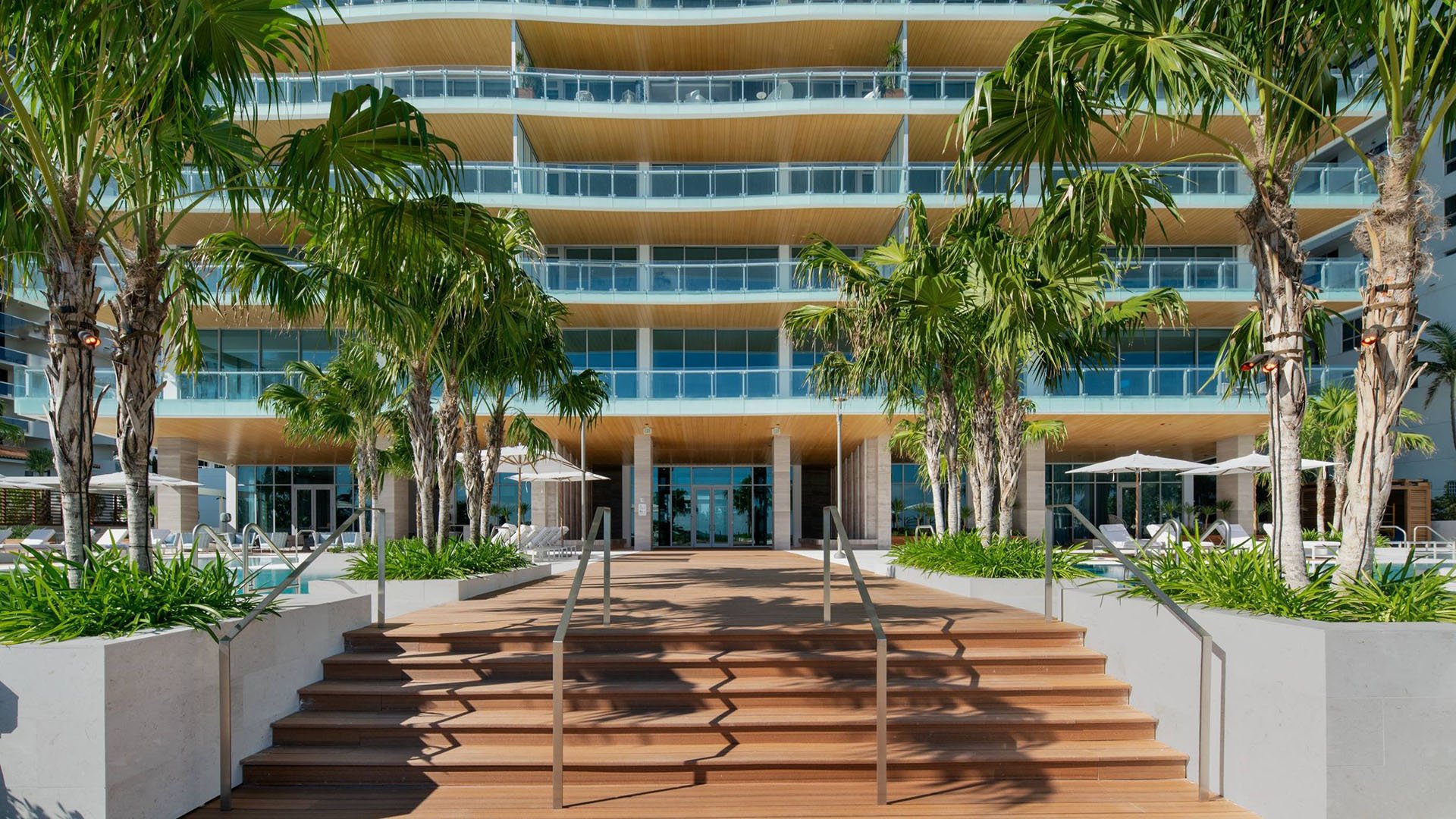
For a serious collector, the suitability of a Miami Beach residence extends far beyond wall length and ceiling height. A compelling interior may still present practical constraints if a crate cannot clear the service-elevator door, a large sculpture exceeds a floor-load limit or condominium rules prohibit the preferred mounting method. Climate performance deserves equal scrutiny, particularly where ocean exposure, expansive glazing and terraces shape the setting.
Buyers considering 57 Ocean Miami Beach and Five Park Miami Beach should therefore make art logistics part of their pre-purchase diligence. Lifestyle and amenity descriptions do not establish museum-grade environmental conditions or supply every dimension a professional art handler needs. The decisive answers lie in current condominium documents, written management responses and, where appropriate, an engineer’s review.
A collection should be surveyed against the building’s actual routes, rules and environmental performance.
Within MILLION’s Buyer's Guides, this distinction is fundamental: a residence can be visually suited to art yet operationally unsuited to a particular work. The most useful inquiry follows the artwork from truck arrival to final placement, then considers how the residence will protect it over time.
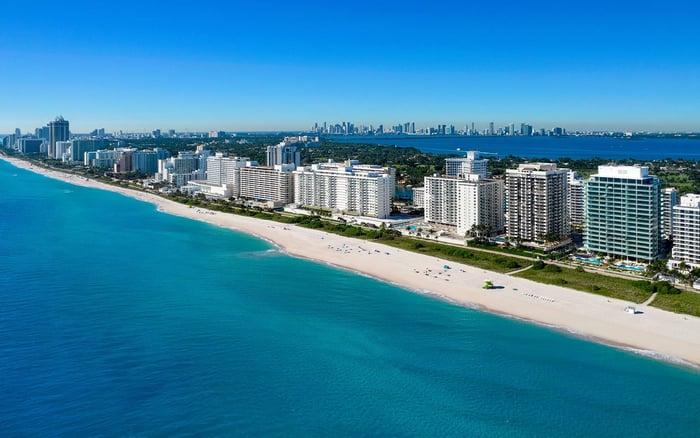
57 Ocean is a 71-residence, 18-story condominium at 5775 Collins Avenue in Mid-Beach, with 220 feet of ocean frontage. Completed in 2021, it offers an intimate oceanfront context, 10-foot ceilings, 12-foot-deep terraces and interiors with Italian kitchens and bathrooms, marble surfaces and premium fixtures. Those finishes demand a detailed protection plan before handlers enter the residence.
Begin by requesting the precise loading route, maximum truck size, service-elevator cab dimensions, door clearance and weight rating. Ask how far in advance the elevator must be reserved, where a truck may wait and whether installers can move from underground arrival areas to service corridors without crossing primary amenity spaces. One-level connectivity between arrival and the beach is convenient for residents, but it does not confirm a viable freight route.
Obtain current requirements for contractor insurance, association endorsements, workers’ compensation, deposits, elevator padding and protective floor coverings. Confirm permitted work hours, weekend policies and after-hours access. Although the building offers concierge service, 24-hour valet and security, plus pool and beach attendants, buyers should not assume residential staff will receive, store or handle crated art.
Once the route is established, turn to the installation. Request wall-construction drawings or written wall specifications, permitted anchor types and any rules governing added blocking. Heavy paintings, stone pieces and large floor-standing sculptures may require floor-load confirmation or structural review. Ceiling-hung works, slab penetrations, track lighting and media installations may also require architectural approval or an engineer’s sign-off.
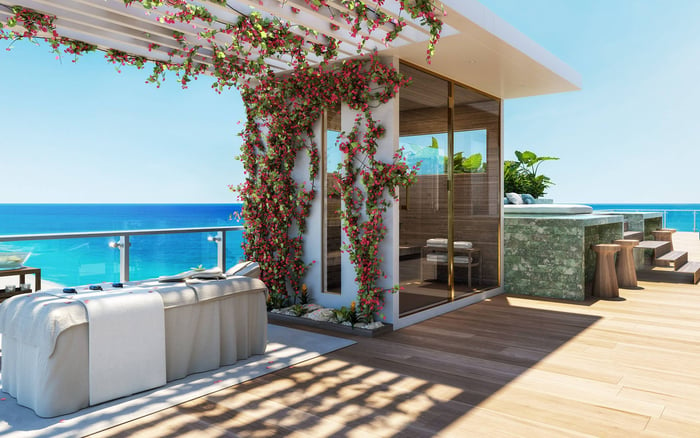
The relationship between art and glazing deserves particular attention. Before placing photographs, works on paper, textiles or other light-sensitive pieces near floor-to-ceiling windows, obtain the glazing’s documented UV performance. For outdoor sculpture, verify terrace load limits, wind-related restrictions, attachment rules and association approval procedures. The terraces may be generous, but dimensions alone do not establish whether a proposed placement is permissible.
Buyers comparing the cultural character of other Miami Beach residences might also tour Faena House Miami Beach. The purpose is not to assume equivalent building standards, but to compare how each property addresses the same practical questions of access, mounting and environmental control.
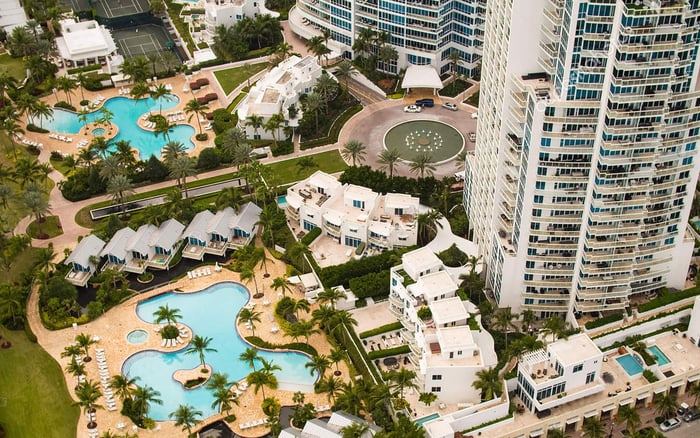
Five Park stands at 500 Alton Road beside the three-acre Canopy Park. The park includes shaded gardens, a playground, outdoor gym, picnic areas, a dog park and art installations. Inside the tower, shared spaces include co-working areas, private offices, boardrooms, a screening room, children’s learning lab, teen club, guest suites and a resident-only pool bar and café.
For a collector, that broad program creates several distinct operational zones. Request the tower loading-area location, maximum truck dimensions, turning clearances, service-elevator measurements, weight limits and approved delivery windows. Determine whether the concierge or butler team will receive a crate, whether professional handlers must remain with it and whether a secure holding area exists. Advertised service should never be interpreted as art-handling authorization without written confirmation.
Five Park also provides access to a private beach club, with transportation by house car or electric Beach Moke. Treat tower delivery policies and beach-club restrictions separately. A route survey should cover the truck’s arrival, loading position, elevator, corridor turns and residence entry rather than assume that one building approval applies throughout the wider amenity experience.
Collectors interested in exhibitions or resident-sponsored installations should ask which Five Park amenity areas, if any, may host privately owned work. Clarify who approves mounting, electrical connections, insurance, security and removal. Because a dedicated program director oversees activities and events, that role is a logical starting point for discussions of rotating exhibitions or cultural programming. Control of Canopy Park’s art program should be confirmed independently, including whether residents can participate.
Digital art introduces another layer. Five Park offers fiber-optic internet and Wi-Fi across residences, amenities, garages and elevators, which may support connected works. Even so, a buyer should verify bandwidth at the intended location, network-access rules, content policies, power requirements, cable routing and approval for screens or projection equipment.
For another perspective on the relationship among residences, architecture and collection planning, buyers can consider The Perigon Miami Beach as part of a broader Design & Architecture review. Every property must still be evaluated against its own current plans, rules and measured conditions.
A wellness-oriented amenity program is not evidence of collection-grade climate stability. At 57 Ocean, request actual temperature and relative-humidity ranges for the residence, corridors and any storage area through which art may pass. Ask whether conditions vary seasonally, how filtration is specified and which systems remain supported during a power interruption.
At Five Park, seek documented HVAC set points, achievable humidity bands, filtration specifications and emergency-power coverage. If a conservator recommends supplemental dehumidification, confirm whether the association permits the equipment, drainage method and electrical load. Buyers should also ask whether HVAC operation can be maintained continuously while the residence is vacant and how alerts are delivered after a fault.
The objective is not a verbal assurance that the home is climate controlled. It is a written understanding of what the system is designed to achieve, where it achieves it and what happens during an outage. Particularly sensitive works may require an independent environmental assessment and a post-move-in monitoring plan.
Before closing or purchasing a major work for either residence, ask an art handler to complete a route survey and prepare a dimensional installation plan. Pair it with current association rules, contractor-insurance requirements, wall and floor specifications, elevator reservations, approved work hours and written management responses. For structural, electrical or ceiling-mounted installations, add the relevant architectural or engineering approval.
This file distinguishes an attractive concept from an executable installation. It also allows the buyer, designer, conservator and handler to coordinate protection for marble, fixtures and other finished surfaces before delivery day. In luxury real estate, discretion often depends on preparation: fewer improvised decisions in the lobby, service corridor or residence create a calmer arrival for both the collection and the building.
For private guidance on selecting a Miami Beach residence around the needs of an important collection, connect with MILLION.
If branded residences are on your mind — as a home or as an allocation — we would be glad to share what we are seeing, privately.
Begin a quiet conversationRequest the loading location, truck limits, service-elevator dimensions, door clearance, weight rating, corridor turns and approved delivery windows.
Do not assume they can. Obtain written confirmation about receiving, temporary holding and coordination with professional handlers.
It should follow the work from truck arrival through loading access, the service elevator, corridor turns and the residence entry.
Confirm wall construction, permitted anchors, floor-load limits and any requirements for added blocking, structural review or engineering approval.
No. Buyers should verify terrace load limits, attachment restrictions, wind-related rules and association approvals before placement.
The dedicated program director is a logical initial contact for questions about exhibitions, rotating art and resident cultural activities.
Its promoted fiber-optic internet and broad Wi-Fi coverage may help, but buyers must confirm bandwidth, network policies, power and mounting approval.
No. Buyers should request documented temperature and humidity ranges, filtration specifications and emergency-power coverage.
Not necessarily. Buyers should distinguish the tower’s delivery and installation policies from any separate beach-club restrictions.
It may be required for ceiling-hung works, slab penetrations, heavy sculpture, structural reinforcement or other installations subject to architectural review.