A buyer-focused guide to appliance, millwork, and fixture warranties at Shell Bay, with the distinctions that matter most: written coverage, statutory protections, maintenance obligations, and warranty clocks that may begin before closing.
At Shell Bay by Auberge Hallandale, the advertised specifications include a full Gaggenau appliance suite, with an induction cooktop and wine refrigerator. For a buyer considering the branded residences at 501 Diplomat Parkway in Hallandale Beach, the next question goes beyond the finishes: what protection accompanies those components after the keys change hands?
The answer is not a single warranty. Written manufacturer terms, additional developer commitments, and Florida’s statutory implied warranties require separate review. Millwork and fixtures demand equally careful classification. A product defect, an installation issue, and a maintenance problem should not automatically be treated as the same claim.
This overview addresses the 2024 framework of Florida Statutes §718.203. Before relying on a particular coverage period, have Florida condominium counsel confirm the law applicable to your purchase and any claim, together with the governing documents.
An appliance brand identifies the advertised equipment, not the duration or scope of its warranty. For the Gaggenau suite, request written terms tied to the actual models delivered. Ask which provisions address parts, labor, service visits, registration, exclusions, and any optional service plan. Do not assume every appliance carries identical terms.
Appliances are not exclusively the manufacturer’s responsibility. Section 718.203 establishes developer-implied warranties of fitness and merchantability alongside applicable written coverage. For personal property transferred with the unit, the developer warranty matches the manufacturer’s warranty period and begins at closing or possession, whichever occurs first.
That statutory starting point does not establish when the manufacturer’s own written coverage begins. Confirm both clocks separately, particularly if possession precedes closing. A component-by-component schedule should identify the warrantor, duration, start date, maintenance conditions, and service contact-not simply state “appliances covered.”
The developer’s implied warranty for each unit lasts three years from completion of the building containing it. It does not restart when an individual buyer closes. Request the documented completion date and ask counsel to calculate the remaining period.
A separate developer category covers roofs, structural components, and specified building-serving mechanical, electrical, and plumbing elements. Its period ends three years after completion or one year after nondeveloper owners obtain association control, whichever is later, subject to a five-year maximum from completion.
That is not a blanket five-year warranty for the residence. The extended category expressly excludes mechanical elements serving only one unit. An in-unit issue therefore requires classification before a deadline can be assigned.
Contractor, subcontractor, and supplier warranties are distinct from the developer’s coverage. Specified structural, roof, mechanical, and plumbing work receives three-year implied warranties from building completion. Other improvements and materials fall under a one-year period from completion of construction. Do not confuse these periods with the developer’s potentially longer building-component coverage.
For buyers also considering 2000 Ocean Hallandale Beach, the meaningful comparison is the documented protection remaining at the relevant purchase date-not an assumption that every Hallandale Beach residence comes with a fresh warranty clock.
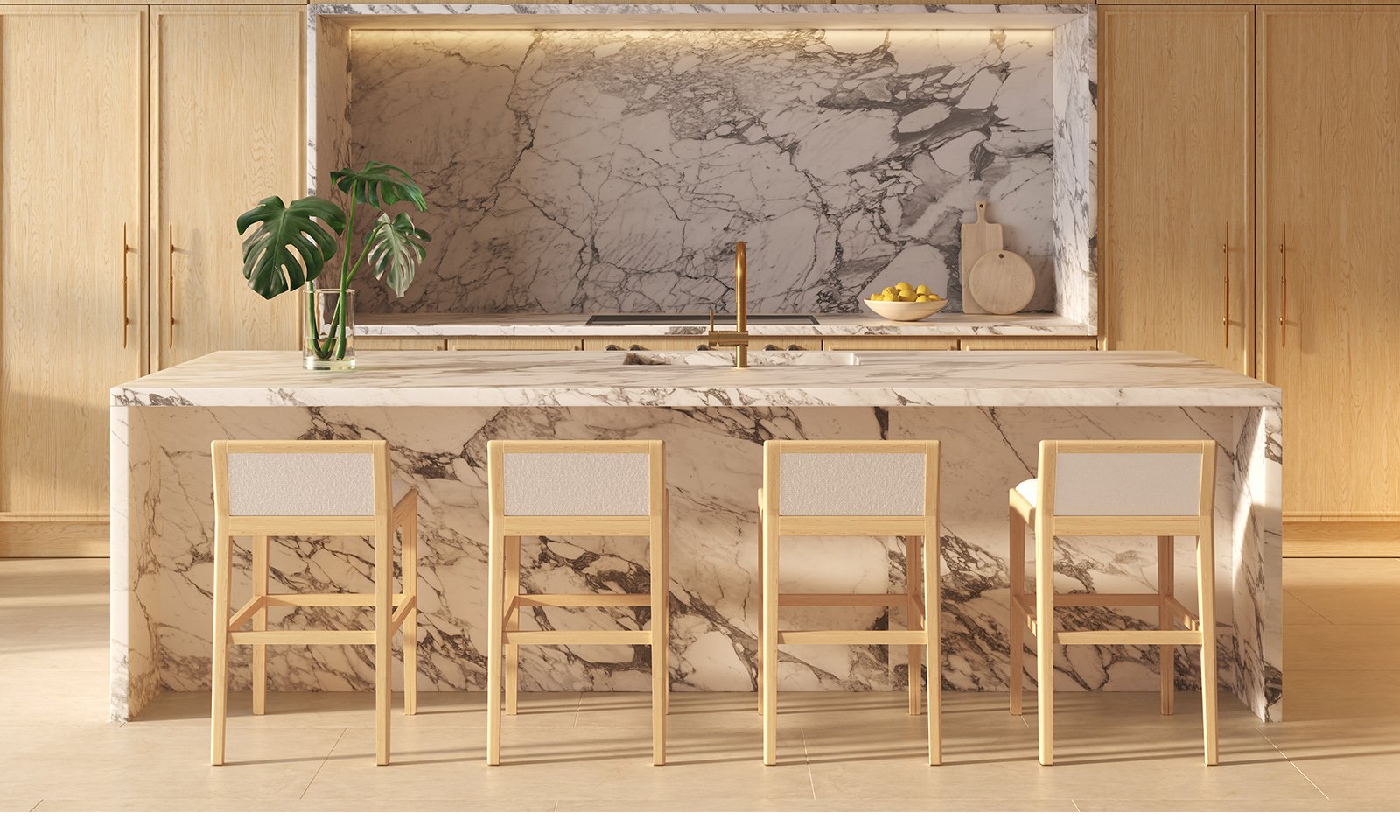
Cabinetry and other millwork may read as one continuous design composition, but a claim requires a precise description. Does the concern involve a panel, finish, hinge, alignment, or installation? These are questions for inspection and diagnosis, not automatic determinations of coverage.
Florida’s framework does not create a uniform “finish warranty.” The developer’s unit warranty and the separate one-year contractor, subcontractor, and supplier warranty for other improvements and materials must be considered in relation to the alleged defect and the responsible party.
Before closing, request any written millwork guarantees and care instructions. Ask how visible concerns will be recorded and unresolved items handled after possession. A walkthrough record provides useful documentation, but it is not a promise that every future cosmetic concern will be repaired.
Do not treat the three-year developer unit period as a guaranteed three-year cabinetry finish warranty. Establishing coverage requires more than matching a defect to a calendar.
Describe fixture concerns at the component level as well. A problem with the fixture itself may require a different inquiry from one involving its installation or connected plumbing. Request the fixture brand, model, written terms, and installer or service contact where available.
The unit boundary is not always the boundary of responsibility. Common elements include condominium property outside individual units, utility easements through units, and installations furnishing services to more than one unit. Location alone does not determine whether an issue belongs in an owner-level or association-level discussion.
Common-element maintenance generally rests with the association, except where the declaration assigns particular limited-common-element maintenance to owners. Check that document before assuming a terrace is association-maintained. Maintenance responsibility and warranty liability are separate questions; identifying one does not resolve the other.
Request one organized handover file containing the component warranty schedule, appliance model and serial numbers, written coverage terms, maintenance instructions, and designated service contacts. Include the documented building-completion date and association-control date, if applicable.
Record inspection findings with dated photographs and clear descriptions. Retain written notices, acknowledgments, service records, and the history of unresolved items. Ask which formal claim procedure applies, who must receive notice, and how receipt is confirmed. Do not assume an informal concierge request satisfies that procedure.
Routine maintenance matters because §718.203 conditions its warranties on it. Preserve evidence of required care rather than relying on recollection. For a residence used intermittently, establish a practical way to retain maintenance and service records while you are away.
Across Broward, a branded setting is no substitute for a component-level warranty review. A buyer comparing Shell Bay with Auberge Beach Residences & Spa Fort Lauderdale should request each property’s own documents rather than infer identical coverage or service administration from the branding.
Successor purchasers can benefit from the statutory warranties, but a resale does not restart the original periods. On a resale, request the original warranty documents, relevant dates, maintenance history, and records of prior claims. Remaining protection matters more than the original advertised duration.
The objective is straightforward: know what may be covered, who is responsible, when each period begins and ends, and what the owner must do to preserve a claim. That clarity belongs beside the specification sheet in any considered purchase decision.
For a discreet conversation about evaluating South Florida residences beyond the finishes, connect with MILLION.
If branded residences are on your mind — as a home or as an allocation — we would be glad to share what we are seeing, privately.
Begin a quiet conversationThe residence specifications advertise a full Gaggenau appliance suite, including an induction cooktop and wine refrigerator. Confirm the actual delivered models and their written warranty terms.
No. Under the 2024 statutory framework discussed here, the developer’s three-year unit warranty begins at building completion, while the personal-property developer warranty begins at closing or possession, whichever occurs first.
Not necessarily. Evaluate both the manufacturer’s written terms and the applicable developer-implied warranty for personal property transferred with the unit.
Section 718.203 provides a developer warranty matching the manufacturer’s warranty period, beginning at closing or possession, whichever occurs first. The actual manufacturer terms must be reviewed separately.
Do not assume so. Millwork claims require identifying the defective component, responsible party, and applicable statutory or written coverage; there is no uniform statutory finish warranty.
No. It applies to specified building components, and that extended category expressly excludes mechanical elements serving only one unit.
The 2024 framework provides a one-year contractor, subcontractor, and supplier implied warranty for other improvements and materials, measured from completion of construction. This is distinct from developer coverage.
Yes, statutory warranties extend to successor purchasers. A resale does not restart the original warranty periods.
Yes. Section 718.203 conditions its warranties on routine maintenance, so retain the applicable instructions and evidence of required care.
Request a component warranty schedule, written terms, appliance model and serial numbers, maintenance instructions, service contacts, and relevant completion and association-control dates. Confirm formal claim procedures and preserve dated inspection records.