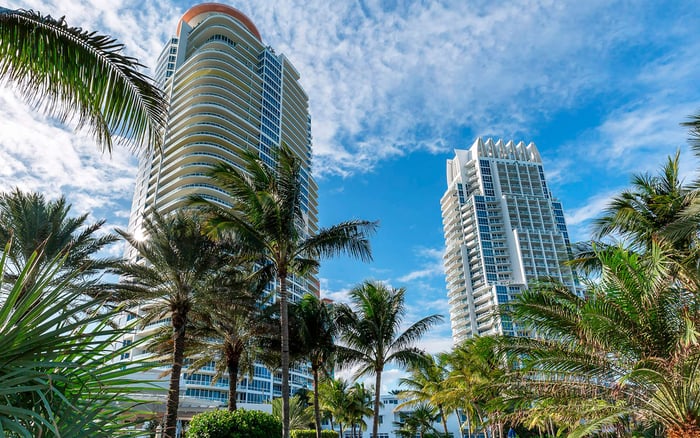
For art collectors considering Oceana Key Biscayne, the decisive questions extend beyond wall space. Service-elevator specifications, structural review and written installation approvals should shape the evaluation of a specific residence.
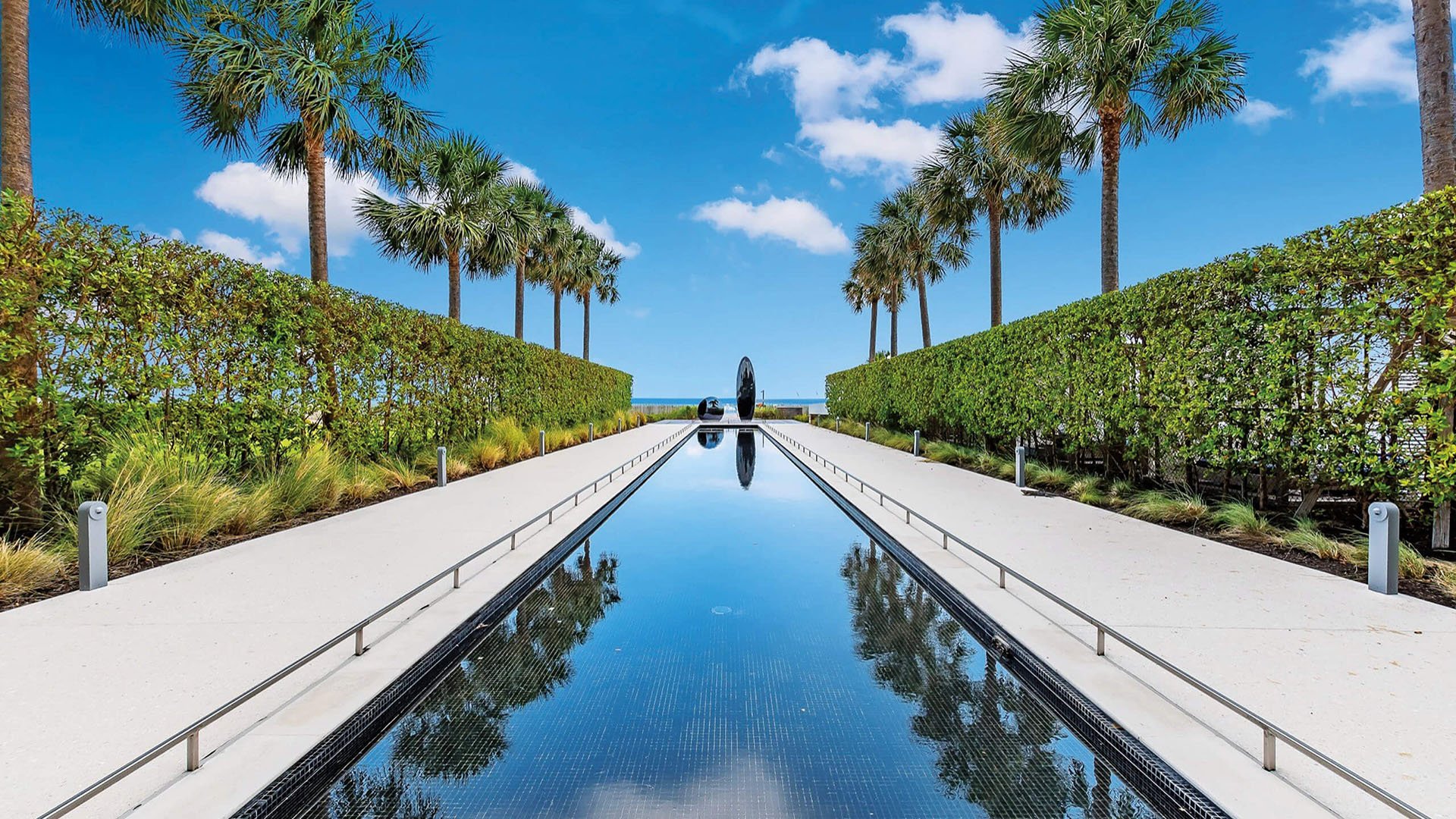
For an art collector, a residence must do more than provide a beautiful setting. It must accommodate the journey from delivery vehicle to display position, support the intended installation and permit the work needed to place it. At Oceana Key Biscayne, those practical questions deserve attention alongside the architecture.
The property comprises North and South towers plus villas, with residence-specific floor plans. Advertised homes range from approximately two to five bedrooms and 1,750 to 7,500 square feet. That breadth makes a building-wide judgment about collection suitability unhelpful. Buyers should evaluate the exact residence against the dimensions, weight and display requirements of their most demanding works.
The essential distinction is simple: a service elevator is advertised, but its freight capability for a particular artwork is not established. Likewise, generous interiors and oversized balconies do not establish structural suitability for heavy sculpture. Each question calls for written confirmation, measurement and professional review before a purchase decision depends on the answer.
Private unit elevators and private lobbies are advertised features, distinct from the separately advertised service elevator. For collectors, an elegant residential arrival should not be mistaken for an approved art-delivery route.
The service elevator's cab dimensions, clear door opening and rated capacity remain unconfirmed, as does whether art deliveries must use it. Ask management to identify the permitted route for the particular residence and provide the relevant elevator specifications in writing.
Then have an art-handling specialist assess the complete route. The review should consider the packed work, not merely the artwork's uncrated dimensions, and account for handling equipment and personnel when evaluating elevator capacity. A crate that fits inside a cab must still pass through its opening and negotiate every approach.
Request measurements from the delivery point through doors, corridors, turns and thresholds to the final room. Treat any proposed unpacking outside the residence as a separate question requiring management permission and the handler's judgment. Do not build a purchase plan around an unconfirmed workaround.
Square footage describes area, not a floor's suitability for a particular sculpture. Numerical residential floor-load and balcony-load ratings remain unconfirmed. Buyers should not substitute spaciousness for structural documentation.
For heavy sculpture, dense art storage or substantial bases, obtain the relevant structural information and commission an engineer's assessment of the proposed arrangement. Provide the work's documented weight, base dimensions, support configuration and intended location. Ask the engineer to evaluate the complete installation, including its pedestal or supporting assembly, rather than the artwork alone.
The delivery sequence belongs in this discussion too. Ask whether the proposed route, temporary staging position and handling arrangement need review alongside the final display location. The objective is not a generic assurance that the building is substantial, but a documented answer for a defined work in a defined position.
If Oceana Bal Harbour is also on the shortlist, commission the same property-specific review there. Shared naming should never substitute for separate elevator, structural and association documentation.
Oceana Key Biscayne's open-plan interiors and floor-to-ceiling windows offer a distinctive residential setting. For a collector, however, the relevant measurement is not simply the breadth of a living room. It is the usable wall area and the circulation space remaining once art, furniture and lighting are considered together.
Use the specific floor plan to map the collection. Layouts include four-bedroom residences, but neither bedroom count nor a marketing photograph establishes whether a particular canvas has an appropriate uninterrupted wall. Verify dimensions on site and identify potential conflicts with doors, glazing and circulation.
High-impact windows are listed, but that designation does not establish museum-grade UV protection. Before placing sensitive works near glazing, ask a conservation professional to assess exposure and advise on suitable placement or protective measures. Do not assume art-specific climate control or storage services are included.
For buyers also considering Faena House Miami Beach, the same collection-led test applies: compare actual display positions and documented access rather than relying on the residence's overall visual impression.
Oversized balconies are advertised at Oceana Key Biscayne. Their dimensions establish neither permission nor capacity for heavy outdoor sculpture.
Treat a proposed terrace work as a distinct installation. Request structural review of the specific location and written guidance on whether the association permits the proposed placement and attachment method. Where a work would involve anchoring or other alterations, ask what drawings and approvals are required before authorizing fabrication.
Apply the same discipline to the delivery plan. Confirm how the piece would reach the terrace and whether that route is permitted. A compelling outdoor composition should remain provisional until access, engineering and installation permission align.
Oceana-specific delivery hours, elevator reservations, deposits, vendor insurance requirements and drilling restrictions remain unconfirmed. A 24-hour concierge is advertised, but concierge availability does not establish art-handling services or permission to undertake an installation.
Request current association rules and a written explanation of the approval process. Ask whether the proposed work requires submissions covering attachments, electrical changes, protective measures or contractor activity. Confirm who can authorize the work and what documentation constitutes approval. These are questions to resolve, not assumed requirements at Oceana.
A local comparison illustrates why this matters. Bahia Mar of Key Biscayne requires 24-hour notice for moving furniture or household effects, professional movers for items too large for easy carriage, and protected-elevator use. Moves are limited to weekdays from 9:00 a.m. to 5:00 p.m., with owners responsible for move-related damage. Those are Bahia Mar's rules, not Oceana's; they must not be transferred between properties.
Before committing to a residence around a major work, assemble one coordinated package: the unit plan, artwork and crate dimensions, documented weights, delivery-route measurements, elevator specifications, structural assessment and written installation permissions. Give management, the art handler and the relevant design professionals the same information.
Keep three conclusions separate: the work can reach the residence, the proposed location can support it, and the installation is permitted. None automatically establishes the others. Where an answer remains unresolved, keep the placement provisional rather than treating it as a settled feature of the purchase.
The strongest choice is a residence where the collection's practical requirements and the owner's aesthetic ambitions can coexist without relying on assumptions.
For a discreet, collection-led approach to South Florida residential decisions, connect with MILLION.
If branded residences are on your mind — as a home or as an allocation — we would be glad to share what we are seeing, privately.
Begin a quiet conversationA separate service elevator is advertised, but its suitability for oversized art crates is not established. Confirm cab dimensions, door openings, rated capacity and permitted use with management.
Private unit elevators and private lobbies are advertised, but permission to use them for art deliveries is not established. Request written confirmation of the approved route.
Ask the handler to assess the complete route, including elevator openings, corridors, turns and the final room. The assessment should use packed dimensions and account for equipment and personnel.
The available marketing materials do not establish numerical residential floor-load ratings. Obtain structural documentation and an engineer's assessment for heavy sculpture or dense storage.
Oversized balconies are advertised, but suitability for heavy sculpture is not established. Obtain location-specific structural review and written installation permission before proceeding.
The high-impact designation does not establish museum-grade UV protection. Ask a conservation professional to assess exposure before placing sensitive works near glazing.
A 24-hour concierge is advertised, but art-handling services and installation permissions are not established by that amenity. Confirm both separately.
Request current association rules and ask about delivery hours, reservations, deposits, vendor insurance and alteration approvals. Oceana-specific requirements for these matters remain unconfirmed.
No. Bahia Mar's rules illustrate possible local management controls, but they do not establish Oceana's delivery hours, notice requirements or owner obligations.
Evaluate each specific floor plan against the collection's dimensions, weights, usable wall needs and circulation requirements. Confirm access, structural suitability and installation permission as separate conditions.