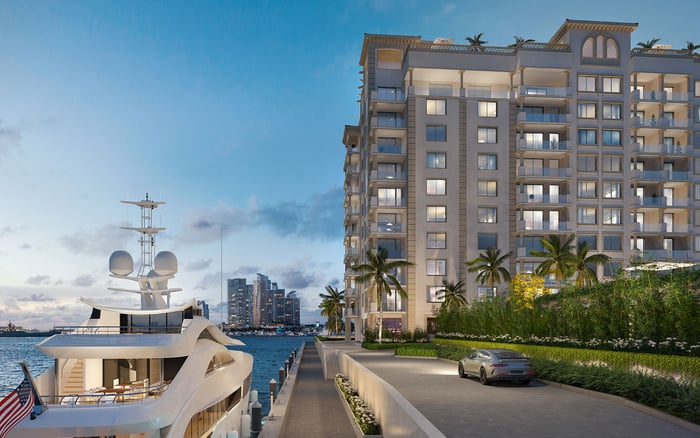
For luxury condominium buyers, a private elevator is only one link in a larger security chain. The meaningful test begins at curb arrival and follows every credential, person, vehicle, and exception through the residence door.
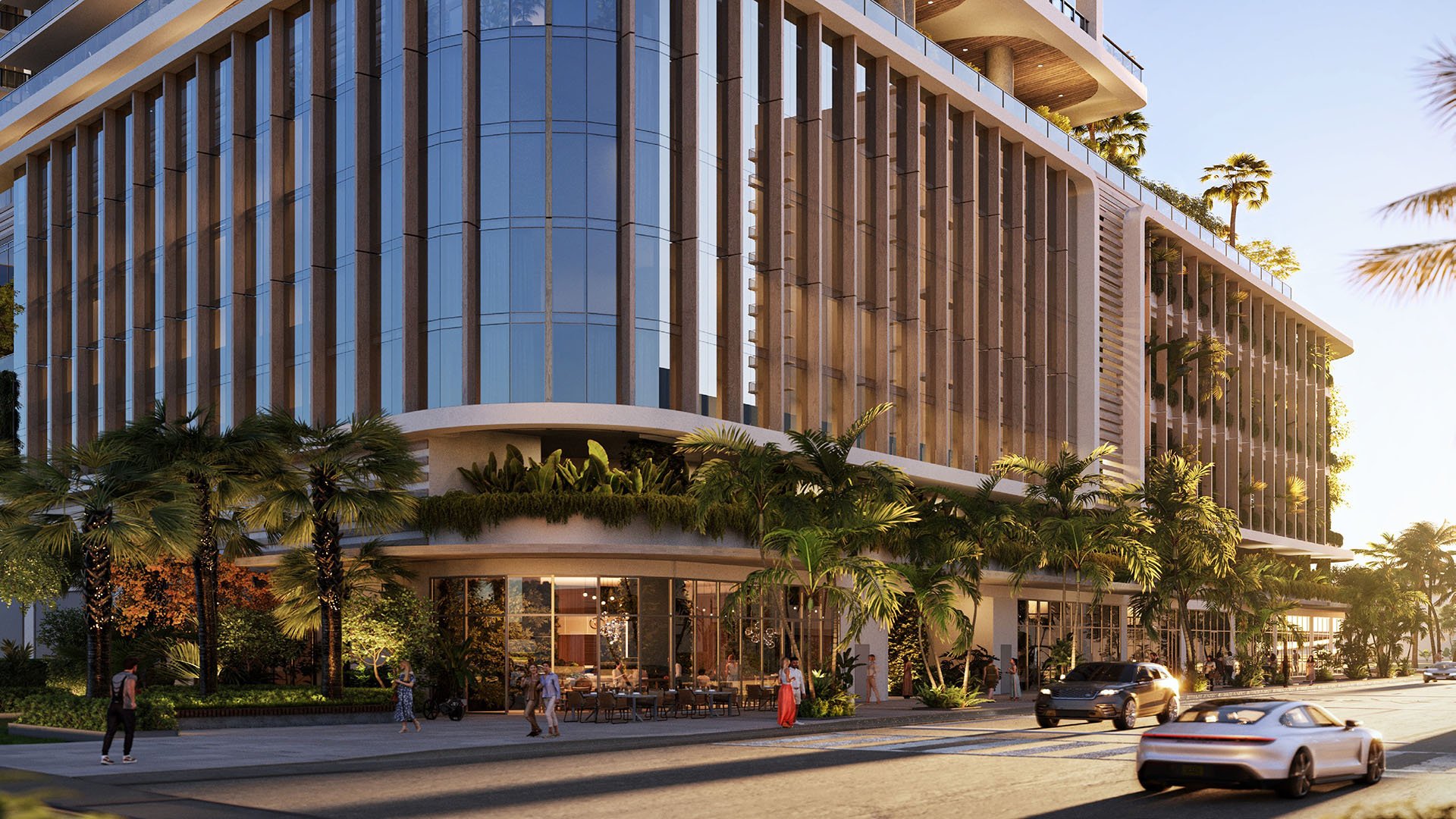
For buyers considering Miami Tropic Residences, security should be evaluated as an uninterrupted sequence rather than a collection of impressive amenities. The decisive question is whether access remains controlled from the moment a vehicle reaches the property until the resident enters the home.
That sequence may include the curb, porte cochère, valet podium, garage gate, pedestrian entrance, lobby desk, elevator call panel, destination controls, private foyer, service circulation, and residence door. A weakness at any point can diminish the value of every layer that follows. A private elevator, for example, offers limited protection if an unauthorized person can enter the lobby, activate the cab, or approach residential floors through an uncontrolled garage route.
The supplied information does not establish project-specific staffing, vehicle screening, surveillance, credentialing, or service protocols at Miami Tropic Residences. Buyers should therefore subject every security representation to document review, management interviews, floor-plan analysis, and an on-site test.
Vehicle arrival is often designed to feel effortless in luxury buildings. Discretion, however, depends on what happens behind that polished choreography. Buyers should ask who controls garage entry, whether every vehicle is identified, how resident credentials differ from visitor permissions, and where ride-share drivers, deliveries, contractors, and household employees may wait.
Valet operations deserve particular scrutiny. Determine whether valet personnel can issue access credentials, open secured doors, enter passenger elevators, or reach residential floors. Convenience should never create an informal bypass around the building’s formal controls. The same inquiry applies to pedestrian entries from a garage, loading area, pool deck, or waterfront promenade.
Miami-area benchmarks illustrate why arrival and vertical movement should be considered together. One Ocean combines 24-hour security, private elevators, and a robotic garage. Porsche Design Tower pairs 24-hour security and direct-to-residence private elevators with a car elevator that allows parking near the home. Such systems may reduce exposure to public corridors, but buyers must still examine credentialing, emergency egress, and operations during power or mechanical failures.
The phrase can describe materially different conditions: a cab that opens directly into a residence, a programmed landing serving a single unit, or a limited shared foyer serving more than one home. Each arrangement changes the number of potential encounters and the location of the final secured threshold.
Continuum North Tower has programmed elevators opening into private or semi-private foyers, while Portofino Tower has semi-private elevator foyers. The Bath Club includes both private and semi-private elevator arrangements. These distinctions make the unit-specific floor plan more consequential than a building-level amenity description.
Buyers comparing Miami Beach options such as Continuum on South Beach and Apogee South Beach should request a demonstration using the exact route and elevator bank associated with the residence under consideration. Ask where the cab opens, what separates the foyer from the home, and whether another residence, service door, or stairwell connects to the landing.
A strong access system answers four questions clearly: who can call an elevator, which floors each credential can reach, when temporary permissions expire, and whether every exception is logged. Residents, guests, vendors, contractors, household staff, deliveries, and emergency responders may require different routes and levels of authorization.
Glass at 120 Ocean Drive illustrates a technology-led approach, with fingerprint access for elevators and common areas, direct-to-unit private elevators, and 24-hour security. Biometrics can strengthen credential control, but technology does not eliminate the need for carefully governed guest admission, staff turnover, deliveries, and emergency access.
Lobby and concierge personnel should admit only authorized people before they can reach residential elevators. Buyers should ask how identity is confirmed, who approves an unexpected guest, whether remote authorizations are retained, and what happens when a credential is lost or a household employee is dismissed. In Brickell or Sunny Isles Beach, the same principles apply regardless of building scale. A comparison visit to Bentley Residences Sunny Isles can help a buyer formulate questions about the relationship between vehicle arrival and residential access without assuming that another project uses identical systems.
Security should function elegantly in daily life and predictably under strain. Buyers should walk the route from each arrival point, including the primary entrance, garage, valet area, and service access. They should also ask how food deliveries, luggage, maintenance teams, private chefs, caregivers, and event guests move through the property.
The service path matters as much as the resident path. Confirm whether residents and workers share elevators, whether service cabs can access residential floors, and how doors between back-of-house and residential areas are controlled. Review procedures for fire alarms, medical response, hurricanes, power loss, elevator shutdowns, and garage equipment failures.
For new-construction purchases, operational rules may evolve before occupancy, so buyers should seek written representations in governing materials rather than rely solely on presentation language. High floors may offer physical separation from the street, but they also increase dependence on elevators, communications, backup power, and emergency procedures.
Before committing, request the condominium documents, relevant floor plans, access policies, valet rules, service protocols, and available emergency procedures. Interview the appropriate management or sales representative, then conduct a supervised curb-to-residence test for the specific home.
The most useful review is scenario-based. Ask how a resident admits a dinner guest, how a contractor receives time-limited access, how a delivery is routed, and how permissions are revoked. Confirm who monitors the garage and whether door, lobby, and elevator events are recorded as one accountable chain. Luxury is not simply the absence of friction. It is controlled, discreet movement with clearly defined exceptions.
Why is a private elevator not enough by itself? It protects only part of the route. Lobby, garage, door, and elevator-call controls must prevent unauthorized access before the cab reaches the residence.
What should buyers inspect at curb arrival? Review vehicle identification, valet authority, pedestrian entry, visitor waiting areas, and the transition from the arrival court to secured interior space.
What does direct-to-residence elevator access mean? It generally means the elevator opens into the home rather than a common corridor, but buyers should confirm the exact threshold and floor plan.
How does a semi-private foyer differ from a private foyer? A semi-private foyer serves a limited number of residences. A private foyer is associated with one residence, although nearby service or emergency doors may still exist.
Which elevator permissions should be verified? Confirm who can call each cab, which floors each credential reaches, how temporary access expires, and whether overrides are logged.
Should household staff use resident elevators? That depends on building policy. Buyers should determine whether staff use separately controlled service routes and how their credentials are issued and revoked.
What should buyers ask about valet personnel? Ask whether valet staff can create credentials, open secured doors, enter residential elevators, or access floors beyond parking operations.
Are biometric systems automatically more secure? Biometrics can improve credential control, but guest, delivery, employee, and emergency procedures remain essential to the system.
How should emergency conditions be evaluated? Request procedures for power loss, mechanical failure, fire alarms, medical response, elevator shutdowns, and alternate egress.
What is the best final due-diligence step? Test the complete route for the specific residence and reconcile what you observe with floor plans, governing documents, and written access policies.
For a tailored shortlist and next-step guidance, connect with MILLION.
If branded residences are on your mind — as a home or as an allocation — we would be glad to share what we are seeing, privately.
Begin a quiet conversation