Fisher Island favors a controlled, low-travel model for routine wellness and concierge care, while Key Biscayne offers a broader mix of local providers and resort-based treatments. The better choice depends on whether a buyer values private-campus integration or greater flexibility, alongside careful property-level planning for accessibility and emergencies.
For buyers placing health span alongside waterfront outlooks, the comparison between Fisher Island and Key Biscayne is less about which destination has more amenities than how care, fitness, recovery and daily logistics fit together over time. One favors a private-campus rhythm with unusually strong resident-centric services. The other offers a more open island ecosystem encompassing local concierge physicians, conventional outpatient care and destination wellness.
The choice is best understood as one between integration and optionality. Fisher Island makes a stronger case for reducing routine travel through club facilities, an on-island academic health service and house-call practices. Key Biscayne provides a wider variety of independently accessed providers, with the added flexibility of a resort spa operating on a recurring daily schedule.
The decisive luxury is not simply access to care, but how little friction care adds to daily life.
Fisher Island is a 216-acre, membership-only private island. Its club environment brings together a private beach club, a nine-hole P.B. Dye golf course, 16 tennis courts, pickleball, padel, two deep-water marinas, dining, spa, salon and fitness facilities. For an owner building a consistent lifestyle around movement and recovery, that concentration is meaningful.
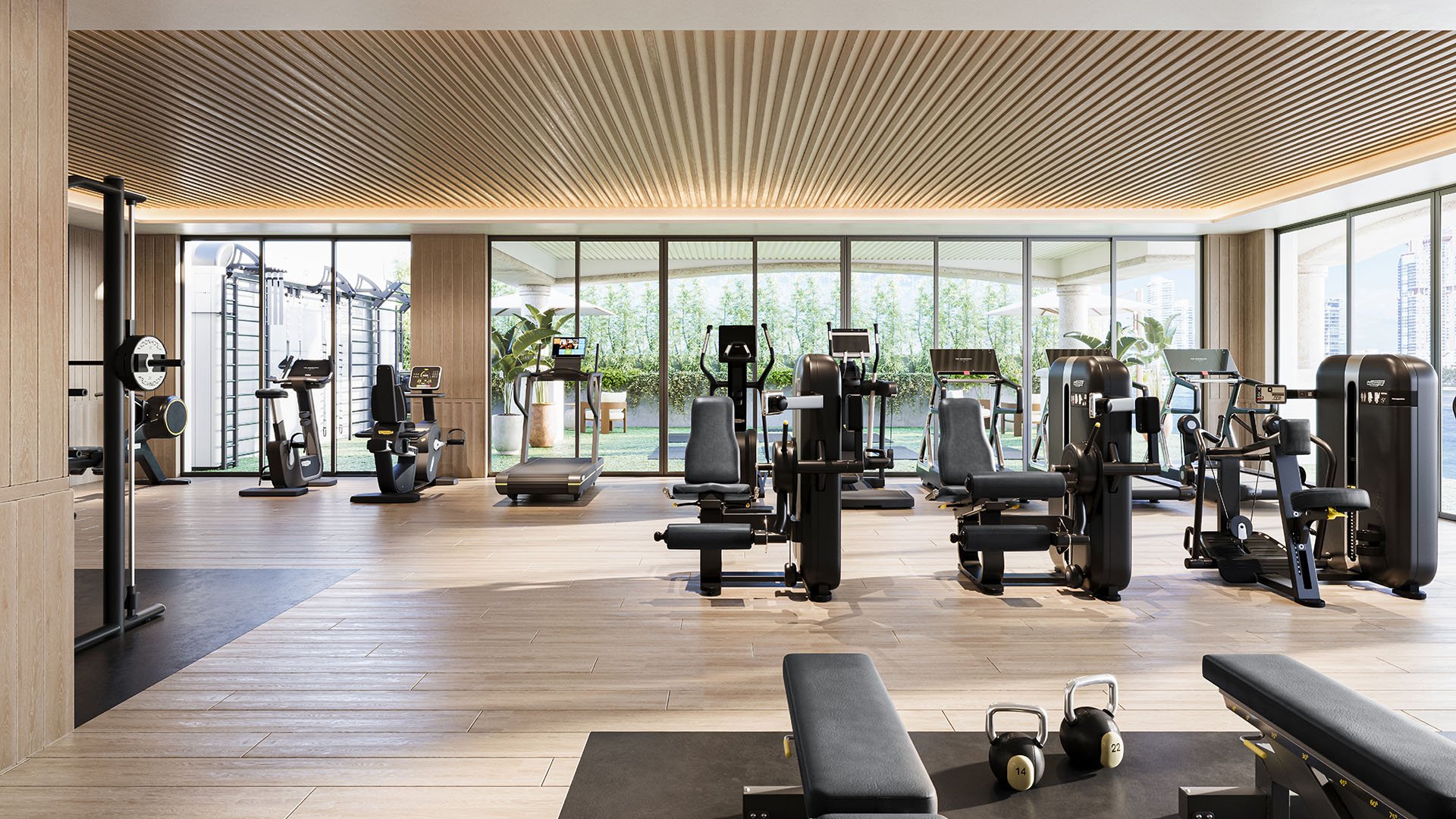
The wellness infrastructure includes a Mediterranean-style spa, Technogym equipment, group exercise, a spin studio, an indoor lap pool, aqua classes and personal training. Rather than requiring separate memberships and repeated mainland journeys, these offerings can support an integrated weekly routine, subject to club eligibility and applicable requirements.
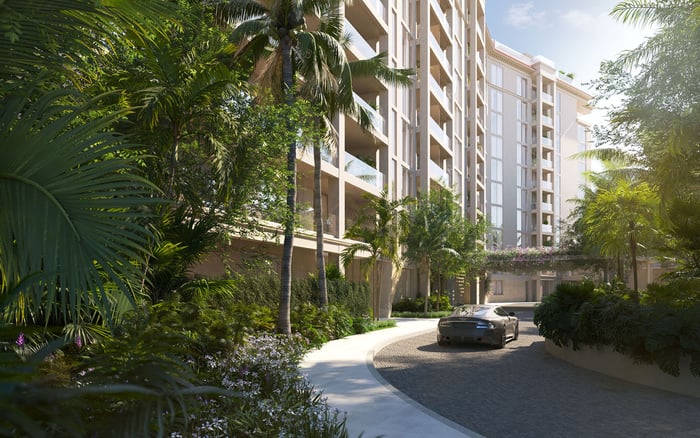
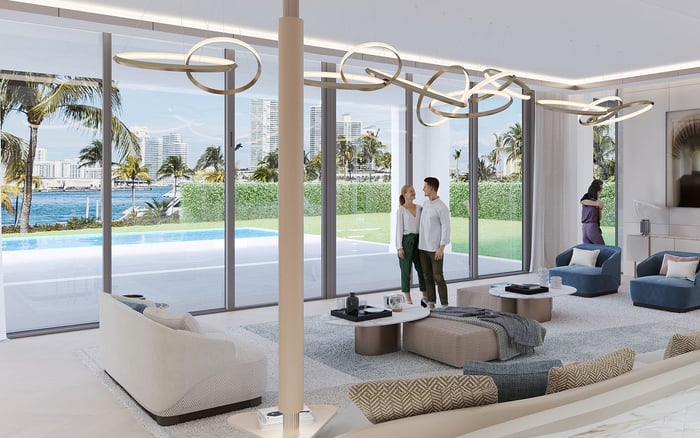
That proposition is particularly relevant at The Residences at Six Fisher Island. Plans include a private resident spa with a sauna and multiple treatment rooms, in addition to access to the club’s 24,000-square-foot spa and fitness center. Buyers should still confirm completion, operating terms and eligibility rather than treating planned features as guaranteed.
Other residential options, including The Links Estates at Fisher Island, warrant a property-by-property review. The island’s broad wellness ecosystem is valuable, but an individual home’s suitability for long-term living depends on its layout, access route, building systems and service protocols.
The island’s medical proposition extends beyond fitness. UHealth at Fisher Island is a University of Miami Health System concierge service offering primary care, immediate attention and 24/7 access to clinic professionals. Multiple private practices also provide highly personalized service for island residents.
TrufaMED offers physician house calls, yacht visits, private-ferry coordination, same-day appointments, 24/7 direct access and family care coordination. Dr. Fisher Island operates a residence-only model with same-day in-home appointments, secure video visits, no visit limits and continuous availability through the physician’s personal mobile number. Its longevity-oriented scope includes biomarker analysis, genetic risk assessment, annual full-body imaging, cardiac workups and worldwide specialist coordination.
That degree of attention carries a significant premium. Annual membership with Dr. Fisher Island begins at $100,000. Buyers should compare the scope, exclusions and continuity provisions of every medical membership, especially when a household divides its time among several residences.
The combined effect is a controlled routine-care environment where a consultation may come to the residence, while exercise, therapy and recovery remain close at hand. It does not, however, resolve every aging-in-place question. Emergency transport, hospital transfer, home-health staffing and caregiver availability require separate diligence.
Key Biscayne presents a different form of convenience. Its medical mix includes a locally based concierge practice serving South Florida, a concierge physician on Crandon Boulevard with weekday office hours and member access outside normal hours for urgent needs, and a conventional outpatient clinic elsewhere on Crandon Boulevard.
This variety can appeal to owners who prefer selecting among independent providers rather than organizing care around a private-campus model. It may also suit households with different levels of medical need, from conventional appointments to membership-based access. The trade-off is that the buyer must coordinate more of the network and assess how each provider handles after-hours needs, home visits and specialist referrals.
For purchasers considering established island residences such as Oceana Key Biscayne, the central issue is not merely proximity to a clinic. It is whether the residence, building operations and chosen care team function cohesively during ordinary weeks, seasonal occupancy and periods of reduced mobility.
The Ritz-Carlton spa at 455 Grand Bay Drive gives Key Biscayne a substantial treatment destination. It has 16 treatment rooms, including three couples’ suites, as well as a full-service salon, Spa Sanctuary, Journey Lounge and sensory spa garden with private cabanas. Programming includes ritual-led experiences associated with sound therapy and elemental healing.
Daily operating hours support recurring use without requiring a residents-only island club model. For some buyers, that openness is preferable: wellness can remain part of the routine while medical relationships are maintained separately. For others, the distinction between resort access and resident-controlled access may be material, particularly during busy periods or when predictable scheduling matters.
Fisher Island therefore has the clearer advantage for a tightly contained wellness day. Key Biscayne offers a more modular arrangement, allowing the owner to combine resort treatments, local physicians and conventional outpatient care according to preference.
Neither address should be treated as an automatic aging-in-place solution. The decisive work happens at the residence and building level. A buyer considering Palazzo della Luna, for example, should evaluate the specific home rather than infer suitability from the Fisher Island address alone.
Review step-free arrival from the vehicle or ferry connection to the residence, elevator redundancy, corridor and doorway clearances, bathroom adaptability, flooring transitions and the practicality of accommodating overnight assistance. Confirm backup-power capacity, including which elevators, climate systems and in-unit circuits remain supported. Ask how management handles wellness checks, medical visitors, deliveries and caregiver access.
Emergency planning deserves equal precision. Comparative ambulance response times and hospital transfer times are not established here. Buyers should request current protocols, identify likely transfer routes and discuss contingency plans with their own physicians. On Fisher Island, include private-ferry operations in that review. On Key Biscayne, clarify how the selected medical practice responds outside office hours and whether home visits are available.
Fisher Island is the more persuasive choice for buyers seeking privacy, resident-centered wellness and a low-travel routine supported by house calls and concentrated club infrastructure. It may be especially compelling for owners prepared to pay for premium medical memberships and comfortable with club rules, island access logistics and a gated-community environment.
Key Biscayne is better aligned with buyers who prioritize provider choice and conventional accessibility alongside concierge medicine. Its mix of local practices, an outpatient clinic and destination spa makes it easier to build a personalized network without depending on a single private campus.
The final decision should follow a coordinated review by the buyer’s physician, legal counsel, insurance advisers, accessibility specialist and property professionals. Wellness access can enhance daily life, but durable aging-in-place planning rests on verified systems, adaptable design and a realistic response plan.
For discreet guidance on selecting a South Florida residence around wellness, access and long-term priorities, connect with MILLION.
If branded residences are on your mind — as a home or as an allocation — we would be glad to share what we are seeing, privately.
Begin a quiet conversationFisher Island has the stronger documented case, combining club fitness and spa facilities with resident-focused medical services and house-call options.
Yes. UHealth at Fisher Island is described as offering primary care, immediate attention and 24/7 access to clinic professionals.
Yes. Private practices advertise same-day house calls, direct physician access and care coordination for Fisher Island residents.
Dr. Fisher Island advertises annual membership beginning at $100,000 for its one-physician, residence-only model.
Facilities include spa and fitness offerings, Technogym equipment, group exercise, a spin studio, an indoor lap pool, aqua classes and personal training.
Key Biscayne has local concierge practices, a concierge physician with after-hours member access for urgent needs and a conventional outpatient clinic.
It offers a more open arrangement that combines independent medical providers with a destination resort spa operating daily.
It has 16 treatment rooms, including three couples’ suites, plus a salon, dedicated lounges and a sensory spa garden.
Fisher Island may better minimize routine travel, while Key Biscayne offers greater provider variety. The residence’s accessibility and emergency systems remain decisive in either location.
Confirm accessibility, backup power, caregiver access, medical fees, club eligibility and emergency-transfer protocols before closing.