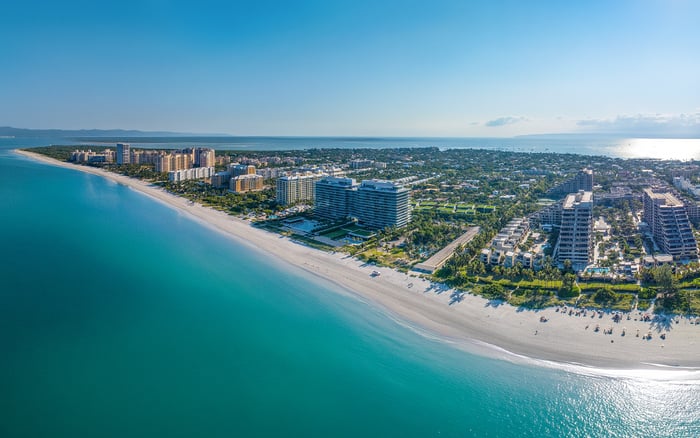
Fisher Island delivers exceptional privacy, controlled access, scarce inventory and a private-club lifestyle. Key Biscayne offers broader housing choice, municipal conveniences and a deeper resale market. The right island depends on whether seclusion or flexibility carries greater weight.
Fisher Island and Key Biscayne both offer waterfront living within Miami, yet they answer the luxury buyer’s priorities in markedly different ways. Fisher Island is defined by physical separation, controlled entry, and a resort ecosystem concentrated within a private enclave. Key Biscayne functions as a conventional island municipality, pairing beaches and parks with schools, village services, and a broader range of homes.
This edition of MILLION’s Buyer's Guides is less about declaring a universal winner than identifying the stronger structural fit. Buyers seeking the highest degree of privacy may accept a narrower market and more layered carrying costs. Those who place greater value on everyday access and future marketability may prefer Key Biscayne’s wider inventory base.
Fisher Island spans about 216 acres and contains roughly 800 residences. Separate estimates place its occupied household count near 700 and its population below 800. Although the figures measure different aspects of the community, both point to the same defining quality: remarkably low occupancy within a geographically constrained setting.
There is no conventional road connection. Access is primarily by private ferry, while club members may also have access to a private heliport. That separation creates a level of controlled arrival that a guard gate alone cannot replicate.
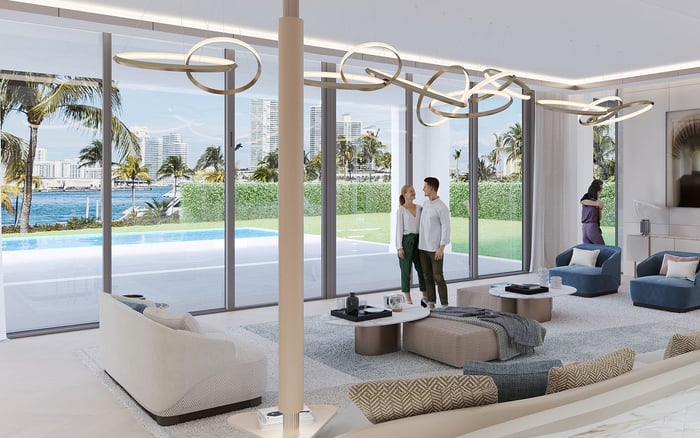
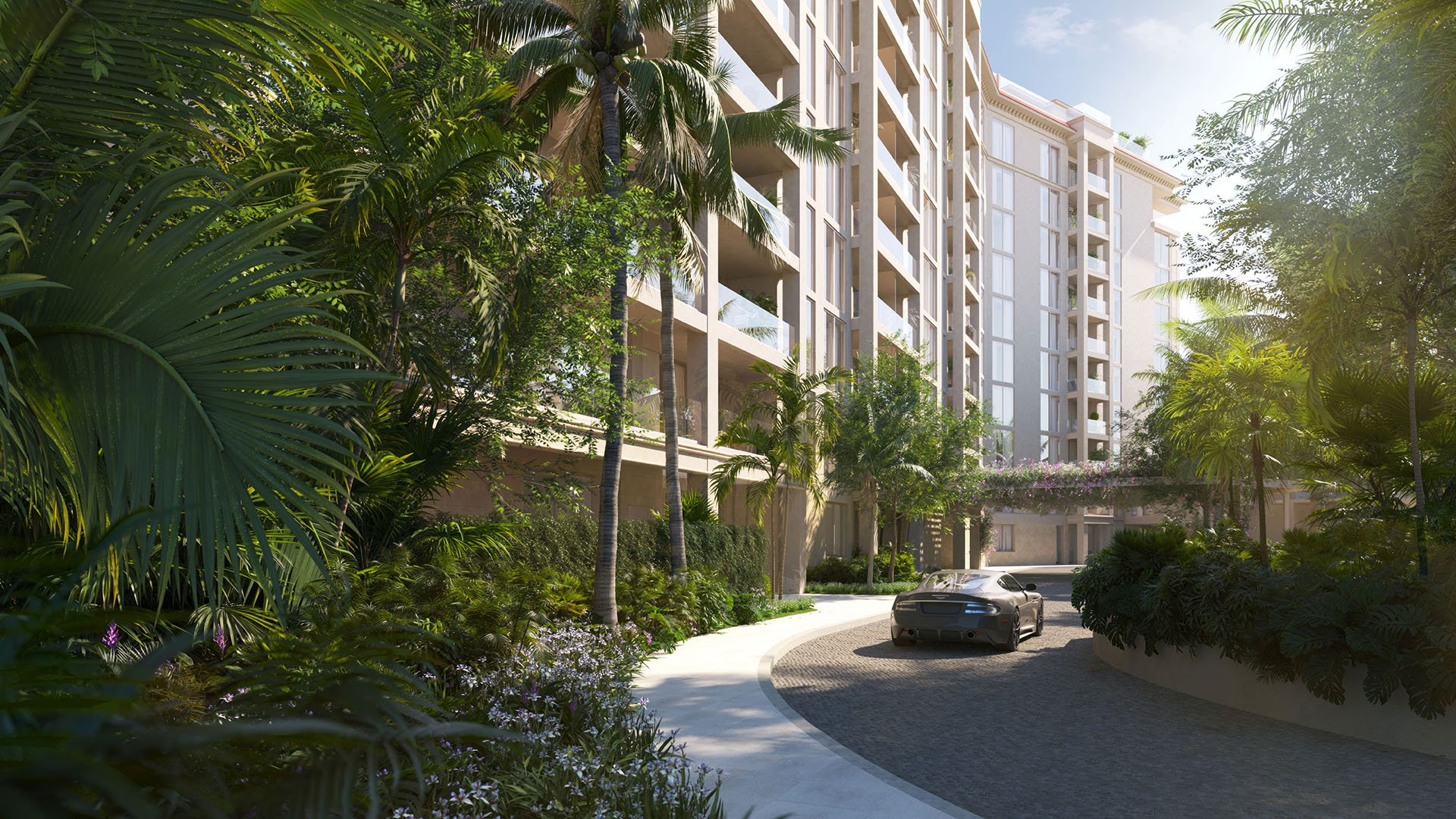
The residential experience ranges from established condominiums such as Palazzo del Sol and Palazzo della Luna to newer options such as The Residences at Six Fisher Island. Buyers considering a house rather than a condominium can also include The Links Estates at Fisher Island in a focused island tour.
Key Biscayne is low-rise and island-oriented, but neither as physically isolated nor as tightly controlled. Its greater variety of single-family homes and condominiums accommodates more household types, particularly families and year-round residents. The tradeoff is clear: more practical connectivity, but less absolute seclusion.
Fisher Island’s lifestyle proposition centers on the private club. Its amenity network includes private beaches, golf, marina facilities, spa and fitness services, pools, and dining. Racquet facilities encompass 18 Grand Slam tennis courts-an unusual depth of private sporting infrastructure. This model suits buyers who want recreation, wellness, and social life organized within one controlled environment.
That convenience carries a substantial cost. Club charges have been approximately $250,000 upfront and about $22,000 annually, separate from condominium or homeowners’ association obligations. Membership terms, current charges, and property-level assessments should be verified for each acquisition.
Key Biscayne distributes its amenities differently. Municipal parks, beaches, schools, and village services support everyday routines as well as leisure. A buyer evaluating condominiums might include Oceana Key Biscayne in a broader review that also considers single-family inventory. Here, amenity access is less about an all-encompassing private club and more about living within a complete civic environment.
Resale liquidity should not be confused with prestige. Fisher Island’s scarcity can support exceptional pricing, but its price points and ownership costs naturally narrow the audience. Housing prices have ranged from above $4 million to nearly $50 million. Average pricing has approached $2,970 per square foot, with premium residences exceeding $5,000 per square foot.
ZIP code 33109 recorded a $9.5 million median sale price in 2025 before subsequently moving to $8.3 million. The change illustrates an important principle: even a globally recognized enclave remains sensitive to property mix and the timing of a relatively small number of trades. Limited inventory can preserve rarity, but it can also reduce comparable-sale evidence and make transaction velocity less predictable.
Key Biscayne offers more observable market depth. Active listings reached about 150 by mid-2026, nearly 50 percent more than at the same point in 2025. Typical marketing time rose to roughly 100 days from about 83 days a year earlier, signaling greater buyer choice alongside slower absorption. Its mix of houses and condominiums creates more pricing reference points and more entry paths for future purchasers.
For a seller, that breadth can expand the buyer pool. It does not guarantee a quick sale, particularly when inventory is rising, but it generally provides more liquidity pathways than a small enclave serving an ultra-luxury audience.
Fisher Island is the stronger choice when privacy is the first filter, club amenities will be used frequently, and the owner is comfortable with ferry-dependent access. It also appeals to buyers who view scarcity as an essential part of the asset, even when that scarcity produces a thinner resale market.
Key Biscayne is better aligned with buyers who prioritize schools, parks, village services, and straightforward year-round routines. It may also suit owners seeking flexibility between houses and condominiums, more comparable transactions, and a broader future audience.
The decision should ultimately be tested against real weekly habits. Consider school runs, office travel, staff access, boating plans, club usage, and the likely holding period. Then compare total annual costs, membership conditions, association finances, and recent property-specific transactions. The right choice is not simply the quieter island. It is the island whose access model, amenity structure, and resale profile remain coherent throughout ownership.
Which island offers greater privacy? Fisher Island offers greater structural privacy because it has no conventional road connection and relies primarily on controlled ferry access.
Which market has lower residential density? Fisher Island’s roughly 800 residences across about 216 acres, combined with low occupancy, create the more private, low-density setting.
Which island has the deeper amenity package? Fisher Island has the more concentrated private-club offering, including beaches, golf, marina facilities, wellness services, pools, dining, and extensive tennis.
Which location is easier for everyday family life? Key Biscayne more naturally supports family routines through schools, parks, village services, and conventional road access.
Does Fisher Island’s scarcity guarantee stronger resale? No. Scarcity supports exclusivity, but high prices and ownership costs can limit the number of qualified future buyers.
Why may Key Biscayne offer better liquidity? Its broader mix of houses and condominiums creates more listings, comparable sales, and potential entry points for buyers.
Is Key Biscayne inventory moving quickly? Typical marketing time reached roughly 100 days by mid-2026, up from about 83 days a year earlier, indicating slower absorption.
Are Fisher Island club costs included in association fees? Club charges are separate from property-level condominium or homeowners’ association costs and should be confirmed before purchase.
Which island better suits a second-home buyer? Fisher Island may suit a privacy-focused resort user, while Key Biscayne may suit an owner seeking easier access and broader daily services.
What should buyers compare before making an offer? Compare access, total carrying costs, membership terms, association finances, recent comparable sales, and the likely future buyer pool.
If you'd like a private walkthrough and a curated shortlist, connect with MILLION.
If branded residences are on your mind — as a home or as an allocation — we would be glad to share what we are seeing, privately.
Begin a quiet conversation