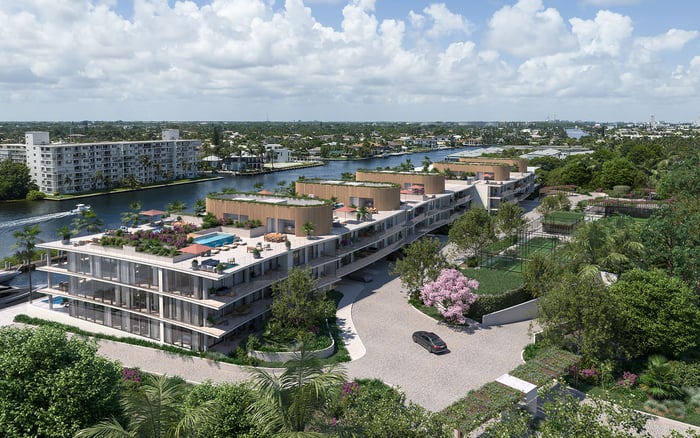
For an ultra-prime South Florida residence purchase, the financing question is not simply whether a buyer can pay cash. It is how to preserve optionality, coordinate liquidity, and prepare for contractual payment and closing obligations.

At the highest end of South Florida real estate, the ability to pay cash does not settle every financing decision. A buyer considering The Ritz-Carlton Residences® Fort Lauderdale may still want to evaluate whether capital should remain liquid, stay invested, or be supported by a lending option closer to closing.
This is not an argument for leverage. It is an argument for optionality. A buyer may ultimately close with cash and still benefit from understanding what a qualified lender could offer, which documents may be required, and when the financing choice must become firm.
Liquidity planning should begin with the signed purchase documents. Buyers can map contractual payment dates, identify the intended source of each payment, and retain sufficient capacity for closing-related obligations disclosed in those documents.
Timing also matters because personal finances, ownership structures, and broader acquisition priorities can change. Buyers comparing Four Seasons Hotel & Private Residences Fort Lauderdale and St. Regis® Residences Bahia Mar Fort Lauderdale should review the documents governing each transaction rather than assume that one project's schedule or structure applies to another.
Portfolio lending should be treated as a strategy to investigate with qualified lenders, not as a guaranteed or project-specific financing solution. Any terms, fees, collateral requirements, covenants, and underwriting standards must be confirmed directly in a written proposal.
The value of the inquiry is comparative. A private bank or lending adviser can explain how it would assess the buyer, ownership structure, collateral, and property at the relevant stage. The buyer can then compare that potential path with a cash closing in light of liquidity needs, portfolio objectives, and risk tolerance.
No assumed rate or general lending promise should replace written terms or independent legal, tax, and financial advice.
A practical approach maintains a cash track and a financing track in parallel. The cash track identifies available funds, transfer logistics, entity authority, and internal decision deadlines. The financing track identifies prospective lenders, anticipated documentation, property-review questions, and the last practical date for selecting a lender.
Neither track should rely on an estimated timeline as if it were guaranteed. Contractual notices and amendments should govern, and advisers should coordinate around the documents actually signed.
The same discipline applies when comparing another Broward County branded residence, such as The Ritz-Carlton Residences® Pompano Beach. Each acquisition requires a fresh review of its legal documents, timing, and financing feasibility.
Before approaching a lender, the buyer should confirm the legal property, seller, ownership structure, transaction type, payment schedule, and anticipated closing process. Those details should align across the purchase documents, lender file, title work, and closing instructions.
It is also important to determine whether the contemplated transaction is a developer sale, resale, or assignment. That classification can affect the documents and timing that professional advisers and lenders need to review.
Cash provides certainty only when the required capital remains available at the required time. Financing provides flexibility only when it is executable on acceptable written terms. A resilient plan therefore preserves adequate cash capacity, allows enough time to evaluate lending, and includes decision dates for reassessing the preferred path.
The final choice should reflect the signed agreement, current financial circumstances, lender requirements, and advice from the buyer's professional team.
Why should a cash-capable buyer consider financing? Reviewing financing can preserve optionality and clarify whether liquidity should remain available for other priorities.
Does speaking with a lender obligate a buyer to borrow? No. An exploratory discussion can help a buyer compare alternatives without committing to a loan.
What is portfolio lending? It generally refers to lending evaluated within a client's broader financial relationship or asset profile, but actual terms depend on the lender's written proposal.
Are portfolio-loan terms guaranteed for this purchase? No. Buyers should not assume availability, approval, pricing, or conditions without written confirmation from a qualified lender.
When should financing planning begin? Planning can begin after the transaction documents are available, with later reviews tied to contractual payment and closing milestones.
What should guide the liquidity plan? The signed purchase documents, contractual notices, and verified closing instructions should guide the plan.
Why maintain both cash and financing tracks? Parallel planning reduces dependence on a single funding path and gives the buyer time to compare executable choices.
What should be confirmed before contacting a lender? Confirm the legal property, seller, ownership structure, transaction type, payment schedule, and anticipated closing process.
Can assumptions from another branded residence be reused? No. Each South Florida transaction can have different documents, timing, and lender-review requirements.
Which professional advisers may be involved? Depending on the buyer's circumstances, the team may include legal, tax, financial, title, and lending professionals.
For a tailored shortlist and next-step guidance, connect with MILLION.
If branded residences are on your mind — as a home or as an allocation — we would be glad to share what we are seeing, privately.
Begin a quiet conversation