For an ultra-prime Sunny Isles Beach acquisition, the central financing question is not simply whether a buyer can pay cash. It is how liquidity, underwriting, appraisal timing, ownership structure, and contractual closing obligations should work together.
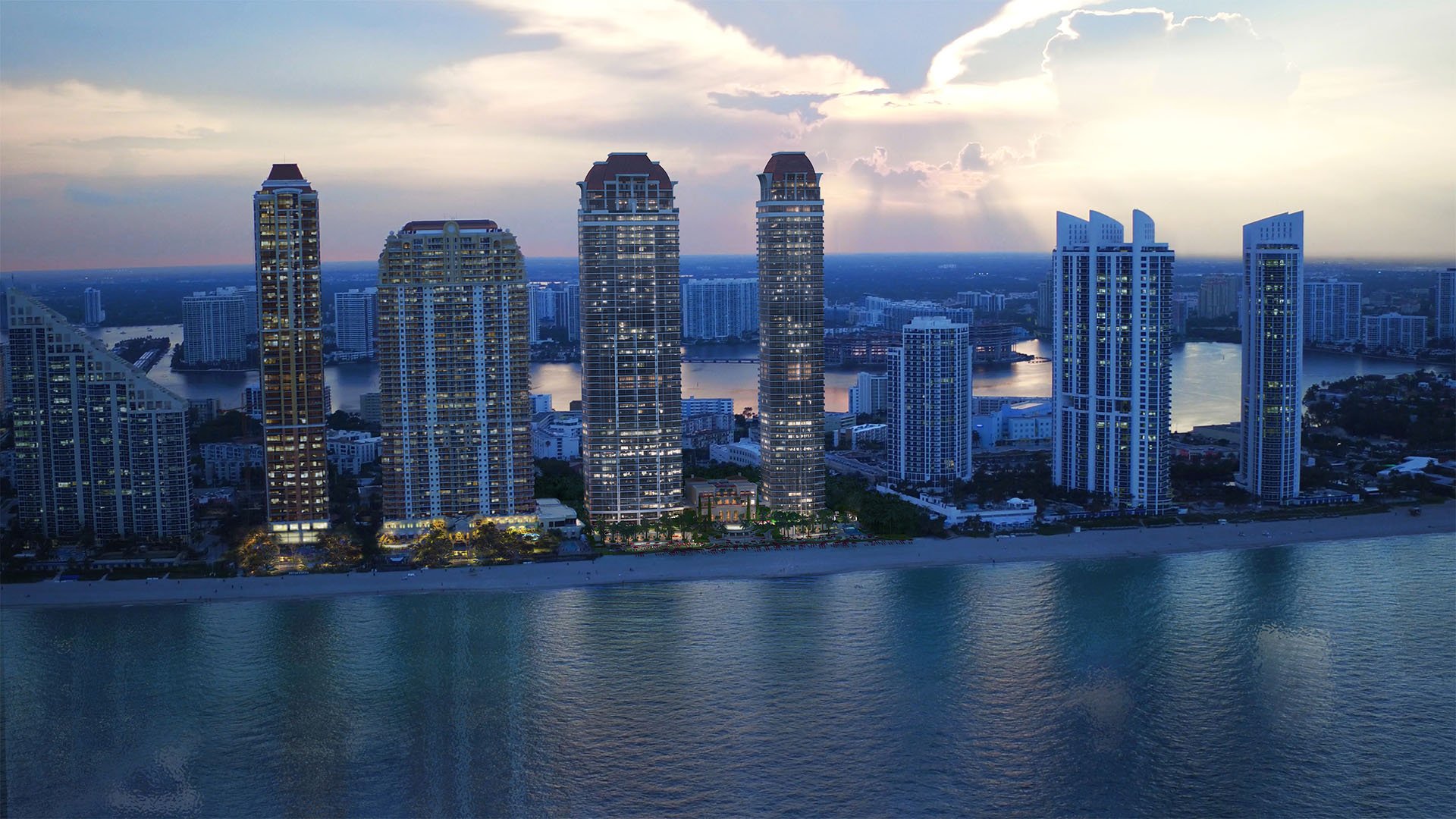
At The Estates at Acqualina Sunny Isles, the scale of the acquisition makes financing relevant even when a buyer has sufficient cash to close. The development spans two approximately 50-story oceanfront towers at 17901 and 17975 Collins Avenue in Sunny Isles Beach. Asking prices have varied widely by inventory and capture date, ranging from the mid-seven figures into the eight figures.
The sophisticated question is not merely, “Can I pay cash?” It is whether an all-cash closing represents the best use of capital. Portfolio lending may allow a buyer to preserve liquidity, avoid selling other assets at an inconvenient moment, or coordinate the residence with a broader investment strategy. Those advantages must be weighed against underwriting, appraisal, documentation, carrying costs, and execution risk.
This buyer’s guide framework is not a recommendation to borrow. It offers a disciplined way to compare certainty at closing with flexibility after closing.
The Estates at Acqualina was developed by The Trump Group with construction financing from Bank OZK. The $558 million construction loan was intended to fund development costs not already covered by presales and developer equity. The project was valued at approximately $1.5 billion when the financing was announced.
That construction facility and a purchaser’s portfolio mortgage are separate obligations. Paying cash eliminates buyer-side loan approval risk, but it did not remove exposure to project-level execution before delivery. For a current transaction, the controlling questions are different: title, condominium records, association information, insurance, the purchase contract, and the condition and status of the specific residence.
Buyers comparing nearby properties such as Bentley Residences Sunny Isles should apply the same separation of risks. Developer capital, condominium eligibility, and personal credit strategy belong in distinct analytical columns.
A portfolio loan is most useful when it serves the buyer’s balance sheet rather than merely extending purchasing power. A lender may evaluate the broader private-client relationship, assets, income, liabilities, ownership structure, and the residence itself. Requirements are lender-specific, so buyers should make no universal assumptions about loan-to-value ratios, reserves, guarantors, entity ownership, or post-closing liquidity.
The practical comparison should include two complete scenarios. The cash case should account for the capital committed at closing and any subsequent plan to refinance. The financed case should incorporate interest, fees, appraisal timing, documentation, rate-lock terms, and the possibility that lender conditions remain outstanding as closing approaches.
For buyers also considering The Ritz-Carlton Residences® Sunny Isles, a lender’s view of one condominium should not be presumed to apply to another. Every building and residence requires its own review.
Financing is as much a calendar exercise as a credit exercise. Begin by mapping the contractual deposit schedule, inspection or review periods, closing date, extension rights, and default provisions. Financing contingencies, assignment rights, entity eligibility, and closing extensions are contract-specific and should be confirmed by counsel.
The lender timeline should then be built backward from the required closing date. Allow time for personal and entity documents, condominium review, insurance materials, title work, appraisal access, valuation review, final approval, and closing logistics. Evaluate a rate lock against the actual transaction calendar, not an aspirational closing date.
Cash buyers contemplating a post-closing refinance should examine that route before acquiring the property. A later loan may require a new appraisal, fresh underwriting, lender-specific seasoning rules, or different economics. The ability to borrow later should never be treated as automatic.
Residences have been marketed from approximately 2,897 to 15,332 square feet, with three to seven bedrooms. That breadth makes unit-level analysis essential. An average asking-price benchmark-including a previously displayed figure near $2,787 per square foot-is only a preliminary reference, not a substitute for an appraisal.
A clean review package should align the executed contract, ownership name, financial statements, title materials, insurance information, current condominium documents, association records, and lender term sheet. If an entity or trust will take title, confirm its acceptability early with counsel, the title team, and the lender.
The same discipline applies when evaluating a resale at Jade Signature Sunny Isles Beach. Comparable asking prices can frame expectations, but condition, floor, views, exposure, included property, and transaction terms must be assessed for the individual residence.
Rental information has included a six-month minimum period, but buyers should verify the current restriction in the governing condominium documents before incorporating rent into any financing model. Available sale and rental counts are dynamic, and pricing can change with the inventory captured at a given moment.
A conservative ownership plan should work without relying on unverified rental income. Confirm lease restrictions, approval procedures, fees, and any other applicable conditions directly from current documents. This exercise still matters for a primary or second-home purchase because it affects future flexibility and potential marketability.
The strongest plan preserves optionality without making the closing dependent on untested assumptions. That may mean paying cash, using portfolio credit from the outset, or arranging both paths and selecting one before contractual deadlines. The appropriate structure depends on the buyer’s liquidity priorities, tax and legal advice, investment horizon, and tolerance for execution risk.
Before committing, reconcile the purchase agreement with the lender term sheet and closing calendar. Have transaction-specific legal, tax, insurance, title, and financing professionals review their respective areas. Luxury is expressed not only through the residence but through a closing designed to remain orderly under pressure.
Is a cash offer always better at The Estates at Acqualina? Cash can reduce buyer-side financing risk, but it may commit capital that a buyer prefers to keep liquid.
What is portfolio lending? It is financing retained or managed within a lender’s portfolio, with terms and underwriting specific to that institution and borrower.
Is the developer’s construction loan the buyer’s responsibility? No. The construction facility and the buyer’s mortgage are separate obligations, although project execution and transaction timing can affect a purchaser.
Should a cash buyer arrange financing before signing? Exploring both cash and financed scenarios early can be prudent, particularly when preserving liquidity is important.
Can financing terms be assumed from another Sunny Isles condominium? No. Lender review can vary by building, residence, borrower, ownership structure, and transaction.
When should the appraisal be ordered? Timing should be coordinated with the lender, access availability, contractual deadlines, and the expected closing date.
Can an LLC or trust purchase the residence? Eligibility is contract-specific and lender-specific, so the proposed ownership structure should be cleared before closing.
Can rental income support the financing plan? Only after current lease restrictions and the lender’s treatment of that income are verified; a six-month minimum has previously been displayed.
Are online asking prices enough for valuation? No. Asking prices and inventory change, while underwriting requires a unit-specific valuation and current transaction details.
What documents should control the final decision? Rely on the executed purchase agreement, current condominium documents, association records, title and insurance materials, and lender term sheet.
For a discreet conversation and a curated building-by-building shortlist, connect with MILLION.
If branded residences are on your mind — as a home or as an allocation — we would be glad to share what we are seeing, privately.
Begin a quiet conversation