A disciplined family-office framework for evaluating Apogee South Beach beyond the residence, from condominium documents and deposits to governance, reserves, inspections, and layered coastal insurance.
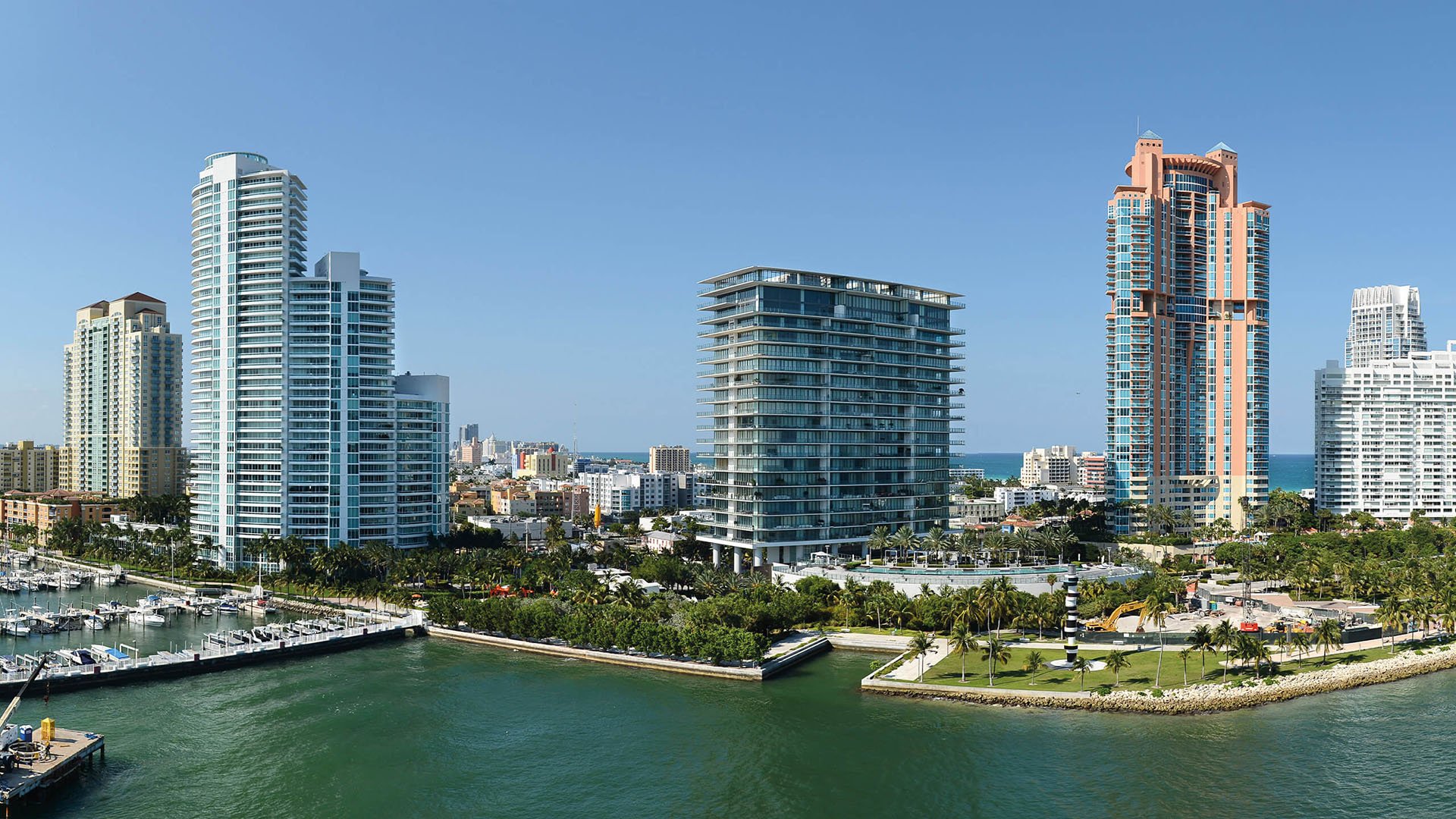
Apogee South Beach occupies a distinctive place in Miami Beach: an ultra-luxury waterfront condominium positioned as a boutique alternative to larger neighboring towers. Its expansive floor plans, privacy-oriented character, generous terraces, and broad water and city views create a compelling lifestyle proposition. For a family office, however, those attributes begin the review rather than conclude it.
Underwriting must extend beyond the residence to the association-controlled systems that support it. Common elements, operating budgets, reserves, maintenance standards, insurance programs, and capital decisions can all influence long-term carrying costs and asset quality. In a limited-inventory building, thinner transaction activity may also make pricing more residence-specific than in a mass-market condominium.
Apogee may therefore suit a mandate centered on privacy, lifestyle utility, and capital preservation more naturally than one optimized primarily for rental yield. That distinction should be agreed internally before negotiations begin because it shapes the investment committee’s view of price, liquidity, holding period, and acceptable operating volatility.
A rigorous review should assemble the declaration, bylaws, rules, current budget, historical financial statements, reserve information, board records, insurance policies, and materials concerning planned capital work. These documents should be read as a single package. A healthy operating result can be less reassuring when reserves are insufficient, while a substantial reserve balance still requires context regarding its designated uses and upcoming projects.
Board minutes warrant close attention. They can reveal how often maintenance issues recur, whether major decisions are deferred, and how owners and directors approach capital spending. Counsel should also examine voting rights, approval thresholds, use restrictions, transfer procedures, and the allocation of common expenses. The objective is not merely compliance, but a clear understanding of how control operates when a costly or time-sensitive decision arises.
For market context, a buyer may compare the ownership proposition with nearby luxury alternatives such as Continuum on South Beach and The Ritz-Carlton Residences® South Beach. Such comparisons should remain disciplined: governance, documentation, physical condition, and transaction terms matter as much as visual appeal.
The purchase deposit should never be treated as a routine administrative detail. The executed contract must identify the amount, due date, escrow holder, conditions governing release, and consequences of default. Counsel should reconcile every payment instruction with the contract and independently confirm the receiving party before funds move.
The family office should map every point at which the deposit may become nonrefundable, along with any inspection, document-review, financing, approval, or closing conditions stated in the agreement. It should also identify notice requirements, cure periods, termination rights, and available remedies. These are contract-specific questions, not assumptions to be carried over from another Florida condominium transaction.
A clear internal protocol separates commercial approval from payment execution. The acquisition principal, legal team, and treasury function should each understand what evidence is required before a deposit is released and who holds final authority.
Association governance is central because the board directs budgets, reserves, maintenance standards, and capital projects. Family-office diligence should test whether those responsibilities appear structured, documented, and consistently executed. The review should examine budget variances, collection practices, reserve funding, assessment history, vendor oversight, and the cadence of preventive maintenance.
Concentration also matters in a boutique-scale property. With fewer residences, a major expense can have a meaningful owner-level impact, depending on the governing allocation formula. The analysis should model ordinary assessments, potential special assessments, and deductible allocations across several scenarios rather than rely on a single annual carrying-cost figure.
Resale planning belongs in the same discussion. Limited inventory can support rarity, but thinner activity may yield fewer directly comparable closings and more property-specific negotiations. A valuation range should therefore reflect residence condition, views, outdoor areas, association health, and the time required to reach an appropriate buyer.
Apogee’s extensive glazing and outdoor areas make façade condition, water intrusion, wind exposure, and drainage essential inspection subjects. The residence inspection should be coordinated with a review of association responsibility because symptoms inside a unit may originate in common elements or require building-level remediation.
The physical review should also treat elevation, flood protection, and mechanical-system configuration as material resilience factors. The aim is to establish what is protected, how critical systems are arranged, which party maintains them, and what an interruption or repair could mean for occupancy. Broad coastal views are integral to the appeal, but coastal exposure demands equal precision.
The same discipline applies when comparing other Miami Beach ownership options, including Setai Residences Miami Beach. A family office should compare not only residences and service environments, but also the documentation and risk allocation underpinning each building.
Insurance analysis should proceed on two levels. First, review the association’s master coverage, deductibles, exclusions, limits, valuation basis, loss history, and renewal terms. Second, review the unit-owner policy contemplated for the specific residence, including improvements, contents, liability, loss assessment, water-related risks, temporary living costs, and any other coverage counsel and the insurance adviser consider appropriate.
The critical task is to identify gaps between the two layers. Governing documents should be checked for the allocation of deductibles, uninsured losses, and special assessments. The team should model how a significant event could affect the owner even when a master policy responds and confirm that unit-owner coverage aligns with both the documents and the residence’s finishes.
No reliable exposure figure can be established without the actual policies, endorsements, deductibles, exclusions, and claims information. Premium alone is not the measure of risk. Scope, allocation, and post-loss liquidity are equally important.
Before approval, the investment memorandum should consolidate the legal, financial, physical, governance, insurance, and liquidity findings. Open items should have named owners and deadlines. Each unresolved issue should translate into a price adjustment, contractual protection, coverage decision, capital reserve, or explicit acceptance of risk.
The most persuasive case for Apogee is not simply that it offers scale, privacy, terraces, and views. It is that those qualities can be paired with documents, governance, infrastructure, and insurance arrangements that satisfy the buyer’s standards throughout the intended holding period.
What documents should a family office request first? Begin with the declaration, bylaws, rules, budget, financial statements, reserve information, board records, insurance materials, and documentation for planned capital work.
Why are board minutes important? They can illuminate recurring maintenance issues, capital priorities, the timing of decisions, and the association’s approach to owner concerns.
How should the purchase deposit be reviewed? Confirm the amount, due date, escrow holder, release conditions, default provisions, notice requirements, cure periods, and remedies directly from the contract.
Does boutique scale change the underwriting? It can make expenses and transaction evidence more property-specific, so assessment scenarios and liquidity assumptions warrant careful modeling.
What physical areas deserve particular attention? Review glazing, façade condition, terraces, drainage, signs of water intrusion, wind exposure, and the division of repair responsibility.
Why examine elevation and mechanical configuration? Both are material to resilience, continuity of occupancy, and the potential consequences of a coastal event or system interruption.
Is the association’s master policy sufficient? Not by itself. The master policy must be reconciled with the governing documents and a unit-owner policy designed for the residence.
How should insurance deductibles be analyzed? Determine how the governing documents allocate deductibles and uninsured losses, then model the owner’s potential share across multiple loss scenarios.
What drives the resale assessment? Residence condition, views, outdoor areas, association health, limited comparable activity, and expected marketing time should inform the range.
What should happen before final approval? Legal, financial, physical, governance, insurance, and liquidity findings should be consolidated, with every open issue resolved or expressly accepted.
If you'd like a private walkthrough and a curated shortlist, connect with MILLION.
If branded residences are on your mind — as a home or as an allocation — we would be glad to share what we are seeing, privately.
Begin a quiet conversation