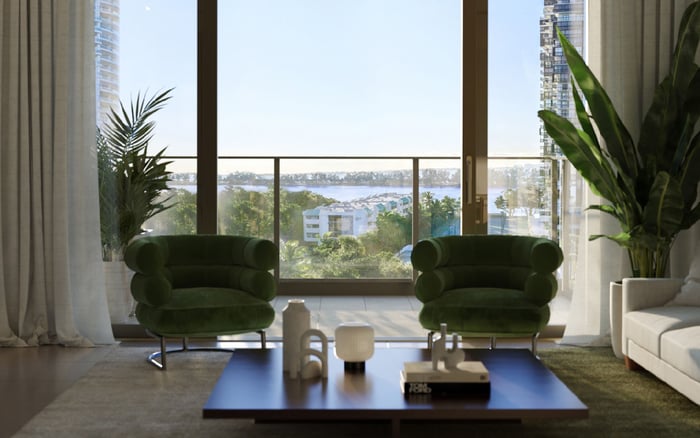
Faena’s planned Sky Bridge separates access to an elevated private club from the choice of residence floor. For buyers, that makes the higher-floor premium a question of private views, layout and privacy, rather than shared amenities alone.
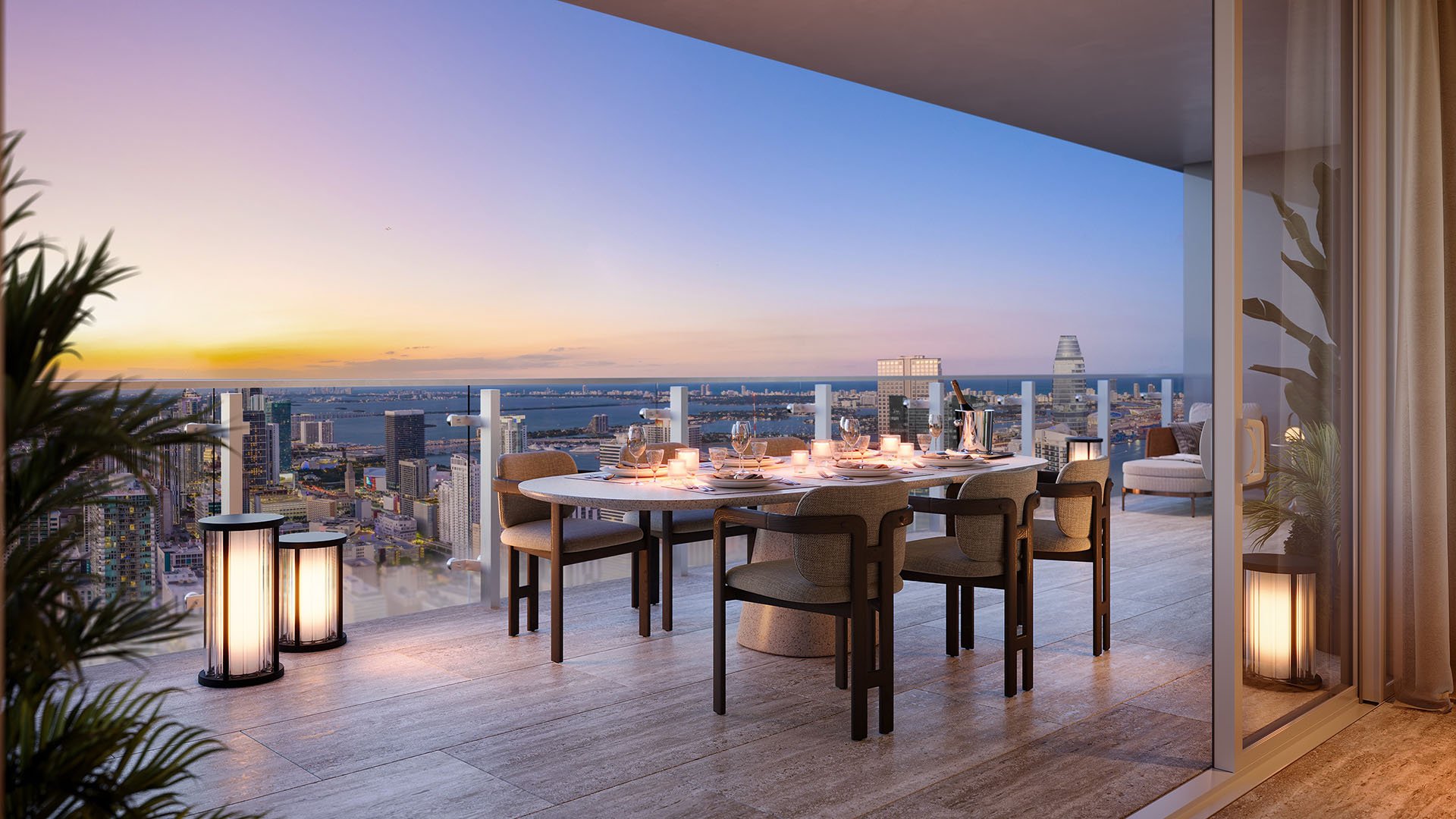
At Faena Residences Miami Downtown Miami, the most consequential elevation may not be the residence floor. The planned twin-tower condominium at 24 Southwest Fourth Street places its signature social destination high above the Miami River: a Sky Bridge connecting two 68-story towers, approximately 700 feet above the water.
For a buyer weighing a higher-floor premium, that arrangement introduces a useful distinction. An elevated club experience and an elevated private home are different purchases. If residents receive comparable club access regardless of their residence floor, a lower- or middle-floor apartment could deliver the signature amenity without the same acquisition premium.
That is a buying framework, not evidence that upper-floor prices will soften. The bridge does not diminish the value of a compelling private outlook. It asks buyers to identify precisely what the additional expenditure delivers.
The planned Faena Residences Miami Club is conceived as a residents-only social and cultural core, combining dining, wellness, entertainment, cultural programming and a rooftop pool. It is presented as a shared destination, not a privilege reserved for upper-floor owners.
The configuration warrants careful review. The club is described as spanning three levels, while its location is labeled “Floors 61-64.” Those descriptions should not be read as four identically programmed floors. Buyers should request current plans showing entrances, individual venues, circulation and the relationship between club spaces and residences.
The project is being developed by Fortune International Group and KAR Properties, with Rafael Viñoly identified with the architecture and Bryan O’Sullivan with the interiors. These credentials provide design context; the purchase documents must establish access rights, service obligations and what happens if the proposed program changes.
The clearest way to evaluate the bridge is to separate shared and private value. Shared value includes the opportunity to dine, swim, socialize or pursue wellness above the river. Private value belongs to the residence: its outlook, natural light, terrace, room proportions and degree of seclusion.
A buyer who expects to use the club frequently might reasonably favor a particularly successful floor plan over additional height. Another who spends long mornings at home, entertains privately or wants a particular outlook from the primary suite may find the higher-floor premium entirely worthwhile.
Neither preference is inherently more sophisticated. The distinction is between a panorama enjoyed during a club visit and one available from the sofa every day. They can complement one another, but they are not interchangeable.
For buyers also considering Aston Martin Residences Downtown Miami, the same discipline applies: compare the exact residence and documented amenity rights, not simply the appeal of an address.
The project’s positioning emphasizes elevated outlooks toward Biscayne Bay, the Miami River and Downtown Miami. That does not establish the view from a particular apartment. Floor number alone cannot tell a buyer what will be visible from a living room, bedroom or seated position on a terrace.
Request unit-specific view studies, orientation information and the relevant stack plans. Compare the actual view corridor, neighboring structures and the relationship between the two towers. Ask which aspects of the illustrated outlook are representations rather than contractual commitments.
Then isolate the price difference between genuinely comparable residences. Similar interior area is not enough if one home has a more usable terrace, a different exposure or a substantially better layout. A useful comparison holds those variables as consistent as possible before attributing the remaining difference to height.
A shortlist that includes Waldorf Astoria Residences Downtown Miami should receive the same unit-level scrutiny. A shared skyline experience cannot substitute for understanding the private view being purchased.
Being close to the club may sound convenient, but physical proximity does not establish faster elevator access. Request elevator zoning, transfer arrangements and the intended routes between residences and club entrances. Ask how guest movement and private events would be managed.
Nor should buyers assume that a nearby home will be noisier, quieter or less private. The relevant questions concern acoustic separation, lighting, mechanical equipment, service circulation and sightlines. These require plans and technical clarification, not conclusions drawn from a rendering.
Buyers considering bridge-facing residences should ask specifically about event activity and potential lighting spill. No particular impact is established here. The objective is to understand that relationship before paying either a height premium or a proximity premium.
Residents-only positioning is meaningful, but it is not a complete operating agreement. Confirm who qualifies for access, whether guests are permitted, how reservations work and which spaces may carry additional charges. Establish operating hours and any rights to reserve areas for private events.
The economic review should be equally specific. Examine projected assessments, staffing assumptions, maintenance obligations and reserves. Ask which club expenses are shared, whether any services require separate payment and what remedies apply if the bridge or its services are delayed or altered.
For a buyer comparing Faena with Baccarat Residences Brickell, this is a useful common standard: distinguish the lifestyle proposition from enforceable ownership rights. A compelling presentation begins that review; it does not conclude it.
Advertised starting prices around $1.3 million provide broad context, not a current quotation for a particular residence. No verified floor-by-floor price curve, resale premium or assessment schedule establishes what the Sky Bridge should be worth to an individual buyer.
Request current availability and compare the total acquisition and projected ownership costs of the homes under consideration. Do not assume the bridge will raise resale values or reduce upper-floor premiums. Neither outcome is demonstrated.
The strongest decision is therefore personal and grounded in the documents. Buy higher when the residence itself offers a meaningful improvement in view, privacy, layout or daily enjoyment. Choose a lower or middle floor when its private qualities satisfy your needs and the confirmed club rights deliver the elevated shared experience you want.
For a discreet assessment of residence-level trade-offs across South Florida, connect with MILLION.
If branded residences are on your mind — as a home or as an allocation — we would be glad to share what we are seeing, privately.
Begin a quiet conversationThe twin-tower condominium is planned at 24 Southwest Fourth Street on the Miami River in Downtown Miami.
The planned bridge connects two 68-story towers approximately 700 feet above the Miami River.
The club is described as spanning three levels, with its location labeled Floors 61–64. Buyers should confirm the precise configuration in current plans.
It is planned as a shared residents-only destination, not specifically for upper-floor owners. Exact access rights require confirmation in purchase documents.
The planned program includes dining, culture, wellness, entertainment and a rooftop pool.
Potentially, if its private qualities meet the buyer’s needs and comparable club access is confirmed. No verified pricing curve establishes a universal advantage.
Floor number alone does not establish the outlook. Buyers should examine unit-specific orientation, view corridors, stack plans and terrace sightlines.
Proximity does not establish faster access. Elevator zoning, transfers and entrance arrangements need to be reviewed.
Confirm assessments, additional charges, guest policies, reservations, operating hours and private-event rights. Review maintenance obligations and remedies for delayed or changed services.
No demonstrated resale premium is established by the available facts. Evaluate the purchase on the residence’s qualities, documented rights and ownership costs.