A disciplined exit plan at 2000 Ocean begins with residence-specific pricing, verified leasing rules, carrying-cost awareness, and a realistic view of the luxury buyer pool.

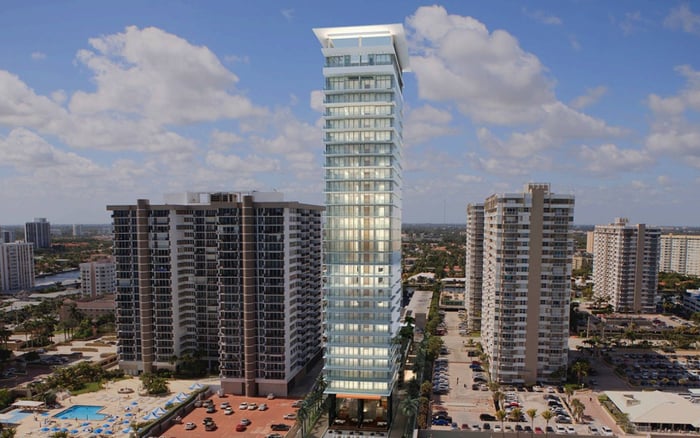
At 2000 Ocean Hallandale Beach, scarcity is meaningful, but it should not be mistaken for instant liquidity. The boutique oceanfront condominium stands at 2000 South Ocean Drive in Hallandale Beach, immediately north of Golden Beach. Its 38-story glass tower contains just 64 beachfront residences-a limited base that supports distinction while creating an uneven resale market.
The critical point for owners is that no building-wide average can fully price an individual home. The three- to five-bedroom residences include half-floor and full-floor configurations, while the penthouses occupy a separate tier. Floor, line, exposure, view, layout, terrace utility, interior condition, parking, and furnishing strategy can all shape a buyer’s perception of value.
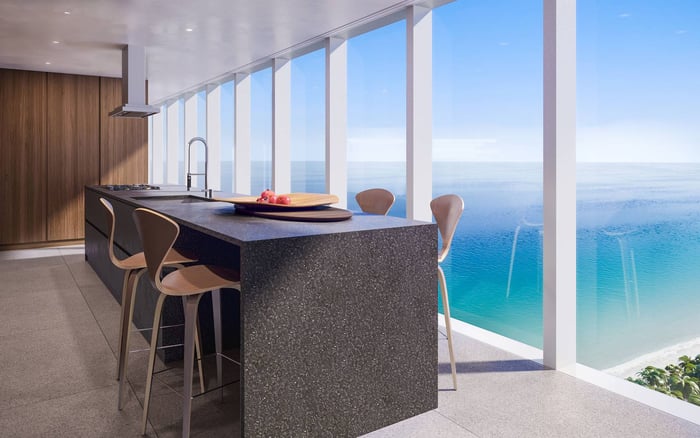
A representative HR 1 half-floor plan illustrates that specificity. It comprises 2,913 interior square feet, 475 exterior square feet, and 3,388 total square feet, with a private elevator landing, east and west terraces, a flow-through plan, and two parking spaces. Those features speak to privacy and livability, not merely price per square foot.
Available inventory has shown broad price dispersion. The average asking price was $3,735,583, or $1,235 per square foot, while individual offerings ranged from the $4.35 million Unit 30B to the $8.5 million PH1. The HR 1 offering was priced at $3.125 million, approximately $1,073 per interior square foot.
That spread is not noise. It reflects materially different residence types and buyer profiles. A penthouse should not serve as the primary benchmark for a half-floor home, and a highly elevated residence should not automatically define value for a lower floor. Sellers considering resale should build a competitive set around genuinely comparable lines, proportions, exposures, and finishes.
Price adjustments also warrant attention. Unit 30B was offered at $4.35 million, roughly $1,707 per square foot, following a 5.3 percent reduction. Unit 12A, a three-bedroom home spanning 2,530 square feet, was offered at $2.975 million after a $125,000 cut. These are asking-price snapshots rather than closed-sale evidence, yet they demonstrate that rarity does not eliminate price sensitivity.
A rational resale window opens when three conditions align: the home is presented at its strongest, competing supply is manageable, and the asking price reaches the qualified audience without requiring an extended period of correction. Owners should monitor current listings and recent transactions rather than rely on stale averages.
Exit planning is also a holding-period calculation. Unit 12A carried a monthly HOA charge of $4,760. That figure is specific to the listing and should not be generalized across every residence, but it demonstrates why monthly obligations matter when deciding whether to test an ambitious price.
Extended market exposure can alter a seller’s leverage. Association charges, taxes, insurance, maintenance, and residence-specific expenses continue while a property is marketed. A seller who establishes an acceptable price range and carrying-cost threshold before launch is better positioned to evaluate offers calmly.
For an investment owner, the decision may involve comparing a sale with a leasing period. For a second-home owner, personal use and seasonal priorities may carry equal weight. In either case, the exit plan should define a target result, an acceptable timing range, and predetermined review points for pricing and presentation.
Visible leasing activity confirms that rentals occur in the building. Three residences were shown for rent, with asking rents of approximately $17,000 to $24,000 per month. These figures indicate a luxury rental audience, but they neither prove unrestricted leasing nor establish achievable rent.
A minimum lease term and detailed rental restrictions were not stated in the project material reviewed. Before treating rental income as an exit bridge, an owner or buyer should obtain the current condominium declaration, rules, application procedures, approval requirements, fees, and leasing provisions. Management should confirm the operative documents and any amendments.
A rental strategy must also account for vacancy, preparation, management, wear, and the possibility that an asking rent will differ from an executed lease. Availability signals activity; it is not a substitute for legal and financial diligence.
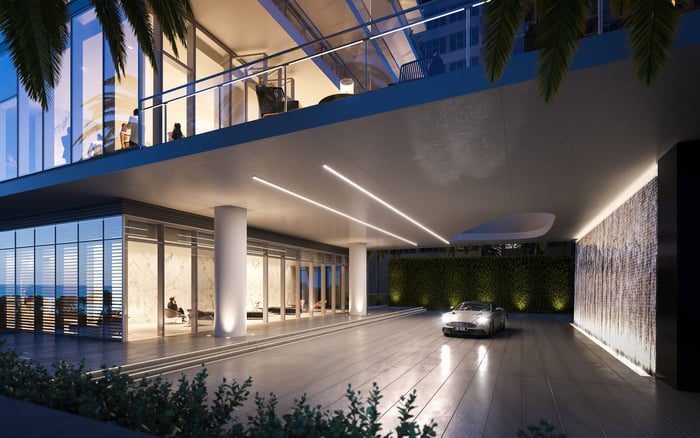
The likely audience includes affluent end users and second-home purchasers seeking privacy, generous dimensions, and direct oceanfront positioning. Private-elevator arrivals, flow-through layouts, and limited density distinguish the building from standardized, high-volume condominium inventory. That same distinction can narrow the pool because the purchase price and ongoing costs demand greater financial capacity.
Buyer depth should be considered across the broader coastline. A prospect focused on privacy and scale may also review Regalia Sunny Isles Beach, while a buyer extending the search northward could consider Auberge Beach Residences & Spa Fort Lauderdale. Within Hallandale, Shell Bay by Auberge Hallandale may enter a broader luxury search, though each property presents a different ownership proposition.
This competitive context does not reduce 2000 Ocean to a commodity. It reinforces the need to articulate what makes a particular residence singular. The strongest campaign translates architectural attributes into lived experience while remaining precise about cost, condition, and terms.
Before listing, separate penthouse, full-floor, and half-floor comparables. Review active competition, relevant closed transactions, current carrying costs, and the residence’s condition. Prepare accurate floor plans, verify parking and terrace details, and resolve presentation issues before photography and private showings.
Next, establish decision points. Set a launch price supported by the residence’s line and finish, determine when feedback will be reviewed, and decide in advance what evidence would justify an adjustment. If leasing is the alternative, verify the governing documents first and model the net outcome rather than focusing on headline rent.
The result is a more controlled exit-not a prediction of an exact absorption period, but a framework for protecting time, leverage, and value.
How many residences are at 2000 Ocean? The 38-story tower contains 64 beachfront residences.
What residence types are available? Homes range from three to five bedrooms and include half-floor and full-floor configurations.
Does limited inventory guarantee a fast sale? No. Scarcity supports differentiation, but pricing and buyer fit still determine liquidity.
Should sellers use the building average price per square foot? It can provide context, but line, floor, views, layout, and condition require separate analysis.
Have asking prices been reduced? Yes. Offerings for Units 30B and 12A showed price reductions.
Are residences at 2000 Ocean rented? Yes. Rental activity has included three offerings in separate snapshots.
Is there a confirmed minimum lease term? No minimum lease term was confirmed in the project material reviewed, so current condominium documents must be checked.
Who is the likely resale buyer? The audience is likely to include affluent end users and second-home buyers prioritizing privacy and scale.
Why do carrying costs matter to an exit? They continue during the marketing period and can affect pricing flexibility and negotiating leverage.
Can an exact resale window be predicted? No exact absorption timeline is established; current competition, pricing, and residence quality must be assessed.
For a tailored shortlist and next-step guidance, connect with MILLION.
If branded residences are on your mind — as a home or as an allocation — we would be glad to share what we are seeing, privately.
Begin a quiet conversation