The published deposit structure leaves 65% of the purchase price due at closing. For affluent buyers, the central issue is not simply whether to borrow, but how portfolio financing or a securities-backed credit line affects liquidity, execution risk, collateral exposure and the timing of available funds.

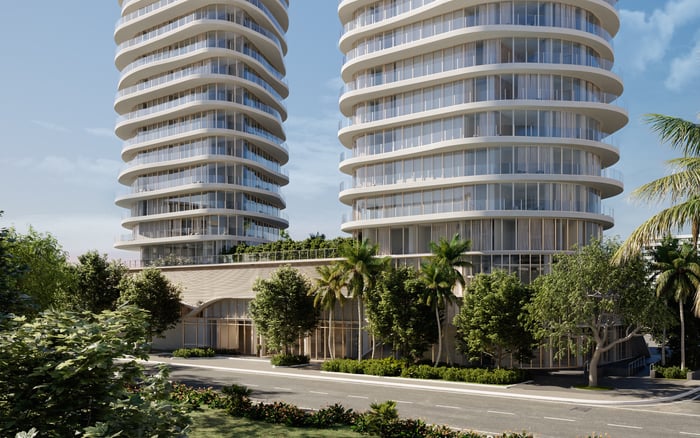
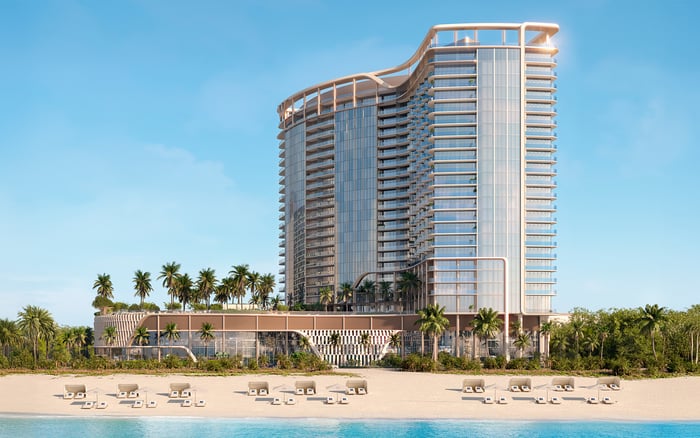
For a buyer evaluating Waldorf Astoria Residences Pompano Beach, the decisive financial moment comes at closing. The planned 28-story oceanfront condominium is being developed by Related Group and Merrimac Ventures at 1350 South Ocean Boulevard in Pompano Beach. Its separately listed sales location is 1213 South Ocean Boulevard.
The indicative payment schedule calls for 20% at contract, 10% at groundbreaking, 5% at top-off and 65% at closing. In other words, 35% is scheduled before closing, while nearly two-thirds of the purchase price remains due at the final transaction. Buyers should verify every amount, deadline and condition against their executed purchase documents, which control the transaction.
The central question is whether the buyer's capital will be available precisely when closing requires it.
This structure changes how sophisticated purchasers should compare cash, portfolio lending and securities-backed liquidity. A financing strategy may preserve invested capital or reduce the need for a concentrated sale, but it does not change the underlying obligation to produce acceptable closing funds on time.
A portfolio loan can be relevant when a lender is willing to evaluate the purchaser, the residence and the broader banking relationship under its own credit framework. For an affluent buyer with complex income, concentrated assets or multiple residences, that assessment may be more nuanced than a standardized mortgage application. Yet no project-specific portfolio-loan standards, approval conditions or funding timelines have been established for this development.
The practical benefit is optionality. Rather than reserve the entire 65% balance in cash, a purchaser may seek debt sized to personal liquidity goals and the lender's final underwriting. That can preserve cash intended for another acquisition, business need or portfolio allocation. It can also create a more deliberate balance between equity in the residence and liquid assets elsewhere.
The trade-off is execution dependency. Credit approval, condominium review, valuation, insurance requirements, documentation and funding readiness can each determine whether proceeds arrive when required. Buyers should not treat an early indication of interest as equivalent to a final, fundable commitment. A conservative plan works backward from the contractual closing process and leaves time to cure documentation issues without relying on an extension.
Buyers comparing new-construction choices along the same coastline may also consider The Ritz-Carlton Residences® Pompano Beach. The comparison should extend beyond architecture and brand to each contract's payment milestones and the lender's willingness to finance the particular property.
A securities-backed credit line, often abbreviated as SBLOC, approaches liquidity from another direction. Instead of depending solely on mortgage proceeds, the buyer seeks borrowing capacity against an eligible investment portfolio. Conceptually, this can provide funds without requiring the immediate sale of pledged securities. The relevant terms, advance rates, eligible collateral and approval conditions remain lender-specific and have not been disclosed for this project.
An SBLOC may serve as a bridge to closing, a supplemental source alongside cash or part of a broader liquidity plan. Its appeal lies in speed and flexibility when the facility is fully established in advance. Its weakness is that borrowing capacity depends on collateral and lender rules. A decline in pledged asset values, a change in eligibility or a lender requirement for additional collateral can reduce flexibility at an inconvenient time.
Accordingly, an SBLOC should not be viewed as a fixed substitute for cash unless the buyer's institution has confirmed available capacity and transfer mechanics. A prudent structure includes a collateral cushion, an alternate source of funds and clarity on how the line will ultimately be repaid. These considerations belong in the investment analysis, not as an afterthought once the closing notice arrives.
Buyers considering the city's evolving branded-residences landscape can place the Waldorf Astoria offering beside Armani Casa Residences Pompano Beach and W Pompano Beach Hotel & Residences. The financing question remains property-specific, even when the projects share an oceanfront market and a globally recognized hospitality or design identity.
The strongest plan separates the decision to borrow from the ability to close. First, the buyer should identify the contractual balance and expected closing mechanics in the executed documents. Second, the chosen lender should confirm what it needs to evaluate both the purchaser and the condominium. Third, the buyer should establish a fallback that does not depend on favorable market conditions.
For portfolio debt, that means monitoring the path from application through final approval and funding rather than focusing only on an indicative loan amount. For an SBLOC, it means measuring the requested draw against available capacity after an appropriate cushion, not against the maximum theoretical line. For a blended approach, it means ensuring that each source can arrive in the form and sequence the closing agent requires.
The analysis should also account for costs beyond the stated residence price. Prices can change without notice and exclude optional features, design packages, furniture packages and premiums for upgraded units. Those choices may increase the buyer's total cash requirement even if the contractual percentage schedule remains unchanged. Financing should therefore be sized to the complete acquisition plan rather than an early headline price.
A lower-density alternative such as Ocean 580 Pompano Beach may lead a purchaser to a different design or ownership decision, but it should still be evaluated through the same liquidity lens: deposits already committed, balance due, additional selections and dependable funds at closing.
The development has secured a $160 million construction loan from Bank OZK to support vertical construction. That facility belongs to the project's capital structure. It should not be interpreted as purchaser mortgage availability, an endorsement of any buyer's credit strategy or evidence that a portfolio loan or SBLOC will be accommodated at closing.
This distinction matters because construction progress and purchaser financing follow separate tracks. A well-capitalized buyer can appreciate the significance of developer financing while still conducting independent credit planning. The buyer's obligation remains unchanged: deliver the scheduled closing funds under the governing documents, regardless of how personal liquidity is arranged.
At Waldorf Astoria Residences Pompano Beach, financing is less about maximizing leverage than controlling timing and optionality. A portfolio loan may align the residence with a broader private-banking strategy. An SBLOC may avoid an untimely securities sale or provide temporary liquidity. Cash offers certainty but concentrates capital in the transaction. Each path carries a different mix of underwriting, collateral, market and execution considerations.
For the ultra-premium buyer, the elegant solution is usually the one with the fewest unresolved dependencies as closing approaches. Confirm the controlling schedule, secure credit well ahead of need, preserve excess liquidity and maintain an alternate funding route. That discipline allows the residence decision to remain architectural and lifestyle-led without turning a 65% closing obligation into a last-minute portfolio event.
For confidential guidance on evaluating the residence and coordinating a purchase strategy, connect with MILLION.
If branded residences are on your mind — as a home or as an allocation — we would be glad to share what we are seeing, privately.
Begin a quiet conversationThe indicative schedule is 20% at contract, 10% at groundbreaking, 5% at top-off and 65% at closing. Executed purchase documents control the actual amounts and deadlines.
The published installments total 35% before closing, leaving 65% due at closing.
It may reduce the cash committed at closing and preserve liquidity elsewhere, subject to the lender's final underwriting, property review and funding requirements.
No project-specific underwriting standards, approval conditions or funding timelines have been established for the development.
An SBLOC may provide bridge or supplemental liquidity against eligible pledged securities. Capacity and terms depend on the buyer's lender and collateral.
Available borrowing capacity can be affected by collateral values, eligibility rules and lender requirements, so a cushion and alternate funding source are prudent.
No. The $160 million Bank OZK construction loan supports the development's vertical construction and should not be presented as purchaser mortgage availability.
Yes. Published prices may change without notice and exclude optional features, design packages, furniture packages and upgraded-unit premiums.
The planned residence is at 1350 South Ocean Boulevard in Pompano Beach.
The buyer should verify contractual deadlines, final credit approval, property review, available borrowing capacity, transfer mechanics and a dependable backup source of funds.