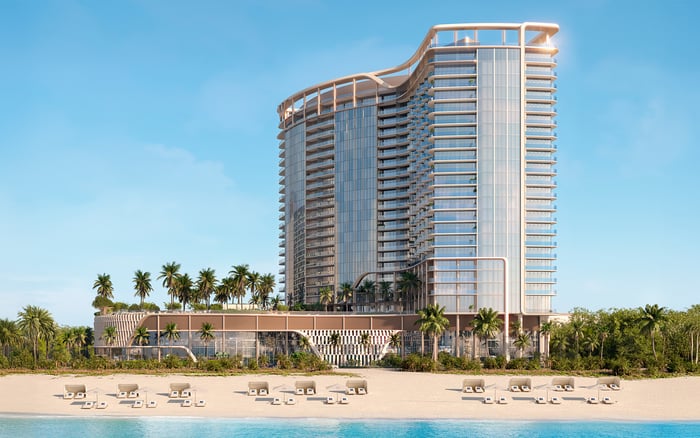
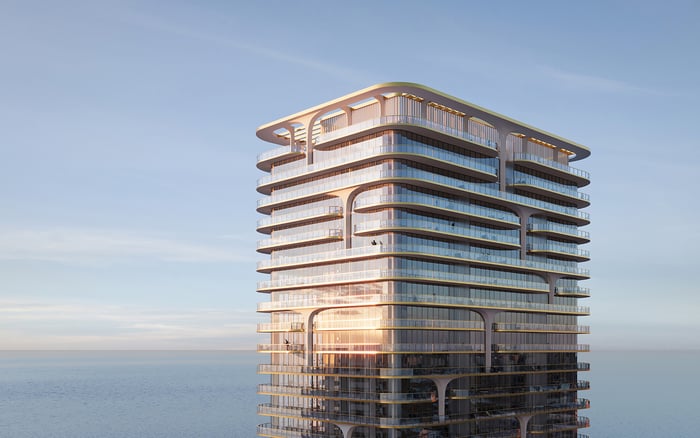
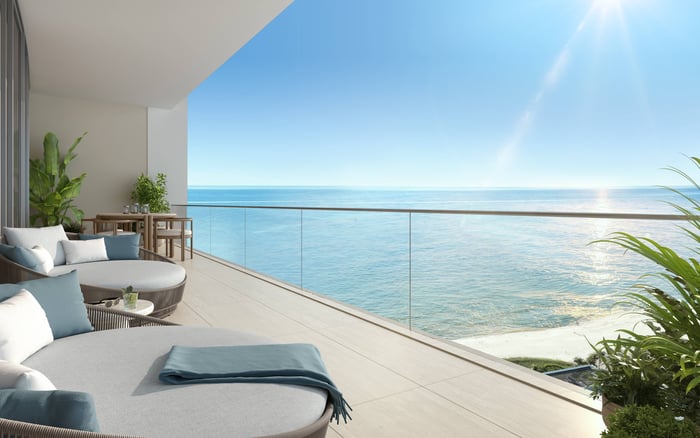
A family-office framework for evaluating flood-loss records, critical equipment elevations, insurance responsibilities, and post-storm operations at Armani Casa Residences Pompano Beach.
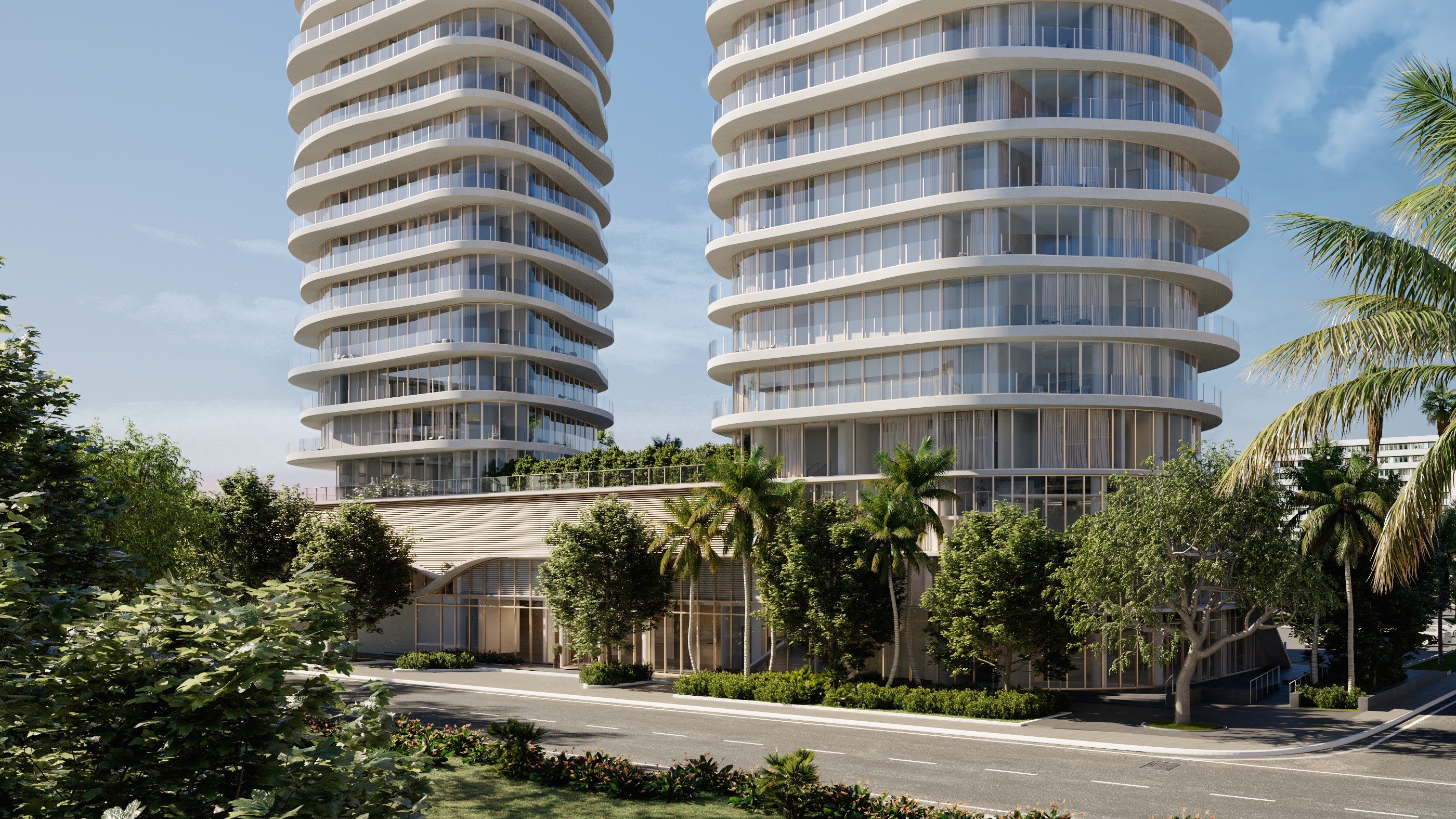
For a family office, an oceanfront residence is both a private retreat and an asset whose usefulness depends on systems rarely visible in a presentation suite. At Armani Casa Residences Pompano Beach, the diligence file should separate the residential proposition from evidence of flood resilience and continuity. Design identity is no substitute for documented operating capability.
The development is planned for 1550 N. Ocean Blvd., Pompano Beach, FL 33062, with 28 residences across two separate 19-story oceanfront towers. These details establish the proposed setting and scale-not the building's ability to protect equipment or restore services after a storm.
Three questions require distinct answers: what losses have occurred at the property, which essential systems could be exposed to water, and how would ownership function during a prolonged interruption? None should be answered by inference from the address, brand, or amenities.
The stated 2028 completion target is not a confirmed delivery date. Construction status remains a verification item. Obtain a current written developer update and permitting confirmation before relying on a schedule.
The diligence file should distinguish proposed specifications, approved drawings, and eventual installed conditions. A design commitment is not an operating test. Ask counsel which representations are incorporated into purchase documents, which remain subject to change, and what documentation buyers can expect before closing.
Apply the same documentary standard when comparing Broward opportunities such as Ocean 580 Pompano Beach. Assess the quality of the evidence rather than presume equivalent engineering or operating provisions.
Building-specific flood claims remain unverified in this diligence file. That establishes neither a claims-free parcel or construction site nor evidence that a loss has occurred. Treat the history as an open diligence question, supported by a defined request for records.
Request available parcel and construction loss histories, insurer loss runs, and written disclosures addressing flooding, water intrusion, remediation, mold, and notices of loss. Specify the period each response covers and the property, entity, or policy to which it applies. A statement about one policy is not a complete history of the site.
Have counsel reconcile disclosures with supporting records and identify unresolved exceptions. If damage is disclosed, request the cause, scope of repairs, remediation documentation, and any outstanding insurance or contractor dispute. The objective is not a reassuring sentence, but a traceable record of what happened and how it was addressed.
Proposed parking allocations are two dedicated garage spaces per residence and three per penthouse. These allocations establish nothing about garage elevation, water-entry points, drainage capacity, or the location of critical equipment. Those characteristics remain unresolved in this file.
Start with the FEMA zone determination, Base Flood Elevation, design flood elevation, and elevation survey. Obtain approved civil, architectural, structural, mechanical, electrical, plumbing, and life-safety drawings. Ask a qualified engineer to assess garage and equipment elevations against the project's applicable flood-design criteria.
The equipment review should locate switchgear, generators, transfer switches, pumps, elevator controls, HVAC, telecommunications, security systems, and fuel storage. For each, request its elevation, protection strategy, access requirements, and restoration dependencies. A protected generator alone does not establish whether the systems it serves would remain usable.
Request garage drainage specifications, backflow prevention, sump-pump redundancy, waterproofing, flood-barrier details, and maintenance responsibilities. Where a protective measure requires deployment, ask who performs it and under what conditions. Proposed wet storage for watersports accessories, kayaks, and paddleboards is an amenity, not evidence of flood protection.
Have the engineer confirm applicable Pompano Beach finished-floor elevation requirements and reconcile them with approved drawings. Do not treat a general code requirement as proof of project-specific compliance or engineering performance.
Evaluate separate flood coverage for buildings and contents rather than assuming a homeowners' policy covers rising floodwater. Ask the insurance adviser to confirm applicable waiting periods and exceptions; do not assume coverage purchased immediately before a storm will respond.
Ask an insurance adviser to review flood, windstorm, builder's-risk, equipment-breakdown, and business-interruption terms where applicable. Identify insured parties, exclusions, limits, and deductibles expressed in both percentages and dollars. Do not assume a building-level policy protects an owner's furnishings, vehicles, temporary accommodation, or business activity.
Reconcile coverage with the declaration, proposed operating budget, reserve schedule, and maintenance obligations. Establish responsibility for common equipment, garage losses, emergency mitigation, and restoration costs. The critical distinction is between an insured event and the amount an individual owner may ultimately bear.
Ask about any applicable flood-policy discounts, but keep coverage adequacy first. Separately, have counsel and the engineer identify applicable substantial-damage and substantial-improvement thresholds, the valuation basis, and any resulting compliance obligations before estimating restoration costs.
A business lounge is among the proposed amenities. Its inclusion does not establish emergency-power capacity, fuel autonomy, redundant internet, or a written post-storm operating plan. These capabilities remain unverified in this file.
Request a continuity file identifying emergency-power loads, fuel autonomy, testing and maintenance protocols, vendor agreements, resident communications, and evacuation and re-entry procedures. Require a clear distinction between restoration targets and guarantees, with named responsibility for each.
The plan should address prolonged loss of power, potable water, elevators, internet, garage access, security staffing, and habitability. Ask what remains available immediately, what requires inspection before restart, and what depends on outside vendors. For an owner expecting to work remotely, seek evidence of connectivity arrangements rather than treating a furnished workspace as continuity infrastructure.
A parallel review of The Ritz-Carlton Residences® Pompano Beach should ask the same questions without assuming shared capabilities. A consistent request makes differences in documentation easier to evaluate.
Organize the final decision around three files: loss history, equipment exposure, and continuity. Assign unresolved items to counsel, the insurance adviser, or the engineer, with an explicit requirement for closure or informed acceptance.
For this acquisition, the central distinction is between an attractive proposed residence and a documented ownership proposition. Proceed with a clear understanding of what is promised, what is approved, what remains unverified, and who bears the financial consequences of interruption.
For a discreet perspective on South Florida residential opportunities, connect with MILLION.
If branded residences are on your mind — as a home or as an allocation — we would be glad to share what we are seeing, privately.
Begin a quiet conversationThe planned address is 1550 N. Ocean Blvd., Pompano Beach, FL 33062.
Advertised plans describe 28 residences in an oceanfront development with two separate 19-story towers.
It is a stated completion target, not a confirmed delivery date. Buyers should obtain current developer and permitting updates before relying on the schedule.
Building-specific flood claims remain unverified in this diligence file. That does not establish either a claims-free history or the occurrence of a loss.
Request available parcel and construction loss histories, insurer loss runs, and disclosures covering flooding, water intrusion, remediation, mold, and notices of loss.
Two dedicated garage spaces per residence and three per penthouse are advertised. These allocations do not establish garage elevation or flood protection.
The review should map switchgear, generators, transfer switches, pumps, elevator controls, HVAC, telecommunications, security systems, and fuel storage against design flood elevation.
The proposed lounge does not establish operational continuity. Emergency-power capacity, fuel autonomy, redundant internet, and a written post-storm operating plan remain unverified in this file.
Buyers should evaluate separate flood coverage for buildings and contents rather than assume a homeowners' policy covers rising floodwater. An insurance adviser should confirm coverage, waiting periods, and exceptions.
It should address prolonged loss of power, potable water, elevators, internet, garage access, security staffing, and habitability, with responsibilities and restoration targets identified.