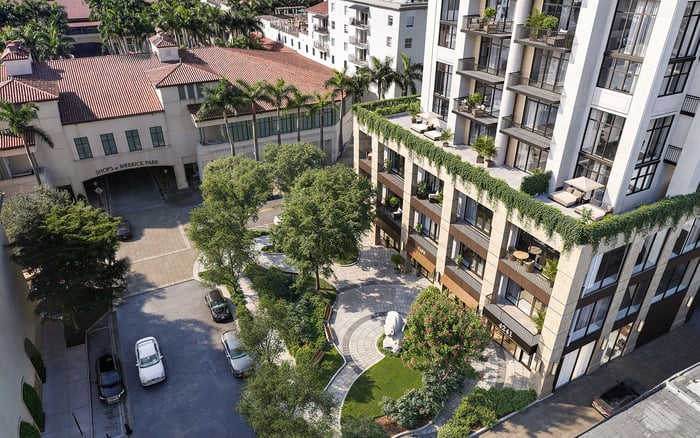
At The Village at Coral Gables, evaluating the residence also means evaluating the funding sequence. Published deposit schedules, Miami-Dade transfer taxes, and currency exposure make early coordination between counsel, tax advisers, lenders, and closing professionals essential.
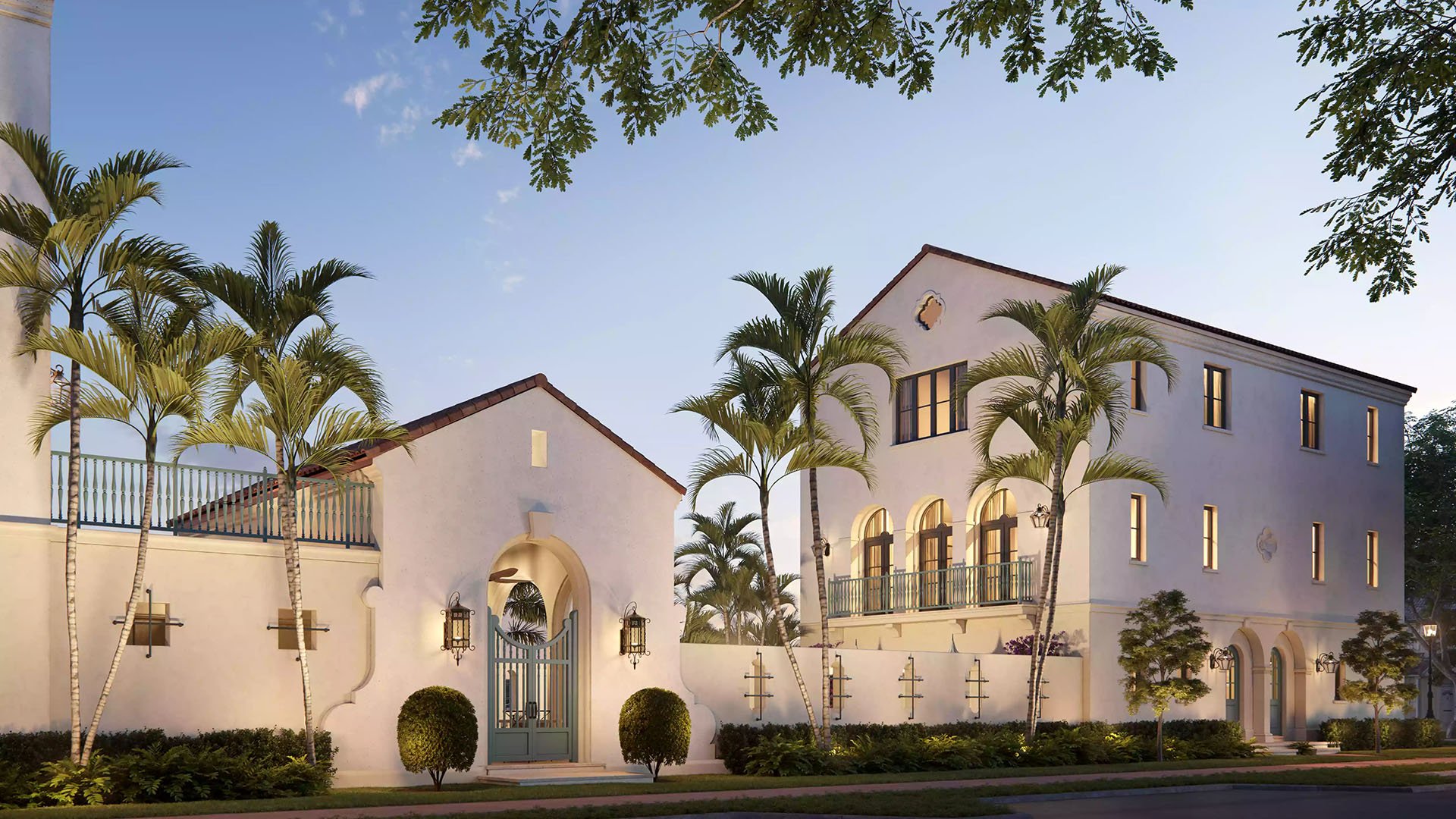
A considered purchase at The Village at Coral Gables begins with more than selecting a floor plan. Marketed as a luxury development with villas, townhomes, and condominium residences, the project offers distinct residential formats. The financial review should be just as specific: which residence, which contractual payment schedule, which funding currency, and which closing obligations?
For a buyer converting non-USD assets, the economic commitment spans several payments. For a financed buyer, the closing calculation extends beyond the remaining purchase price. In either case, assumptions about customary tax allocation can leave the budget incomplete.
The practical recommendation is straightforward: align counsel, tax advice, financing, and currency funding before wiring the deposit. The purpose is not to rush the transaction, but to establish clarity before committing capital.
Published payment schedules illustrate why document review comes first. One shows 20% at contract, 10% at groundbreaking, 10% at top-off, and 60% at closing. Another divides the initial commitment into 10% at reservation and 10% at contract, followed by the same subsequent percentages.
Both total 40% before closing, but the initial payment triggers differ. That distinction matters when arranging liquidity or converting funds. These published schedules do not confirm current contractual requirements, construction status, or delivery timing.
Before wiring, ask counsel to reconcile the proposed agreement with the payment instructions. Identify the amount due, the contractual trigger, the recipient, and the provisions governing refunds and escrow. A milestone payment schedule does not, by itself, establish when escrowed money may be released.
Ask counsel to confirm whether any broker representations or arrangements are binding on the developer. Treat verbal explanations as points to resolve in the operative documents, not as substitutes for them.
Currency planning matters when the purchase is funded from non-USD assets. Living outside Florida does not create exchange-rate exposure if the required funds are already held in dollars.
Where conversion is necessary, plan around each contractual payment, not just the final closing balance. Under the published schedules, a substantial portion of the price would be funded before closing. Deferring currency decisions until the final payment leaves those earlier obligations outside the plan.
Build a funding calendar showing the dollar amount required at each trigger, the assets intended to fund it, and who will coordinate conversion and transfer. Ask the relevant financial professionals to assess how exchange-rate movements would affect the home-currency cost. No single conversion strategy or hedge can be presumed suitable for every buyer.
For someone also evaluating Ponce Park Coral Gables, the useful comparison is not an assumed common deposit structure. Compare the cash required under each property's own documents and the currency exposure attached to that payment sequence.
A generic Florida closing estimate can obscure an important local distinction. In Coral Gables, the Miami-Dade base deed documentary stamp tax rate is $0.60 per $100 of sale price.
Miami-Dade also imposes a $0.45-per-$100 surtax on qualifying non-single-family transfers. Where applicable, the combined rate is $1.05 per $100. Because The Village includes several marketed residential formats, ask the closing professional to confirm the specific residence's classification. Do not infer its tax treatment from the words villa, townhome, or condominium alone.
Responsibility for that tax is a separate question. Seller payment of deed documentary stamp tax is customary, but it does not guarantee that the buyer is exempt. The allocation is negotiable and governed by the purchase contract.
Financing introduces different charges. Florida generally imposes documentary stamp tax on the promissory note at $0.35 per $100 financed. Applicable mortgage financing also carries a nonrecurring intangible tax of 0.002 of the taxable mortgage amount, equivalent to 0.2%.
Keep these categories distinct in the estimate: deed taxes, their contractual allocation, and financing-related taxes. A single unexplained allowance makes it harder to identify what the buyer actually owes.
The published 60% closing installment represents the purchase-price balance, not the entire cash requirement. Buyer expenses can include loan origination fees, title insurance, escrow charges, and recording fees, depending on the transaction.
A general Florida buyer closing-cost range of 2-5% of purchase price can serve as an early budgeting reference. It is not a Village-specific quote, a guaranteed ceiling, or a substitute for an itemized estimate. Ask the closing professional to specify what is included and how contractual tax allocations affect the total.
The same discipline applies when considering Cora Merrick Park alongside the Village. Compare projected cash requirements using the same categories, without assuming identical fees or payment terms. The relevant figure is the total needed to complete each acquisition, not merely the advertised balance percentage.
Before the deposit, establish a shared set of questions. Counsel should review payment obligations, refund provisions, escrow terms, and closing responsibilities. The tax adviser should assess the buyer's circumstances and proposed ownership arrangement. Neither an LLC nor a trust should be assumed to deliver automatic tax savings.
If financing is contemplated, ask the lender to reconcile the proposed loan with the purchase obligations. Request an itemized estimate and confirmation of applicable tax treatment from the closing professional. Where conversion is required, ensure the funding adviser works from the same payment schedule.
A buyer extending the search into Coconut Grove, perhaps considering The Well Coconut Grove, should apply this review framework across the shortlist while keeping each property's obligations separate. Comparable questions are useful; interchangeable assumptions are not.
The objective is a coordinated decision: a residence selected on its merits, obligations understood in writing, and funding arranged around the actual contract. Before the first wire, the buyer should understand both what is being purchased and how each payment will be met.
This article is informational only and is not legal, tax, or investment advice.
For a discreet perspective on your South Florida residential shortlist, connect with MILLION.
If branded residences are on your mind — as a home or as an allocation — we would be glad to share what we are seeing, privately.
Begin a quiet conversationThe development is marketed with villas, townhomes, and condominium residences. The specific residence's legal classification should be confirmed for tax purposes.
Published schedules total 40% before closing and 60% at closing. Those figures are marketing information, not confirmation of the buyer's current contractual obligations.
One published schedule shows 20% at contract, while another shows 10% at reservation and 10% at contract. Buyers should confirm the applicable amounts and triggers in their documents before wiring.
No. A published payment schedule does not establish refund rights or escrow-release conditions; those require review of the applicable documents.
Buyers converting non-USD assets face exchange-rate exposure across scheduled payments. Living outside Florida alone does not create that exposure.
The Miami-Dade base rate is $0.60 per $100 of sale price. A $0.45-per-$100 surtax applies to qualifying non-single-family transfers, subject to confirmation of the residence's classification.
No. Seller payment is customary, but responsibility is negotiable and governed by the purchase contract.
Documentary stamp tax on the promissory note is generally $0.35 per $100 financed. Applicable mortgage financing also carries a nonrecurring intangible tax of 0.2% of the taxable mortgage amount.
No. Closing expenses can include loan origination fees, title insurance, escrow charges, and recording fees, so buyers should obtain an itemized estimate.
Counsel, a tax adviser, the closing professional, and any lender or currency-funding adviser should work from the same proposed payment obligations. Their review should address contract terms, applicable taxes, financing, and the funding sequence.