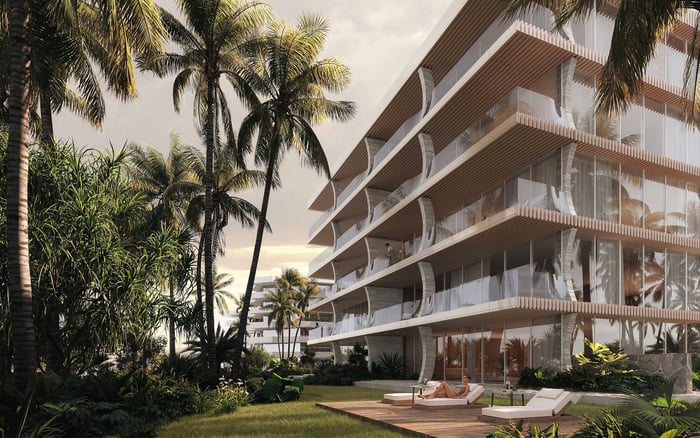
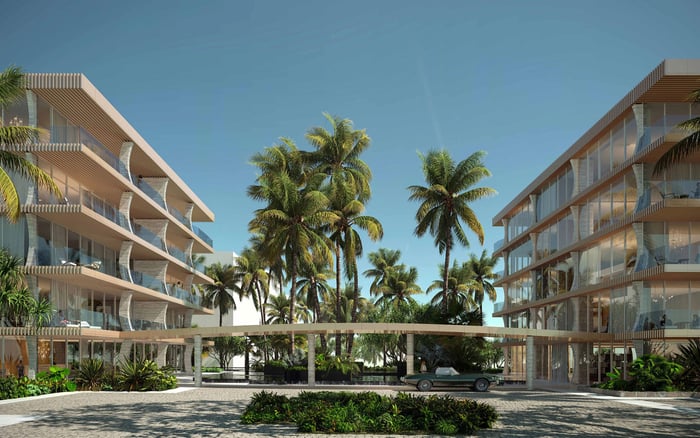
The Ritz-Carlton Residences® West Palm Beach pairs an Intracoastal setting with a service-led proposition. For buyers, the decisive diligence lies in the agreements, staffing assumptions and operating budgets that support the experience.

At 1717 North Flagler Drive, The Ritz-Carlton Residences® West Palm Beach pairs an Intracoastal waterfront setting with two- to four-bedroom homes and a residential experience built around attentive service. The advertised offering comprises 138 residences, with starting prices of $3 million.
For buyers, however, the distinction between an attractive proposition and a durable ownership experience lies beneath the presentation. Ritz-Carlton-trained staff, concierge service and 24-hour valet set meaningful expectations. Their practical value depends on what the governing agreements require and what the operating budget can sustain.
The question is not whether the name conveys hospitality. It is whether the documents translate that expectation into obligations, funding and accountability. A service promise needs both contractual definition and budget support.
The development is described as a 27-story, fully residential condominium without a co-located hotel. Residences average approximately 2,500 square feet, although buyers should evaluate the dimensions and layout of their selected home rather than rely on a project-wide average.
Stated specifications differ on important points. Other figures list 144 residences and 28 stories, with starting prices of $2.5 million, rather than 138 residences, 27 stories and a $3 million entry point. The stated size range for the two- to four-bedroom homes is approximately 1,530 to 3,330 square feet.
Those differences call for reconciliation, not speculation. Confirm the applicable inventory, price, building configuration and residence plans in the purchase package. A starting price is not a quotation for a particular home, and conflicting counts deserve clarification before signing.
Buyers also considering Alba West Palm Beach should apply the same discipline: compare the actual residence and ownership obligations, not simply headline positioning.
The advertised concierge and valet offering provides a starting point for diligence, but it does not establish every operating detail. Twenty-four-hour valet describes advertised coverage; it does not, by itself, specify attendant numbers, vehicle retrieval times or peak-period capacity. Concierge service likewise leaves questions about availability, scope and additional charges.
Ask counsel to identify where service commitments appear in the purchase and condominium documents and how they interact with the management agreement. Determine whether staffing standards are defined, training is recurring and response-time or coverage requirements exist.
A useful review translates each priority into an operational question. If effortless arrivals matter, examine valet coverage and backup arrangements. If concierge assistance is central to ownership, clarify which requests staff handle directly and which involve outside providers.
For buyers comparing Mr. C Residences West Palm Beach, this framework applies equally; it does not suggest that different brands offer equivalent contracts or service packages.
The management term, renewal provisions, termination rights and fee structure deserve attention alongside finishes and views. Buyers should not assume a particular contract duration or an unrestricted ability to replace management. Neither is established for this project here.
The essential questions are who must deliver what, who monitors performance and what happens if expectations are not met. Ask whether the documents provide notice and cure procedures, measurable obligations or other remedies. Counsel should distinguish enforceable duties from promotional language and discretionary services.
Clarify who may modify staffing, operating hours, amenity access or service standards, and under what conditions. Do not presume that an association board can freely reduce services or that every advertised feature is permanently protected. Both conclusions require project-specific document review.
Even when considering another residence carrying the same name, such as The Ritz-Carlton Residences® Palm Beach Gardens, buyers should examine its agreements independently rather than assume contractual uniformity.
Advertised amenities include a fitness center, community spa and steam room, along with a pool, sundeck, outdoor kitchen and fire pit. A children’s playroom and golf simulator room round out the offering.
The buyer’s task is to connect each desired amenity to its ongoing operating requirements. Request a budget that clearly identifies staffing, valet coverage, training, management fees, cleaning, amenity maintenance and reserves. Ask how equipment replacement and periodic renewal are addressed rather than treating the opening condition as the permanent standard.
The absence of a co-located hotel makes residential funding particularly important to understand. It does not establish that every expense will be paid through association assessments, nor does it justify assuming hotel support. Identify the actual funding arrangements.
Separate three categories: services funded through assessments, services charged when used and any other documented funding. Monthly assessments require confirmation in the project documents. Without that distinction, buyers cannot reliably translate the amenity offering into an ownership budget.
The stated deposit schedule calls for 20% at contract, 10% at groundbreaking and 10% at top-off, with 60% due at closing. Under that structure, 40% is scheduled before closing. Buyers should confirm the applicable payment triggers and terms in their own agreement.
Stated milestones identify February 2026 groundbreaking and first-quarter 2028 completion. These dates are not a contractual delivery guarantee, and the stated groundbreaking milestone should not be treated as confirmation that the event occurred.
Review delivery provisions, permitted extensions and the treatment of changes with counsel. The payment schedule and service proposition belong in the same investment decision: capital is committed before the finished operating experience can be evaluated firsthand.
For an owner who values uncomplicated arrivals and limited household administration, service may be a central reason to buy. That makes a credible operating plan more important, not less. A lower initial assessment is not necessarily preferable if it cannot support the experience the buyer expects.
Ask for explanations of staffing assumptions, anticipated operating costs and reserve planning. Discuss how the budget responds to higher expenses and which approvals govern changes. These are diligence questions, not predictions that service reductions or additional assessments will occur.
The strongest purchase decision aligns three things: the residence itself, the documented service obligations and a budget capable of supporting them. The brand can frame expectations; the agreements and funding must explain how those expectations endure.
For a discreet perspective on service-led residential ownership in South Florida, explore MILLION.
If branded residences are on your mind — as a home or as an allocation — we would be glad to share what we are seeing, privately.
Begin a quiet conversationThe waterfront condominium is at 1717 North Flagler Drive in West Palm Beach, on the Intracoastal Waterway.
The advertised offering comprises 138 two- to four-bedroom residences. A conflicting stated count is 144, so buyers should reconcile the difference in the purchase package.
Stated starting prices differ between $3 million and $2.5 million. Confirm current pricing for the specific residence before committing.
The project is described as fully residential, without a co-located hotel. Buyers should verify residential operating funding rather than assume hotel subsidies.
The advertised services include Ritz-Carlton-trained staff, concierge service and 24-hour valet. Specific staffing levels, response times and enforceable obligations require document review.
Review the term, renewal provisions, termination rights, fees and required service standards. Clarify who can modify staffing or amenities and what remedies address failures to perform.
It should clarify staffing, valet coverage, training, management fees, amenity maintenance and reserves. Buyers should distinguish assessment-funded services from separately charged services.
The stated schedule calls for 20% at contract, 10% at groundbreaking and 10% at top-off, with 60% due at closing. The buyer’s agreement should confirm applicable triggers and payment terms.
The stated completion milestone is first-quarter 2028. It is not a contractual delivery guarantee; buyers should review delivery provisions and permitted extensions.
Marketing alone does not establish legal enforceability. Counsel should examine the purchase documents, condominium documents and management agreement to identify binding obligations.