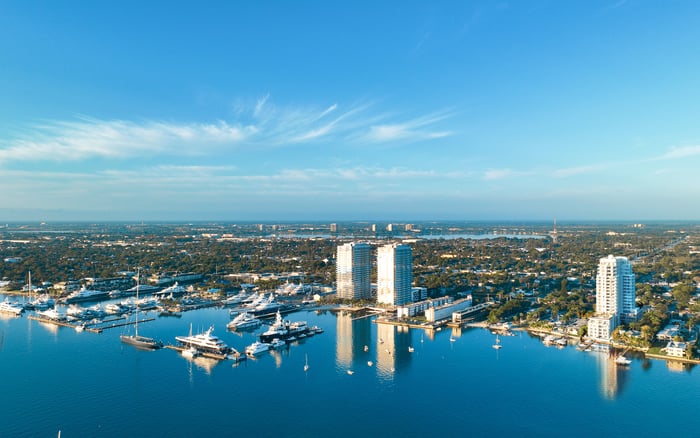
A disciplined Palm Beach condominium purchase aligns contractual deposits, currency conversions, portfolio-backed borrowing and closing finance. Here is what to verify before committing capital, including escrow release conditions, appraisal exposure and the deadlines that govern buyer protections.

A Palm Beach condominium purchase is more than a decision about the residence. Before delivery, it is a sequence of dollar obligations that may intersect with foreign-exchange movements, portfolio valuations and lending conditions. The essential question is not simply whether the purchase is affordable, but whether funds will remain accessible when each payment falls due.
Treat the contract, currency plan and financing strategy as one coordinated exercise. Keep Palm Beach and West Palm Beach distinct in property comparisons, and never substitute regional deposit examples for a particular residence’s signed terms.
Start with the proposed contract’s deposit schedule, not an assumed regional percentage. Identify the total required before closing and how it is divided among payments.
Timing deserves equal scrutiny. Verify whether each payment is due on a calendar date or upon a construction milestone. Do not assume that a calendar-based obligation moves when construction progress changes.
For a residence under consideration at Alba West Palm Beach, request the applicable payment schedule rather than carrying over assumptions from another building. Record each amount, due date, milestone definition and required notice.
Build the funding horizon around the proposed agreement. Have counsel identify extension provisions and distinguish an anticipated completion date from an enforceable contractual obligation.
Do not treat escrow as a blanket assurance that every dollar remains untouched until closing. Have Florida counsel verify the applicable escrow requirements, exceptions and release conditions, including whether any deposited funds may be used for construction.
Obtain the escrow agent’s identity, confirmation of where funds are held and a procedure for written deposit receipts. Ask counsel to explain the conditions for release and return, and when deposits become nonrefundable under the agreement.
If funds may be used for construction, review the developer’s financial strength and any completion guarantees. The question is not only where the money sits, but what exposure the buyer accepts after release.
For buyers funding in another currency, a fixed dollar purchase price does not fix the home-currency cost. Each staged deposit and the closing balance creates a separate conversion decision. Map those obligations before choosing an exchange strategy.
Discuss early conversion, conversion immediately before each payment and forward contracts with an FX provider. Compare how each approach would support predictable funding on the actual contractual dates. Ask how a change in construction timing would affect the proposed arrangement; do not assume a currency plan automatically adjusts when delivery moves.
When comparing Mr. C Residences West Palm Beach with another residence, compare when dollar payments fall due, not merely headline prices. Different payment calendars can create different home-currency exposures even when purchase budgets are similar.
The result should be a payment-by-payment funding plan: dollars due, expected conversion timing and an alternative source of liquidity if currency movements are unfavorable.
Evaluate a securities-backed line of credit, or SBLOC, as a funding arrangement with its own borrowing costs and collateral requirements. It is not evidence that mortgage financing will be available at delivery.
First, have counsel confirm whether the purchase contract permits securities-backed credit, margin loans or other borrowed deposit proceeds. Separately, establish what proof of funds the developer accepts. Neither point should be inferred from a buyer’s wealth or an existing banking relationship.
Then compare the proposed credit arrangement with potential mortgage financing at closing. Ask the credit provider how a portfolio decline could affect borrowing capacity and whether additional collateral could be required when a property payment is due.
Stress-test currency and collateral together. An adverse exchange move could increase the home-currency amount needed just as a portfolio decline reduces borrowing capacity. The reserve should remain available under that combined scenario, rather than depend on the same pledged assets already supporting the purchase.
An appraisal gap arises when appraised value falls below the contract price. Ask the lender to confirm how the lower of purchase price or appraised value affects its loan-to-value calculation. Anticipated loan proceeds may fall even though the contractual purchase obligation does not.
Ask the lender to model closing cash at several lower valuations, crediting deposits already paid. This makes the additional funding requirement clear without confusing the appraisal shortfall with the precise cash adjustment required by a particular loan structure.
Discuss whether additional cash, an eligible higher-LTV structure, mortgage insurance, secondary financing or a negotiated price reduction could address the gap. Availability depends on lender approval and, where relevant, seller cooperation. None should be treated as a promised solution.
If the appraisal appears inaccurate, review living area, views, condition and upgrades, then ask the lender about a reconsideration of value supported by relevant comparable sales. Do not assume that review extends the buyer’s contractual deadlines.
For a shortlist that includes Shorecrest Flagler Drive West Palm Beach, request lender screening of the condominium and HOA alongside borrower review. Project characteristics and individual circumstances can affect whether conventional or portfolio financing is suitable. A strong borrower profile does not resolve every building-level question.
Discuss occupancy approvals, delivery uncertainty, rate-lock expiration and extension costs with the lender. The financing timetable should account for possible construction delays rather than rely solely on an anticipated closing date.
Finally, have Florida counsel read the financing and appraisal provisions literally. Verify whether contingencies exist, what conditions apply and which notice deadlines govern their exercise. Do not assume a low appraisal establishes a right to recover deposits; ask counsel how missed deadlines could affect recovery.
Before signing, consolidate deposit obligations, contingency notices, developer extension rights and remedies for delay or nonperformance into one calendar. Review it with counsel, the lender and the relevant funding advisers. The objective is a purchase plan that remains executable when currency, credit or delivery assumptions change.
For a discreet conversation about your Palm Beach residence search, connect with MILLION.
If branded residences are on your mind — as a home or as an allocation — we would be glad to share what we are seeing, privately.
Begin a quiet conversationRequest the proposed contract’s payment schedule and total all deposits required before closing. The actual agreement determines the amounts and timing.
Do not assume they are. Verify whether each payment is tied to a calendar deadline or a defined construction milestone.
Do not assume it does. Florida counsel should verify applicable escrow requirements, release conditions and whether any funds may be used for construction.
Map every dollar-denominated deposit and the closing balance against planned conversions. Discuss early conversion, payment-date conversion and forward contracts with an FX provider.
Have counsel confirm whether the contract permits borrowed proceeds and separately verify what proof of funds the developer accepts. An existing credit facility does not establish contractual acceptance.
An adverse currency move can increase the home-currency funding requirement while a portfolio decline reduces available securities-backed credit or prompts additional collateral demands.
A lower appraisal may reduce expected loan proceeds and increase required buyer cash. Ask the lender to confirm its valuation basis and model the effect on your proposed loan.
Ask about additional cash, an eligible higher-LTV loan, mortgage insurance, secondary financing or a negotiated price reduction. Availability depends on lender approval and seller cooperation where applicable.
Do not assume it does. Have counsel verify the signed contract’s financing or appraisal contingencies, conditions and notice deadlines.
Ask lenders to screen the condominium and HOA and explain occupancy requirements, rate-lock expiration and extension costs. Current deposit funding does not guarantee financing at delivery.