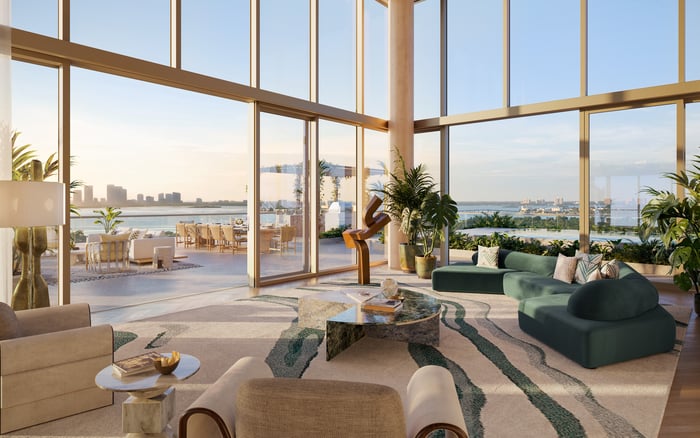
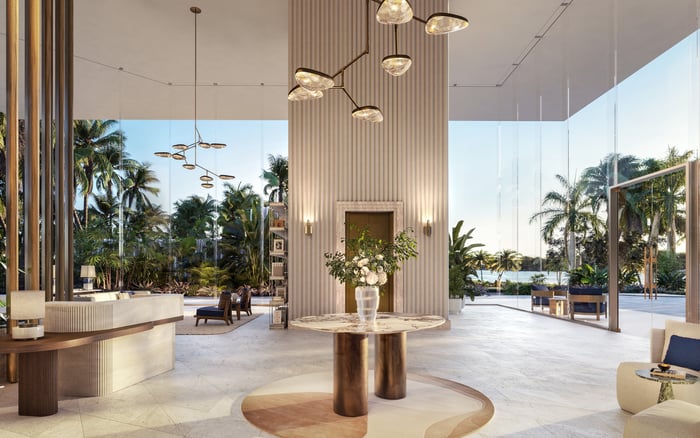
The Perigon’s advertised wellness offering is substantial, but its lasting value depends on staffing, maintenance funding, environmental protocols and service commitments that buyers can evaluate before purchasing.

At The Perigon Miami Beach, the advertised wellness proposition begins with an unusually intimate oceanfront setting: 73 residences, eight guest suites and approximately 200 feet of beachfront at 5333 Collins Avenue. Residences are described as offering two to four bedrooms and approximately 2,100-6,700 square feet of interior space.
For a discerning buyer, however, the question is not simply whether the building offers attractive places to exercise, recover and relax. It is whether those spaces will function consistently, supported by qualified personnel, dependable access and funding that protects their quality over time.
An amenity inventory establishes the setting for wellness, not the standard of service. That distinction need not diminish The Perigon’s appeal. It sharpens the purchase decision: evaluate the physical offering, the operating commitments and the enforceable obligations separately.
The advertised program includes an ocean-view fitness center, a high-impact training room, relaxation and meditation spaces, gardens, and areas for yoga and stretching. Spa treatment rooms are described as having private garden terraces and private saunas, while a residents’ salon is promoted for personalized beauty and grooming services.
Outdoors, the offering includes a 25-meter beachfront pool, cabanas, sunbeds and landscaped lounging areas. Advertised beach services include attendants, chairs, umbrellas, towels and food-and-beverage service. These are meaningful lifestyle attributes, but neither a pool’s dimensions nor a treatment room’s description establishes availability or health outcomes.
Scale also requires careful interpretation. The advertised figures include more than 20,000 square feet of five-star amenities and a broader indoor-outdoor amenity total of nearly 40,000 square feet across a two-acre site. Neither figure should be treated as a dedicated wellness footprint, and the two should not be reconciled without a clear area breakdown.
For practical comparison, request a room-by-room schedule showing function, capacity, hours and access rules. Usable capacity matters more to a morning routine than aggregate square footage.
The proposed hospitality offering includes an on-site general manager, lifestyle concierge, residential butler, 24-hour security and valet parking. Those titles describe a service structure. They do not establish how many people will be available during a busy weekend or who is responsible when service is interrupted.
Request the management company’s identity, staffing commitments by function and shift, staff qualifications, operating hours and escalation procedures. Clarify which services use dedicated employees and which depend on outside providers. A treatment room may be available even when a preferred practitioner is not.
A buyer also considering Setai Residences Miami Beach should seek comparable operating disclosures rather than infer equivalent staffing, access or service from positioning alone.
At The Perigon, written commitments on staffing ratios, treatment-booking lead times and response-time guarantees still require confirmation. That is a reason to request documentation, not to conclude that operating protocols do not exist.
Wellness facilities should be evaluated as maintained systems, not merely finished interiors. Request preventive-maintenance schedules for fitness equipment, saunas, pool systems and the mechanical systems serving these spaces. Ask who conducts inspections, records defects, authorizes repairs and communicates closures.
The advertised home-management services include cleaning, maintenance, floral services and pantry stocking. That description is not a building-wide preventive-maintenance schedule. Buyers should distinguish assistance inside a residence from the association’s responsibility for shared facilities.
A useful diligence package would include equipment service contracts, replacement cycles, warranties and the relevant HOA budget and reserves. During development, seek proposed schedules and funding assumptions. Once operations begin, request inspection and service logs as evidence of execution.
A wellness-specific maintenance budget, equipment-replacement schedule and reserve policy still require written confirmation. Ask how routine costs and major replacements are allocated, and which financial assumptions support the promised service level. A beautifully appointed room is only one part of its lifetime cost.
Five-star positioning should prompt specific questions. The following are suggested diligence metrics, not established Perigon commitments:
Amenity uptime: Define scheduled availability, planned closures and how downtime is recorded.
Spa access: Request booking windows, cancellation rules and peak-period capacity policies.
Concierge responsiveness: Distinguish acknowledgment of a request from completion or resolution.
Dining delivery: Clarify service windows, order fulfillment expectations and exception handling.
Resident satisfaction: Ask how feedback leads to corrective action and who remains accountable.
Useful standards identify the responsible party, the measurement period and the response when performance falls short. A target without clear responsibility or a review mechanism offers limited reassurance.
Environmental performance deserves the same discipline. Request air and water testing protocols, humidity-control targets, acoustic criteria and cleaning-product policies. Any claimed certification should come with documentary evidence of its scope and status. Attractive gardens and a tranquil palette do not, by themselves, establish tested environmental performance.
Spaces for yoga and stretching do not establish a recurring class calendar. Ask for instructor qualifications, session frequency, class sizes and charges. If The Well Bay Harbor Islands is also on a buyer’s shortlist, apply the same distinction between a wellness identity and a documented operating program.
The Perigon’s planned dining venues, Nota and FiftyThree, are associated with Michelin-starred chef Shaun Hergatt. That credential belongs to the chef; it does not establish that the planned restaurant itself holds a Michelin star. Nor does chef-led dining establish a nutrition program.
For residents seeking dietary support, request menus, customization policies and allergen procedures. Advertised in-residence dining, catering, refrigerator stocking and housekeeping coordination may simplify daily life, but availability, charges and scheduling should be confirmed. Convenience becomes dependable only when its terms are clear.
The building’s top-off was announced on March 9, 2026. That construction milestone does not establish that its wellness facilities or residential services were operating. A previously publicized 2027 debut remains a delivery target, not a confirmed opening date.
Before purchase, have counsel review which amenities and services are guaranteed, separately charged, subject to availability or changeable under the condominium documents. Request the proposed opening sequence, including whether residential occupancy and the full service program are expected to begin together.
The strongest case for The Perigon is not that its wellness language should be accepted or dismissed. Its advertised offering warrants a disciplined examination of staffing, maintenance, funding and accountability. Lasting luxury is the ability to rely on what has been promised.
For a considered approach to South Florida residential ownership, explore MILLION.
If branded residences are on your mind — as a home or as an allocation — we would be glad to share what we are seeing, privately.
Begin a quiet conversationThe Perigon is marketed at 5333 Collins Avenue, Miami Beach, with 73 residences, eight guest suites and approximately 200 feet of beachfront.
The offering includes an ocean-view fitness center, high-impact training room, spa treatment rooms with private garden terraces and private saunas, and relaxation, meditation, yoga and stretching spaces.
The outdoor program includes a 25-meter beachfront pool, alongside cabanas, sunbeds and landscaped lounging areas.
The advertised figures do not establish a dedicated wellness footprint. More than 20,000 square feet describes five-star amenities, while nearly 40,000 square feet describes a broader indoor–outdoor program.
Written commitments on staffing ratios, treatment-booking lead times and response-time guarantees still require confirmation. Buyers should request operating documentation rather than assume protocols are absent.
Request preventive-maintenance schedules, equipment service contracts, replacement cycles and supporting HOA budgets and reserves. Once facilities operate, inspection and service logs can help demonstrate execution.
Suggested metrics include amenity uptime, spa-booking lead times, concierge response times, dining delivery expectations and resident satisfaction. These are diligence recommendations, not established Perigon commitments.
The planned Nota and FiftyThree venues are associated with Michelin-starred chef Shaun Hergatt. That credential does not establish that the planned restaurant itself holds a Michelin star.
The March 9, 2026 top-off announcement establishes a construction milestone, not operating services. The previously publicized 2027 debut remains a target rather than a confirmed opening date.
Counsel should review which amenities and services are guaranteed, separately charged, subject to availability or changeable under the condominium documents. Buyers should also clarify the proposed opening sequence and service commencement.