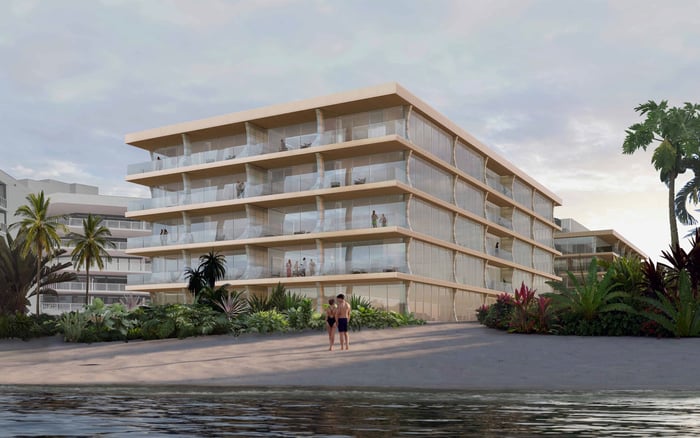
A family-office framework for evaluating Maison D’Or South Flagler through operating costs, staffing, governance, ownership structure, and eventual exit flexibility.

A family-office review of Maison D’Or South Flagler should separate the principal’s personal interest in the residence from the financial and operational demands of ownership. The analysis should consider intended use, service expectations, governance requirements, succession planning, and the likely duration of the hold.
This approach is especially important for a South Florida residence that may serve as a seasonal home, a long-term family asset, or part of a broader real-estate portfolio. The investment committee should define the purpose of the acquisition before deciding which costs and risks are acceptable.
The first diligence request should cover the proposed budget, reserve methodology, insurance assumptions, service contracts, allocation of common expenses, and governing documents. These materials help determine how recurring obligations may be distributed and how future changes could affect owners.
The review should distinguish fixed building expenses from costs that vary with occupancy or service levels. It should also examine how any residence-specific features are treated for expense allocation. Without verified project documentation, assumptions should remain clearly labeled as scenarios rather than presented as forecasts.
For context, the committee may compare the proposed ownership experience with South Flagler House West Palm Beach. The purpose of a comparison is not to assume equivalent costs, but to identify differences in service, governance, ownership scale, and operating structure.
A credible model should address association obligations alongside property taxes, residence insurance, utilities, interior maintenance, technology, private staffing, periodic refurbishment, and management during absences. Each line item should be supported by project documents, professional estimates, or clearly identified assumptions before an acquisition decision is made.
The family office should prepare base, elevated-cost, and extended-hold cases. Sensitivities can address insurance repricing, labor costs, reserve changes, unexpected repairs, and special assessments without assigning unsupported figures to Maison D’Or.
Cash-flow planning should also reflect how the principal expects to use the home. Seasonal occupancy, frequent entertaining, extended vacancies, and full-time residence can create different demands even within the same building.
Service promises should be translated into an operating map. The family office should identify which functions are managed directly, which are outsourced, what coverage is expected, and how vendor or payroll changes flow into the budget.
Diligence should examine management fees, shift coverage, overtime assumptions, employee benefits, escalation provisions, after-hours procedures, and accountability for service quality. The objective is not simply to reduce expenses; it is to determine whether the intended experience can be delivered consistently within the approved ownership budget.
A wider West Palm Beach review can include Forté on Flagler West Palm Beach and The Ritz-Carlton Residences® West Palm Beach. These links provide internal project navigation, while any financial comparison should rely on current, verified documents for each property.
The legal review should confirm whether the contemplated ownership vehicle, trust structure, succession plan, and family-office controls are compatible with the governing documents. Counsel should examine approval procedures, transfer provisions, leasing rules, use restrictions, insurance responsibilities, and any other terms that could affect flexibility.
Decision rights also matter after closing. The committee should understand voting procedures, owner obligations, budget approval mechanisms, and the process for addressing major capital needs. Any unresolved issue should become a closing condition or an explicitly accepted risk.
Exit analysis should begin before acquisition. The family office should consider the likely buyer profile, the effect of customization, potential marketing time, transaction expenses, refurbishment needs, and carrying costs during a sale process.
Several hold periods should be modeled rather than relying on a single resale date. A short hold may expose the owner to transaction friction, while a longer hold can increase cumulative operating and capital costs. Neither outcome should be assumed without documented inputs.
The investment committee should define an acceptable exit pathway, including who will oversee a sale, when the asset will be reviewed, and which conditions could trigger an earlier disposition. This converts resale flexibility from a general aspiration into a governance process.
Approval should depend on verified documentation and agreed thresholds. The committee can establish a maximum annual ownership budget, acceptable assessment exposure, required service standards, compatible ownership provisions, and a target hold range.
The final memorandum should separate confirmed terms from assumptions and unresolved questions. If the operating model, governance framework, and exit plan fit the principal’s objectives, the residence may merit further consideration. If material uncertainties remain, the family office should pause until they can be resolved.
What is the central family-office question when evaluating Maison D’Or? The central question is whether the complete ownership structure aligns with the principal’s intended use, governance standards, and financial parameters.
Which documents should be requested first? Request the proposed budget, reserve methodology, insurance assumptions, service contracts, governing documents, and expense-allocation details.
Why should assumptions be labeled as scenarios? Scenario labels prevent unverified inputs from being mistaken for project forecasts or contractual obligations.
Which expenses should be considered beyond association obligations? The model should consider taxes, insurance, utilities, interior care, technology, private staffing, refurbishment, and absence management.
How should staffing be evaluated? Review coverage, direct and outsourced roles, management fees, overtime, benefits, escalation terms, and accountability for service delivery.
Why does the principal’s usage pattern matter? Seasonal, full-time, and entertainment-focused use can create different service, maintenance, and management demands.
What should legal counsel review? Counsel should assess ownership-entity compatibility, transfer provisions, approval procedures, leasing rules, use restrictions, and insurance responsibilities.
How should comparison projects be used? Use them to identify structural differences, while relying on current verified documents rather than assuming equivalent costs or terms.
What belongs in the exit analysis? Consider buyer fit, customization, potential marketing time, transaction expenses, refurbishment, and carrying costs during the sale process.
When should an investment committee delay approval? Approval should be delayed when material operating, governance, legal, or exit questions remain unresolved.
For a tailored shortlist and next-step guidance, connect with MILLION.
If branded residences are on your mind — as a home or as an allocation — we would be glad to share what we are seeing, privately.
Begin a quiet conversation