Eighty Seven Park’s advertised wine tastings, canapés and light-fare service suggest an intimate approach to entertaining. For buyers, the decisive questions concern current catering access, private-booking rights and the distinction between hosting at home and using shared amenities.
For a buyer who entertains regularly, the most revealing amenity is not necessarily the grandest room. It is the service arrangement behind an evening: who prepares the food, where guests may gather, and whether a shared setting can become private. At Eighty Seven Park Surfside, the advertised offering is clearest around wine, canapés, light fare and outdoor leisure.
That profile has an understated appeal. An intimate tasting or an unhurried lunch can suit residential life better than a formal reception. But buyers should distinguish an appealing hospitality offering from confirmed event permissions. A wine bar is not automatically a reservable dining room, and catering language does not establish a seated-dinner package.
The question is not simply whether entertaining is possible. It is whether the building’s current services and rules accommodate the occasions an owner intends to host.
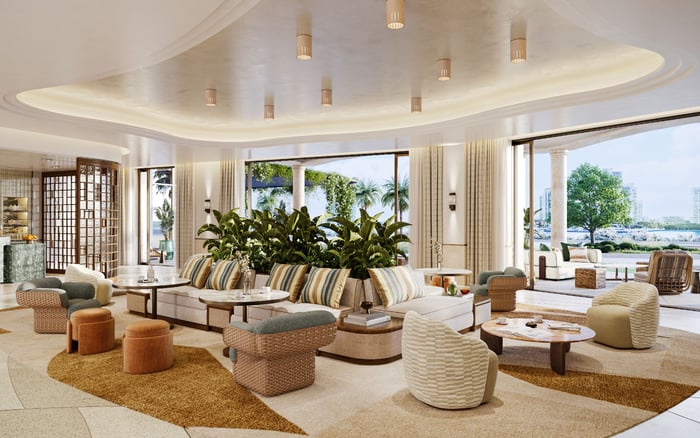
Enoteca is presented as a resident wine-bar experience, with casual glasses of wine, intimate sommelier-selected tastings, paired canapés and wine ordering for residents’ homes. These specific offerings lend themselves to conversation and smaller-scale hospitality.
For an owner imagining an evening built around a few bottles and carefully chosen bites, Enoteca is the strongest documented fit. The advertised amenities explicitly include catered canapés and tapas, as well as a refreshment and light-fare buffet with butler service. This establishes an advertised light-catering offering, not merely an attractive place to sit.
It does not, however, settle whether Enoteca can be reserved exclusively, whether guests may attend a particular tasting, or whether its service can extend into a residence. Buyers should request current menus and booking terms before making any of these possibilities part of their hosting routine.
The distinction matters for buyers also considering Arte Surfside: compare the occasions each property can accommodate, not just the names on its amenity schedule. Do not assume equivalent dining services or event permissions.
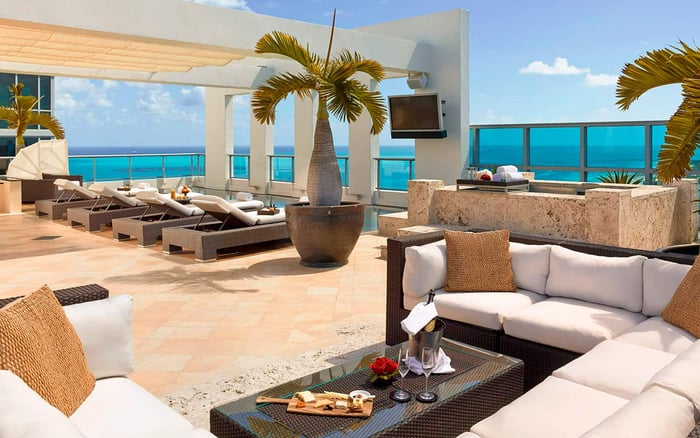
Fugo Bar’s advertised menu centers on specialty juices, small organic snacks, a light lunch and salad bar, and grab-and-go service. Its outdoor setting beneath white awnings, extending toward the ocean, gives the offering a relaxed coastal context.
Fugo is sometimes described in restaurant terms. The more precise basis for a purchase decision is its stated menu and service format, not the label alone. Neither a full public restaurant operation nor its definitive absence should be assumed without management confirmation.
Food-and-beverage delivery to the beach and elsewhere on the property has also been advertised. Buyers should confirm the current delivery area, availability and ordering arrangements. Service to a beach chair, for example, does not establish that a private gathering can receive the same service.
For someone expecting casual lunches with visiting friends, these details may matter more than formal dining infrastructure. For someone planning recurring multicourse dinners, they leave a different set of questions unanswered.
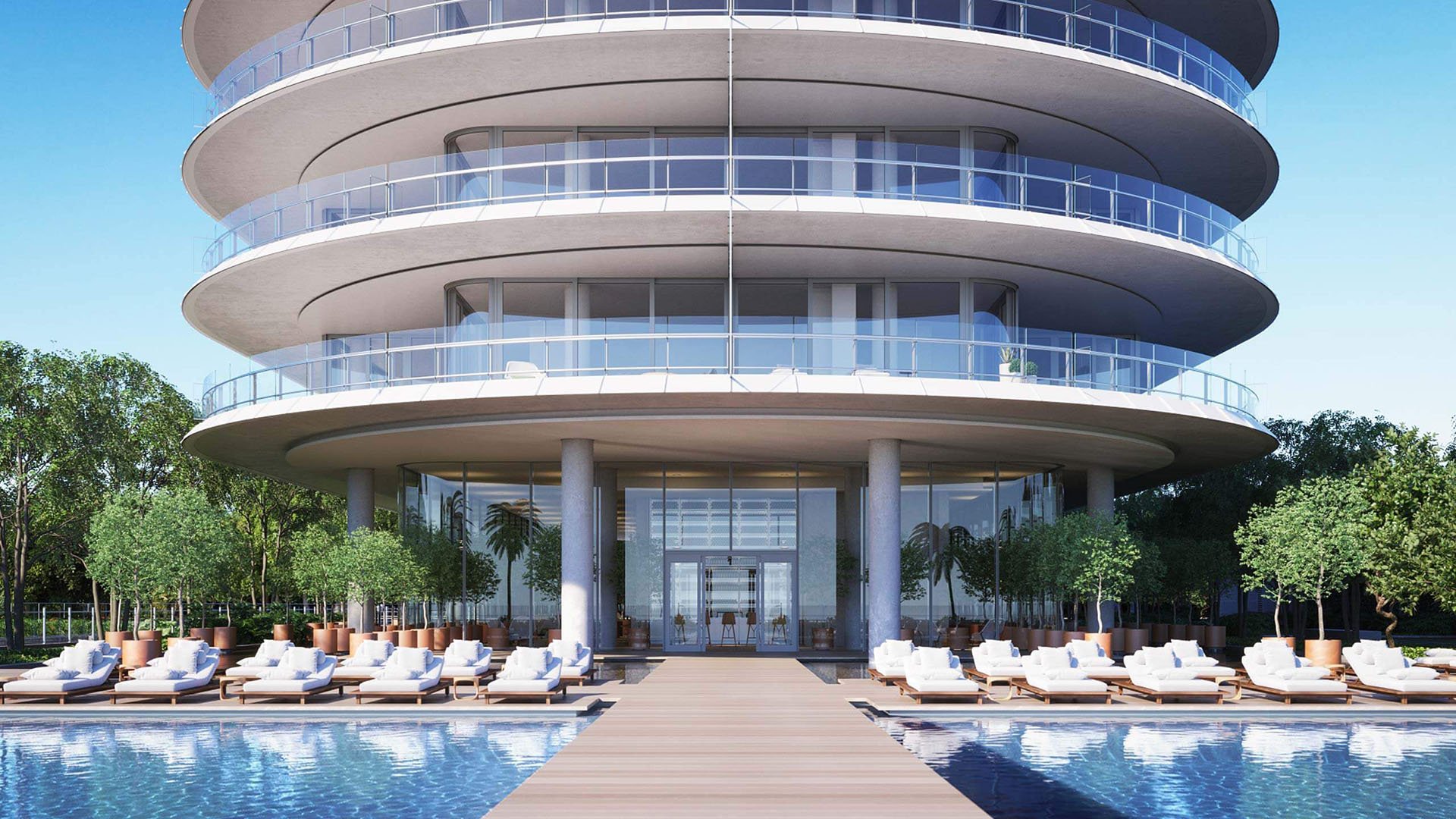
The advertised amenities include two oceanfront swimming pools, poolside cabanas, a private garden and beachside services. A library adds another shared interior setting. Together, these spaces suggest several ways to spend time with others, subject to current guest and use policies.
An outdoor pavilion and event space is also advertised. That designation deserves attention, but it does not establish exclusive resident booking rights, capacity or permission for a particular celebration. Likewise, programming such as moonlight concerts, cinema under the stars, garden lectures and wellness sessions describes communal experiences, not necessarily privately commissioned events.
Ask management to distinguish ordinary resident use, organized building programming and exclusive private bookings. These are different arrangements, even when they share a setting. Clarify guest access and any limits on furniture, music, decorations or food service; an event-space label does not answer those questions.
For outdoor occasions, also ask whether there is an approved weather contingency. An appealing garden is not, by itself, a complete event plan.
Private entertaining inside an owner’s home and hosting in a common area should be evaluated separately. The advertised light-catering offering does not establish a dedicated reservable private dining room, a commercial catering kitchen or a seated-banquet package. Nor does it prove that larger dinners or outside caterers are prohibited.
A buyer who works with a personal chef or event planner should request written confirmation of outside-vendor permissions for each intended setting. Ask whether approval, insurance documentation, delivery coordination or service-elevator arrangements are required. These are diligence questions, not confirmed building restrictions.
The same precision applies to preparation and cleanup. Determine where food may be prepared or finished, how equipment can arrive, and who is responsible for restoring a shared space afterward. If in-house staff can support an occasion, establish the scope and charges in advance.
When extending a search into Miami Beach, including 57 Ocean Miami Beach, use the same hosting brief. A consistent scenario makes comparisons more useful without assuming that different buildings offer matching services.
Before committing to a purchase, request the current house rules, event-booking terms, food-and-beverage menus, vendor requirements and guest-access procedures. Ask for separate guidance on in-residence hospitality and shared-space events.
The central variables remain unconfirmed: capacities, guest caps, operating hours, reservation fees, deposits and outside-caterer permissions. Obtain applicable terms in writing, including cancellation provisions and any restrictions on exclusive use. Advertised amenities are no substitute for confirmation of current availability.
A practical test is to present management with two proposed occasions: an intimate wine gathering and a larger catered dinner. Specify the desired setting, service style and guest count. The response should clarify what can be arranged, what requires approval and what would need an off-site solution.
Advertised concierge assistance includes restaurant reservations, car or limousine arrangements, babysitting coordination and light groceries. These services may support an evening, but they should not be mistaken for a confirmed event-planning department.
Eighty Seven Park’s clearest supported entertaining profile is intimate and informal: wine tastings, canapés, light buffets and casual outdoor dining. That describes its advertised offering; it is not a confirmed ceiling on what residents may arrange.
For a restaurant-led evening nearby, Thomas Keller’s Surf Club Restaurant at The Surf Club Four Seasons Surfside provides an off-site dining option. Its proximity does not imply resident privileges or guaranteed reservations.
The right purchase is the one whose confirmed operations match your habits. Evaluate the wine bar, garden and beachfront settings alongside the permissions that make hosting predictable, discreet and comfortable.
Explore South Florida residences through the lens of your lifestyle with MILLION.
If branded residences are on your mind — as a home or as an allocation — we would be glad to share what we are seeing, privately.
Begin a quiet conversationEnoteca is presented as a resident wine bar with casual wine service, intimate sommelier-selected tastings, paired canapés and wine ordering for residents’ homes.
The advertised amenities include catered canapés and tapas, plus a refreshment/light-fare buffet with butler service. Current menus and availability should be confirmed.
A dedicated reservable private dining room is not established by the advertised offering described here. Ask management which spaces, if any, can be booked exclusively.
Fugo’s advertised offering includes specialty juices, small organic snacks, a light lunch and salad bar, and grab-and-go service. Its current menu and operating arrangements require confirmation.
Beach and property-wide food-and-beverage delivery has been advertised. Management should confirm the current service area and whether it accommodates guests or gatherings.
An outdoor pavilion and event space is advertised, but exclusive booking rights and capacity are not established. Request current reservation terms before planning an occasion.
Outside-caterer permissions remain unconfirmed. Ask for separate written policies covering private residences and shared amenity spaces.
Guest caps, event capacities, fees, deposits and operating hours remain unconfirmed. Current house rules and booking terms should resolve the requirements for a proposed gathering.
No such restriction is established. Light catering is the clearest advertised format, but larger dinners require a separate discussion of permissions, facilities and service.
Thomas Keller’s Surf Club Restaurant at the Four Seasons Surf Club is identified as a nearby option. Proximity does not establish special resident access or guaranteed reservations.