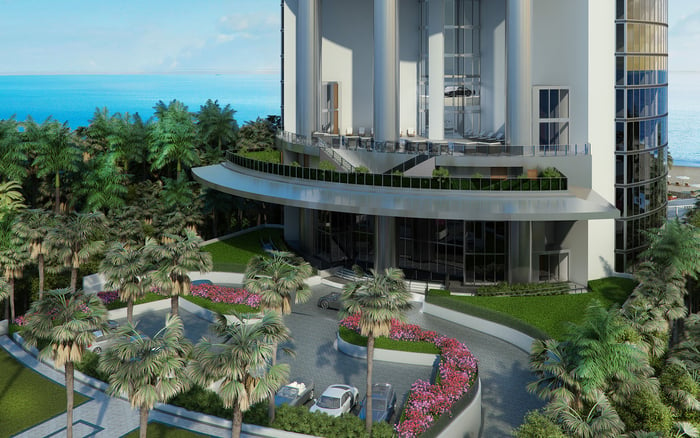
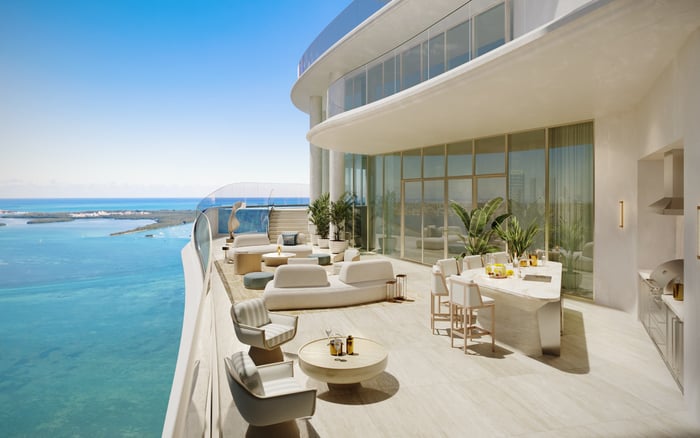
Bentley Residences pairs private sky garages with advertised smart climate controls. For buyers, the next layer of diligence is understanding network separation, service access, data privacy, and the digital handover at closing.
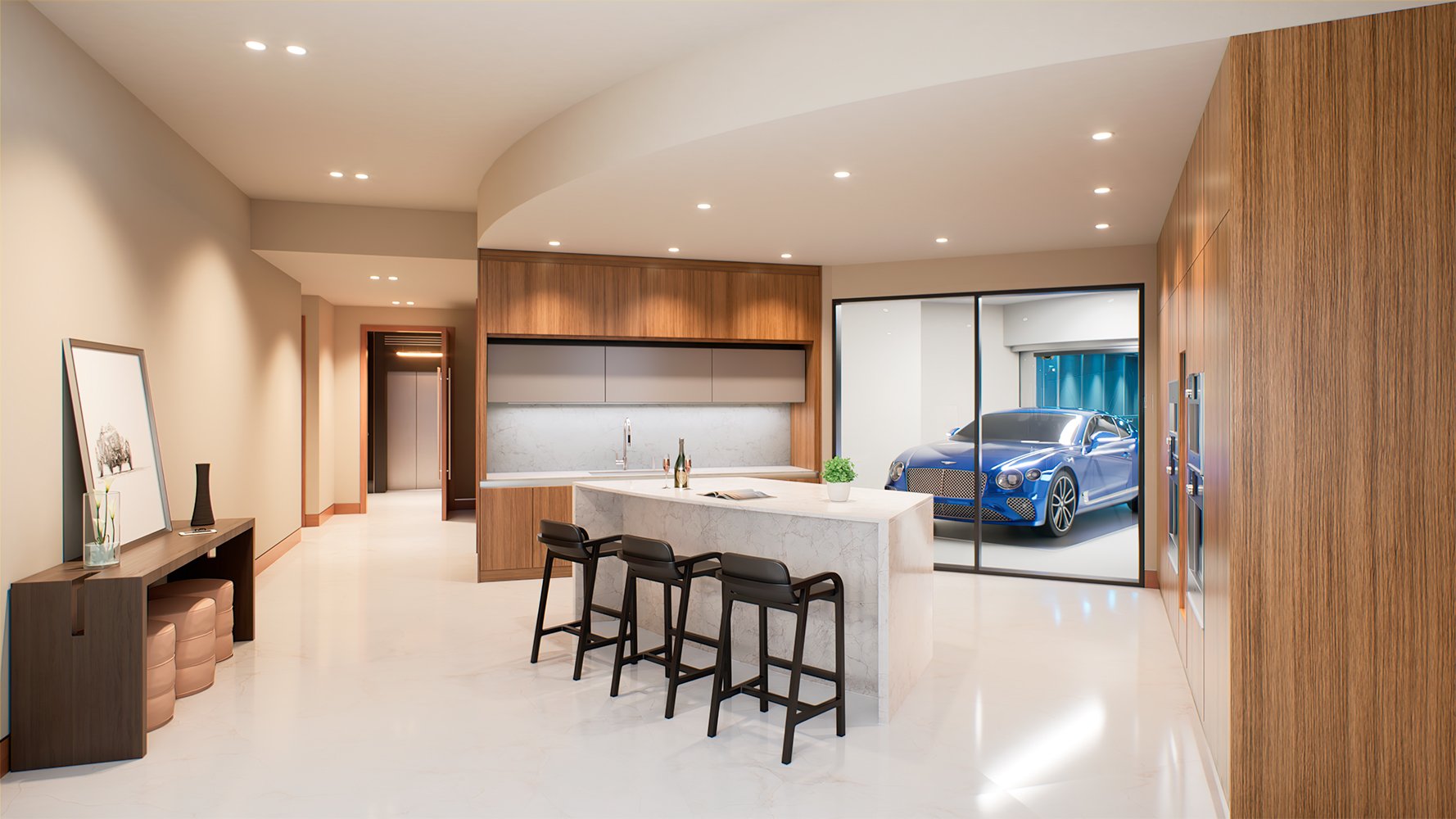
At Bentley Residences Sunny Isles, the appeal of arriving directly at a private sky garage is clear. Less visible is who controls the technology supporting daily life-and how that control passes to the owner.
The first Bentley-branded residential tower is located at 18401 Collins Avenue in Sunny Isles Beach. Advertised residence features include smart climate controls with digital thermostats and private three- or four-car garages served by the Dezervator™ vehicular elevator system. These are meaningful conveniences, but they do not establish the cybersecurity architecture behind them.
For a discerning purchaser, digital privacy deserves the same attention as physical access. The objective is not to presume a weakness, but to obtain clear, written answers about what is connected, who can access it, and who remains responsible after closing.
The advertised specifications establish smart climate controls, not a comprehensive connected-home ecosystem. Miele appliances and a wine cooler are listed, but their inclusion does not establish network connectivity or integration. Nor should buyers assume that lighting, shades, cameras, locks, or audiovisual systems share a controller or app.
Publicly disclosed residence details do not clearly identify the smart-home platform, controller vendor, resident app, or unified interface. Nor do they clearly establish network segmentation or independent cybersecurity testing. Missing disclosure is not evidence that protections are absent or that the building is insecure.
Treat advertised features as planned specifications until confirmed in purchase documents and final installation records. A first-quarter 2028 completion target was announced in February 2025; it is not a guaranteed delivery date. Request the current technical specification rather than assume early descriptions will match the delivered installation.
Start with a room-by-room inventory identifying each included connected device, its model number, controller, software, and required account. Ask which components are standard, optional, owner-supplied, or controlled by the building rather than the residence.
Then request a plain-language architecture summary. Which functions operate locally, which require internet access, and which depend on a third-party cloud service? Ask whether one interface merely displays several systems or actually administers them. Convenience is not the same as administrative authority.
Have the developer identify who selects and installs each component, who owns the administrator credentials, and what documentation the purchaser receives. If specifications remain provisional, ask how substitutions will be communicated and whether support commitments will change with the equipment. These are requests for clarification, not descriptions of confirmed project features.
Ask for a network diagram showing separation among private residences, building operations, guest connections, staff, and vendors. An independent adviser should be able to understand which systems may communicate and which are isolated without receiving unrestricted access to shared infrastructure.
Does each residence have its own network boundary? Are owner VLANs or equivalent controls used? Is guest Wi-Fi isolated from household devices? Ask who can change those settings and how changes are documented.
For a Sunny Isles comparison that includes St. Regis® Residences Sunny Isles, use the same document request. This is a consistent diligence standard, not a claim that either development has a particular network design or security advantage.
Bentley's advertised services include 24-hour security, valet, and multilingual concierge service. Like the listed built-in closet safe, these offerings address aspects of service and physical protection. They do not verify cybersecurity controls.
Ask the developer and building manager to distinguish permissions for owners, household guests, valet, concierge, maintenance personnel, and outside vendors. Does each person receive an individual credential limited to the task, or can credentials be shared? Who approves access, and how quickly can it be revoked?
The Dezervator is designed to carry residents to their private garages without leaving their vehicles. Ask separately how authorization for that journey is administered and whether any related permissions interact with residence systems. Do not assume vehicular access and home automation share credentials or infrastructure.
Request a written description of every permitted remote-service pathway. Ask who can initiate a session, whether owner approval is required, whether service accounts expire, and whether remote access can be disabled without losing core functions.
Software maintenance requires an equally precise allocation of responsibility. Who applies updates to residence equipment and building-managed components? How long is support expected to last, and who pays when equipment no longer receives updates?
Ask what independent testing can be documented, including its scope, date, and treatment of unresolved findings. A controlled review or appropriately limited assurance summary may be more suitable than circulating sensitive technical details. Request a named escalation contact and an explanation of how owners would be informed of an incident affecting their systems or data.
A buyer also considering The Ritz-Carlton Residences® Sunny Isles should bring the same questions to that conversation. Compare documented responsibilities and available controls-not branding or an assumption that extensive service automatically means stronger digital protection.
Request a data-handling summary explaining which access events are logged, who can view them, how long they are retained, where they are stored, and who owns them. Ask how an owner can obtain relevant records and what happens to those records at resale. These questions help distinguish convenient service from unnecessary visibility into household routines.
Before closing, ask what continues to function during an internet outage and what changes during a power interruption. Address climate operation, any confirmed connected access functions, and vehicular-elevator procedures separately rather than accepting a blanket assurance about backup arrangements.
Request an authorized demonstration of relevant fallback procedures and restoration steps. For an owner who spends extended periods away, clarify who may enter or service the residence, how approval is obtained, and how temporary access ends. An independent cybersecurity adviser should work only within an expressly approved inspection scope.
Request a closing checklist covering passwords, authentication tokens, digital keys, installer accounts, and any earlier access. It should identify the owner administrator, document which service permissions remain active, and provide for immediate revocation of prior-owner access at resale.
Ask counsel which technical specifications and handover commitments can be incorporated into the transaction documents. Request a responsibility schedule distinguishing the roles of the developer, installer, building manager, and owner. The strongest answer is not simply an assurance that a system is secure. It is a clear, documented account of how that system operates, is maintained, and transfers to the next owner.
For a discreet conversation about South Florida residences and buyer priorities, connect with MILLION.
If branded residences are on your mind — as a home or as an allocation — we would be glad to share what we are seeing, privately.
Begin a quiet conversationSmart climate controls with digital thermostats are advertised. A unified platform connecting lighting, shades, audiovisual equipment, security, and appliances is not clearly established in publicly disclosed residence details.
No. Missing disclosure does not establish that protections are absent; buyers should request written technical and operational clarification.
A first-quarter 2028 completion target was announced in February 2025. It is an announced target, not a guaranteed delivery date.
Request model numbers, controllers, software, required accounts, and local or cloud dependencies. The inventory should distinguish included equipment from optional, owner-supplied, and building-controlled systems.
Ask how residence networks are separated from building operations, guests, staff, and vendors. Request a diagram and clarification of who can change the isolation settings.
No. Advertised security, valet, concierge service, and a physical safe do not verify network security or digital access controls.
Ask how vehicular-elevator authorization is administered and revoked, and whether it interacts with residence systems. Do not assume it shares infrastructure or credentials with home automation.
Buyers should request a written allocation of authority identifying who may connect remotely, how sessions are approved, and when service credentials expire. These arrangements are not confirmed project features.
Include passwords, authentication tokens, digital keys, installer accounts, owner administrator rights, and retained service permissions. Request immediate revocation of prior-owner access at resale.
Yes, buyers can ask whether an adviser may inspect before closing. Any review should have an expressly authorized scope and avoid unrestricted access to shared building infrastructure.