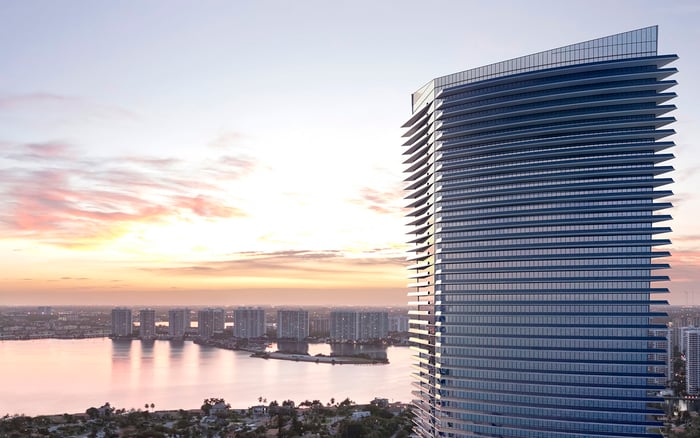
For Montreal buyers establishing a South Florida base, a considered purchase begins beyond the residence itself. Association records, structural inspections, reserve funding and insurance history reveal the building-level obligations that deserve attention before closing.

For a Montreal buyer establishing a South Florida base, the residence is only part of the acquisition. More consequential questions may lie in association files: what the building needs, how those needs will be funded and whether insurance leaves owners with meaningful exposure. A beautifully finished apartment does not answer those questions.
The objective is not to avoid every building with repairs or an assessment. It is to understand the obligations before committing. Organize the purchase around a coordinated review of governing documents, engineering records, finances and insurance, allowing sufficient time for professional interpretation before contractual review periods expire.
Request association records in writing early enough to receive and review them before the contractual inspection period ends. Ask your attorney to align the document-review schedule with the actual contract; do not assume every unresolved question can wait until closing.
The initial file should include governing documents, the current budget, recent financial statements, reserve information, assessment disclosures, insurance records, litigation information and applicable engineering and inspection records. Request the last 24 months of board minutes and special-assessment discussions as a buyer diligence measure-not as an assumed universal delivery requirement.
For a Brickell search that includes 2200 Brickell, keep the residence comparison separate from the document review. Apply the same discipline to every candidate: evaluate the records for that specific property without inferring financial or structural standing from its presentation.
Florida’s milestone-inspection program covers qualifying condominium and cooperative buildings of three or more habitable stories. A licensed engineer or architect performs the inspections. The initial phase is primarily visual; substantial structural deterioration can trigger a more detailed second phase involving further investigation or testing.
Ask for the complete milestone-inspection report and subsequent engineering documents. A statement that a building has been inspected does not explain what was found, whether additional investigation was required or which recommendations remain unresolved.
For identified repairs, request the engineer’s scope, contractor proposals, permits, municipal comments and completion records. Look for evidence that recommendations have been addressed; an approved proposal is not proof of completed work. Have your advisers distinguish among work that is proposed, permitted, underway and documented as complete.
Verify the building’s age, story count, applicable inspection deadline and certification status for the exact address. Check municipal or county recertification records alongside state milestone documentation, and identify the responsible authority. Do not assume one process establishes compliance with every other requirement.
A Structural Integrity Reserve Study, or SIRS, and adequately funded reserves are separate diligence questions. Obtain the applicable study and the association’s funding plan. Compare projected component costs and remaining useful lives with actual reserve balances and planned contributions.
Read the current budget, recent financial statements, reserve information and assessment disclosures together. The central question is not simply whether a study exists, but how the association expects to pay for the work it identifies. Ask advisers to explain where available funds and planned contributions align with projected needs-and where questions remain.
When comparing Miami Beach residences, including 57 Ocean Miami Beach, apply this financial review independently of design preferences. Neither an attractive monthly fee nor an impressive setting substitutes for a clear understanding of reserves and future owner funding. This is a review principle, not a statement about any named property’s finances.
Board minutes can connect engineering concerns to financial decisions. Read them for discussions of structural repairs, water intrusion, insurance, reserve funding, litigation, violations and special assessments. Consider those discussions alongside formal disclosures, particularly where the minutes refer to work that has not yet reached a funding decision.
Ask separately about approved, pending and proposed assessments. A current monthly maintenance figure does not capture every potential ownership cost. Where a repair is discussed but funding remains unsettled, request clarification rather than interpreting the absence of an approved charge as the absence of exposure.
For a Surfside comparison involving Arte Surfside, maintain the same distinction between lifestyle selection and building review. For any candidate, the relevant question is whether the available records explain the relationship between identified work, funding decisions and the owner’s potential obligations.
Obtain the association’s insurance declarations, limits, deductibles, exclusions and renewal terms, along with claims history and any cancellation or nonrenewal notices. Proof that a policy exists is a starting point, not a complete assessment of protection.
Ask an insurance professional to examine windstorm, flood, water damage, roof, façade and ordinance-or-law coverage specifically. Review deductibles alongside premiums: a large deductible can leave substantial costs with the association and its owners. The review should establish what the policies cover, what they exclude and which costs may remain outside insurance.
Loss history deserves separate attention. Ask about unresolved claims as well as previous losses, then compare the answers with minutes and repair records. Where documents leave a claim’s status unclear, seek clarification before treating the matter as resolved.
A Sunny Isles Beach search that includes Jade Signature Sunny Isles Beach calls for the same property-specific insurance questions. Location and architecture can guide the shortlist; neither establishes the terms, claims position or renewal standing of an association’s coverage.
When managing the process from Montreal, use a shared document file and a written list of unresolved questions. Assign each issue to the appropriate adviser: contractual interpretation to counsel, technical findings to an engineer, coverage questions to an insurance professional and project eligibility to the lender.
Confirm the condominium project’s insurance and lending standing early. Personal mortgage qualification does not guarantee project approval. Keep that review alongside the building investigation rather than allowing financing assumptions to outrun the documents.
Before proceeding, ask for a concise reconciliation of inspection findings, open repairs, reserve funding, assessments and insurance questions. The strongest purchase decision is not necessarily the one with no outstanding work; it is the one whose obligations are understood well enough to judge deliberately.
For a considered South Florida property search, connect with MILLION.
If branded residences are on your mind — as a home or as an allocation — we would be glad to share what we are seeing, privately.
Begin a quiet conversationReview the association’s governing documents, finances, reserves, assessments, insurance, litigation and applicable engineering and inspection records. These help establish the building-level obligations accompanying the residence.
Request them in writing early enough to allow professional review before the contractual inspection period ends. Have counsel confirm the timing under the actual contract.
Request the complete milestone-inspection report, the applicable Structural Integrity Reserve Study and the last 24 months of board minutes and assessment discussions. The minutes request is a buyer diligence recommendation, not a universal statutory delivery requirement.
The program covers qualifying condominium and cooperative buildings of three or more habitable stories. Confirm applicability and the inspection deadline for the specific address.
Substantial structural deterioration identified during the primarily visual initial phase can trigger further investigation or testing. Review the full findings and follow-up engineering documents.
No. Compare projected component costs and remaining useful lives with actual reserve balances, planned contributions and the association’s funding plan.
The current maintenance fee does not capture every potential ownership cost. Proposed and pending assessments can reveal funding questions that have not yet become approved charges.
Request declarations, limits, deductibles, exclusions, renewal terms, claims history and any cancellation or nonrenewal notices. Ask separately about unresolved claims.
Do not assume it does. Check municipal or county recertification records alongside state milestone documentation and identify the authority responsible for the property.
No. Confirm the project’s insurance and lending standing early rather than relying solely on the buyer’s personal qualification.