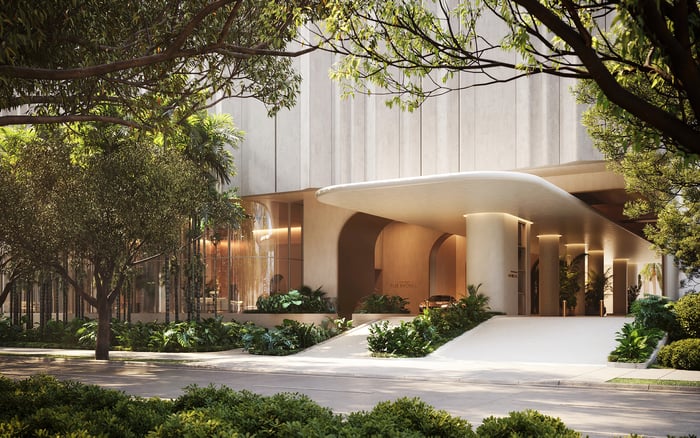
Elevator planning can influence privacy, circulation, and the transition from shared areas to a private home. This buyer-focused review explains how to evaluate vertical access at St. Regis® Residences Brickell without assuming that every residence has the same configuration.
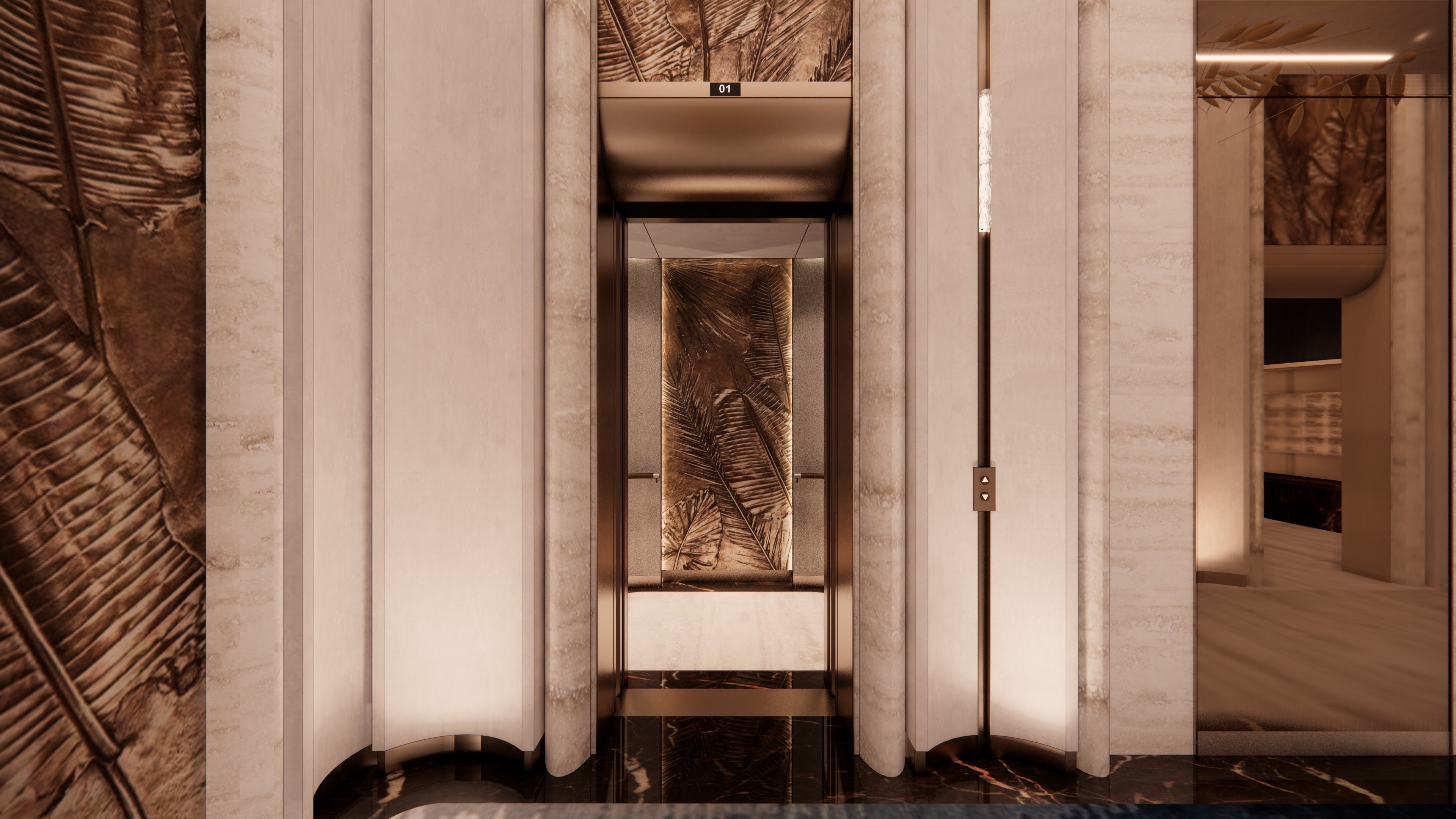
For buyers evaluating St. Regis® Residences Brickell, elevator privacy is best considered as part of the complete ownership experience. The relevant question is not simply whether an elevator is described as private, semi-private, or shared. What matters is how residents move from the building entrance to the selected home and where that journey intersects with communal space.
Vertical circulation can influence the rhythm of arrival, the frequency of incidental encounters, and the distinction between public and private areas. Its effect depends on the actual configuration serving a particular residence, so buyers should avoid applying a general building description to every floor plan.
A careful review begins before the elevator doors close. Buyers can trace the route through the arrival area, lobby, elevator waiting area, cab, residential floor, and final entry. Each transition helps reveal how much of the journey is shared and where controlled access begins.
The elevator itself is only one part of that sequence. Lobby layout, the number of residences served, the location of amenity levels, and the treatment of the space outside the front door can all affect the experience. A configuration that appears private on a floor plan may still include shared stages elsewhere in the building.
This same method can be used when touring Baccarat Residences Brickell. Comparing the full path to the residence is more informative than comparing a single marketing term.
The terms used to describe elevator access should be interpreted carefully. A private arrangement generally suggests a higher degree of separation, while a semi-private arrangement may serve a limited number of homes. A shared bank typically involves more communal circulation. The exact meaning, however, must be established through the documents and plans governing the residence under consideration.
Buyers should also determine what happens when the elevator reaches the residential level. It may open toward a vestibule, landing, or corridor, and that area may be private or shared. The relationship between the elevator and the front door often has as much influence on the sense of discretion as the cab itself.
When comparing Cipriani Residences Brickell, buyers can ask the same questions rather than assuming that branded residences follow one standard model.
Elevator privacy is not only about prestige. It can affect how exposed or composed the final approach to a home feels, particularly when residents are returning with guests, luggage, or deliveries. A more separated route may feel quieter and more residential, while a shared route may create more frequent interaction.
Neither arrangement should be judged by its label alone. Some buyers value separation, while others are comfortable with a more social building environment. The appropriate choice depends on personal priorities and the verified layout of the selected residence.
Vertical access also does not make an entire tower private. Entrances, parking areas, amenity spaces, and other common areas may remain shared. The useful distinction is the degree of control and separation provided along specific portions of the route home.
In a single-family setting, privacy can be created through distance and a sequence of outdoor thresholds. A high-rise cannot reproduce that arrangement exactly, but elevator planning can create a vertical progression from common space toward the residence.
The comparison is experiential rather than literal. Buyers assessing The Residences at 1428 Brickell alongside St. Regis® Residences Brickell should focus on how clearly each transition signals movement into a more private zone.
A tour should test the route rather than stop at the residence interior. Buyers can note where access is controlled, how the elevator is called, whether the waiting area is shared, where guests arrive, and what lies between the elevator and the front door. They should also ask whether the observed arrangement applies to the exact home being considered.
Comparing another Brickell property, such as Una Residences Brickell, can clarify which circulation patterns feel most comfortable. Any comparison should remain residence-specific because layouts can differ within a building.
Before relying on a description of elevator privacy, buyers should review the current plans and condominium offering documents applicable to the selected residence. Those materials can clarify which elevator serves the home, whether the landing or vestibule is shared, and which parts of the arrival route are common areas.
Buyers should also confirm how resident, guest, and service access is organized. The objective is not to infer a configuration from branding or general promotional language, but to understand the documented path associated with the particular home.
Does every residence at St. Regis® Residences Brickell have the same elevator arrangement?
The configuration should be verified for the specific residence rather than assumed to be uniform throughout the building?
What is the difference between private and semi-private elevator access?
The terms generally indicate different degrees of separation, but the applicable plans and documents should establish the precise arrangement?
Why should buyers examine the entire arrival route?
Privacy depends on every transition between the building entrance and the home, not only on the elevator cab?
What should buyers inspect outside the elevator doors?
They should determine whether the elevator opens to a private vestibule, a shared landing, or a communal corridor?
Can elevator access eliminate all encounters with other residents?
No. Other parts of a condominium may still involve shared circulation?
For a confidential assessment and a building-by-building shortlist, connect with MILLION.
If branded residences are on your mind — as a home or as an allocation — we would be glad to share what we are seeing, privately.
Begin a quiet conversation