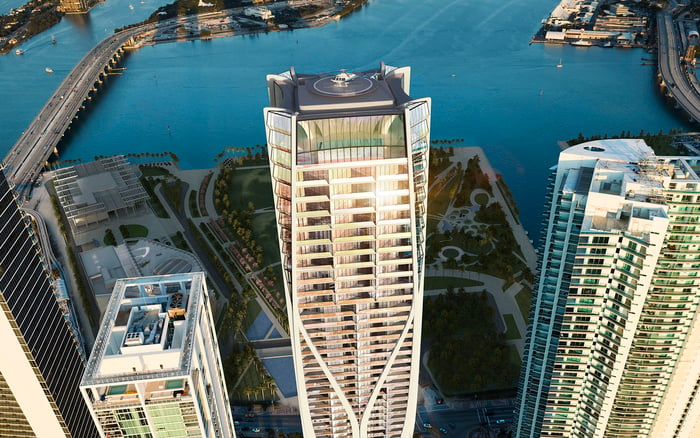
Both residences deliver direct Atlantic beach access, but neither includes yacht mooring. The decisive issue for boat-owning buyers is how well an independently secured berth fits daily routines, crew logistics, provisioning, and storm planning.
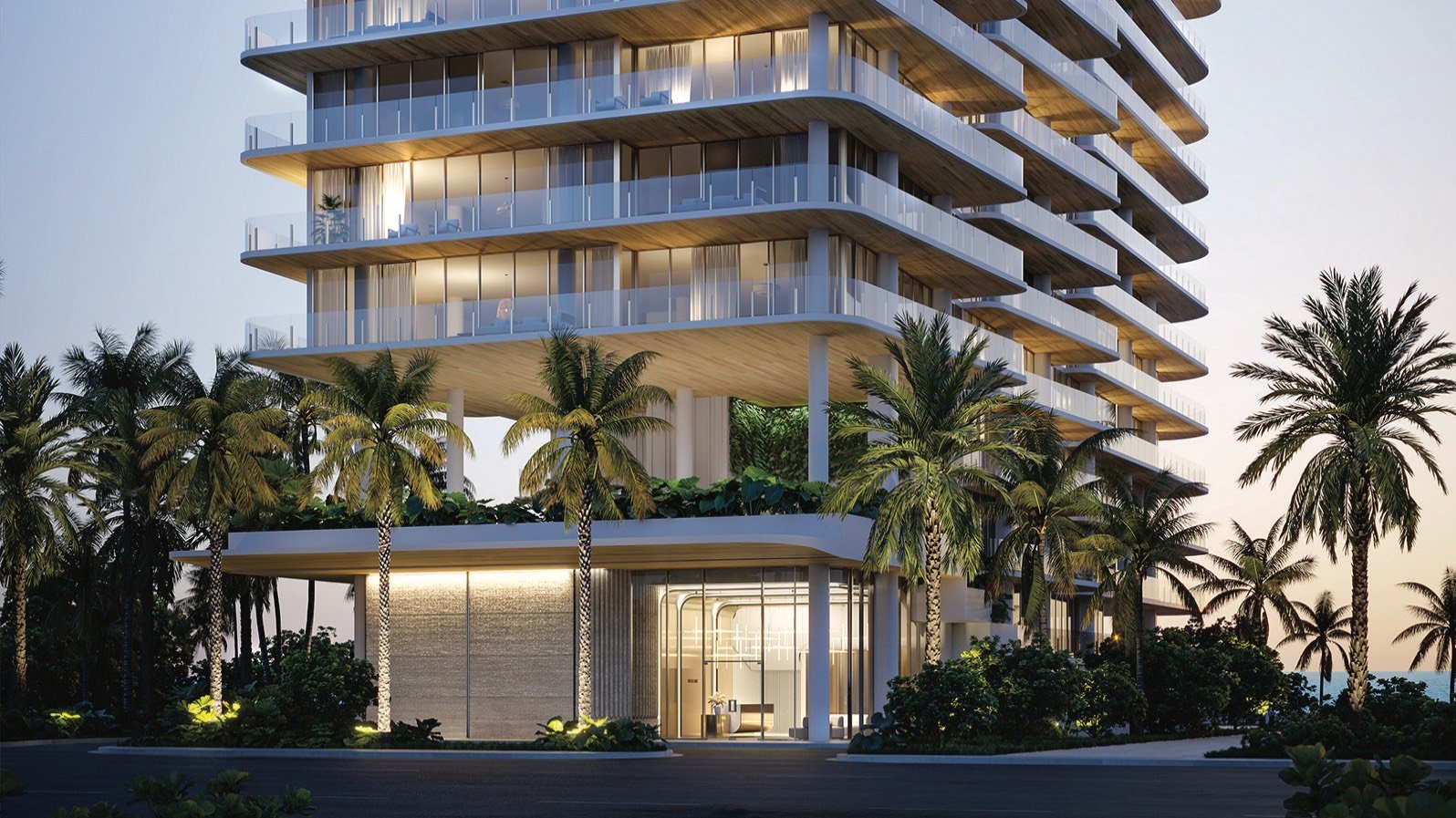
For a yacht owner, a residence can feel connected to the water without offering direct access to a vessel. That distinction is central to comparing Eighty Seven Park Surfside with Ocean House Surfside. Both occupy Atlantic-facing beachfront settings with direct beach access, yet neither is an integrated marina condominium with on-site yacht mooring.
The purchase decision, therefore, is not a choice between two private dockage solutions. It is a comparison of oceanfront homes that must be paired with a separately arranged berth at a marina or another permitted marine facility. For buyers accustomed to stepping directly from a residence onto a yacht, this requires a recalibration of convenience.
Eighty Seven Park is positioned at the southern edge of Surfside’s residential corridor rather than within the town’s central oceanfront zone. Its appeal to a yacht owner begins with Atlantic frontage and direct beach access, but the vessel must be stored elsewhere. The practical experience will depend on the road transfer between the residence and the owner’s chosen berth.
Its municipal address and jurisdiction warrant confirmation during due diligence rather than assumption. That detail may influence how a buyer evaluates local administration, services, access routines, and the residence’s relationship to Surfside proper.
Ocean House occupies Surfside’s central oceanfront area and similarly provides a beachfront residential environment with direct beach access. It does not include on-site mooring, so its value to a yacht owner also depends on the location and operating suitability of an off-site berth.
The geographic distinction between the buildings is meaningful, but it does not alter the fundamental ownership structure: in both cases, the home and yacht slip are separate commitments.
A yacht owner should test the complete transfer rather than rely on a general impression of coastal proximity. The relevant journey begins at the condominium, continues by road to the selected facility, and concludes with access to the vessel. A convenient routine for an owner may differ from a workable one for a captain, crew, guests, vendors, or provisioning teams.
No driving times or inlet distances should be assumed without verification. Conditions can vary, and a berth that appears nearby on a map may not suit the vessel or the owner’s operating pattern. Buyers should travel the route at the times they expect to use it, examine arrival and parking procedures, and consider how luggage, catering, equipment, and guests would move through each stage.
A boat slip is not conveyed merely because a residence is beachfront. Availability must be confirmed independently, and the timing of a condominium purchase should be coordinated with the process of securing appropriate vessel storage.
The berth review should begin with the yacht itself. Confirm permitted vessel dimensions, draft constraints, bridge restrictions, and the route from the marine facility to open water. Maximum vessel lengths, slip rates, and specific marina capabilities are not established here, so each point requires direct verification before the residential decision is finalized.
Operational questions matter just as much. Buyers should assess crew access, parking, provisioning routes, vendor policies, security procedures, and available marine services. A facility suited to occasional owner use may prove less effective for a professionally crewed yacht requiring regular maintenance, deliveries, or rapid departure preparation.
Hurricane planning also belongs in the acquisition analysis. The owner should understand the marina’s storm procedures, the vessel’s relocation plan, crew responsibilities, and any alternative arrangements required as conditions change. These considerations are separate from the condominium’s own emergency protocols.
A disciplined buyer will underwrite the residence and berth as two coordinated assets. That means reviewing separate costs, rules, access rights, availability, and contingency plans rather than treating off-site dockage as an informal detail to resolve after closing.
Buyers considering a wider Surfside search may also encounter Arte Surfside and The Surf Club Four Seasons Surfside. These residences help frame the broader residential landscape, but every project must be evaluated on its own verified boating provisions. Waterfront or oceanfront positioning alone should never be interpreted as evidence of a private slip.
The most useful comparison matrix separates residential qualities from marine logistics. One column can address beach access, location within the corridor, and preferred home characteristics. Another should address berth security, transfer practicality, crew operations, vessel constraints, and storm readiness.
Neither building should be dismissed because it lacks integrated mooring. For many owners, a polished beachfront residence paired with a professionally suitable off-site berth may be the preferred arrangement. The essential question is whether that pairing remains elegant in daily use.
Eighty Seven Park should be assessed as a residence at the corridor’s southern edge with off-site vessel storage. Ocean House should be assessed as a central Surfside oceanfront home near South Florida’s wider boating infrastructure-not as a private dockage solution. The stronger choice is the one whose location works most naturally with a berth the buyer can actually secure and operate.
Does Eighty Seven Park include on-site yacht slips? No. It is an oceanfront condominium, and yacht owners need a separate berth elsewhere.
Does Ocean House Surfside offer private yacht mooring? No. Owners must arrange a slip at a marina or another permitted marine facility.
Do both buildings provide direct beach access? Yes. Both offer Atlantic beachfront settings with direct access to the beach.
Is Eighty Seven Park in central Surfside? No. It is positioned at the southern edge of Surfside’s residential corridor, and its municipal jurisdiction should be verified.
Where is Ocean House located within Surfside? Ocean House is situated in Surfside’s central oceanfront area.
Does buying in either building secure a yacht berth? No. Marina availability and the right berth for the vessel must be confirmed separately.
What makes an off-site berth convenient? The road transfer, parking, crew access, provisioning route, security procedures, and vessel access collectively shape convenience.
Which vessel constraints should buyers verify? Confirm permitted dimensions, draft, bridge restrictions, and the route from the facility to open water.
Should hurricane planning be reviewed before purchase? Yes. Buyers should understand marina storm procedures, crew responsibilities, relocation plans, and alternative arrangements.
Which residence is better for a yacht owner? The better fit depends on the secured berth and how effectively the residence-to-marina transfer supports the owner’s routine.
If you'd like a private walkthrough and a curated shortlist, connect with MILLION.
If branded residences are on your mind — as a home or as an allocation — we would be glad to share what we are seeing, privately.
Begin a quiet conversation