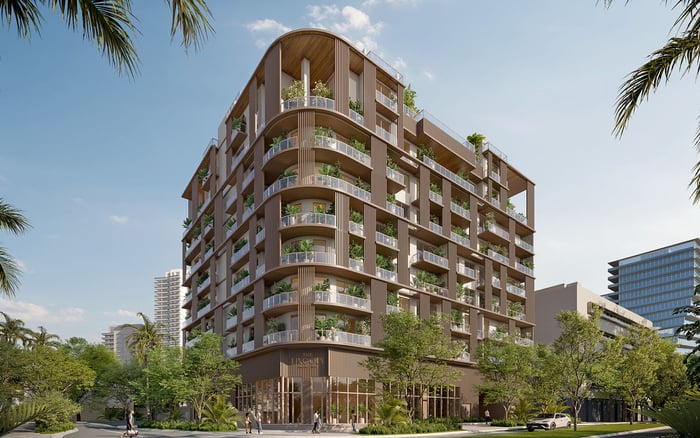
Design choices at Cora Merrick Park should be evaluated through written scope, approval, cost and schedule terms. Buyers should also consider whether personalized layouts and finishes will remain practical and broadly marketable at resale.

At Cora Merrick Park, buyers considering customization should begin with the documents governing their specific residence. The term “design package” can refer to different levels of choice, so it should not be treated as proof that a particular finish palette, upgrade tier, layout change or bespoke program is available.
Ask the sales and development teams to identify each option in writing. The response should distinguish standard specifications from upgrades, owner-requested changes and substitutions initiated by the project team. It should also state which documents control if a presentation, plan and purchase agreement differ.
This documentary approach is useful when comparing nearby residences such as Ponce Park Coral Gables. Each project may define choices differently, and assumptions based on another development can lead to costly misunderstandings.
A decorative selection and a plan modification do not carry the same scheduling risk. A request involving walls, plumbing, electrical work, mechanical systems or built-in elements may require additional review and coordination. Whether any request is feasible depends on written approval and the stage of work for the specific residence.
Before making a commitment, buyers should request the selection calendar, approval process and final change deadline. They should also determine whether a late decision, revised drawing, unavailable material or rejected request could affect delivery or trigger added costs.
The controlling agreement should explain how changes interact with the broader completion framework. Any promise that a request will not affect timing should be incorporated into the relevant signed document rather than left as a verbal assurance.
A complete customization budget extends beyond the quoted price of a material or feature. Buyers should clarify design fees, professional fees, change-order charges, deposits, taxes, installation expenses and any cost associated with a later revision or restoration.
Written terms should identify who approves drawings, who selects substitutes, when payments become nonrefundable and what happens if an option cannot be delivered. They should also address whether cancellation of a requested change affects the residence purchase or only the separate change order.
A comparison with The Village at Coral Gables should follow the same method: review the contract, exhibits, plans and selection materials for that residence rather than assuming uniform practices across Coral Gables developments.
Customization can make a residence better suited to its first owner, but resale depends on how future buyers understand and use the result. A coherent layout, adaptable rooms, practical storage and clearly defined private and social areas may be easier to evaluate than a plan organized around a highly specific lifestyle.
More distinctive is not automatically more valuable. Unusual circulation, specialized rooms or finishes that require immediate replacement can narrow the audience. Conversely, restrained choices that improve daily function without limiting future use may support broader marketability.
Buyers should evaluate both the personal benefit and the potential exit cost of each decision. That includes considering whether a later owner could reverse the change, what restoration might involve and whether the completed work will be supported by plans, specifications and warranties.
Wellness-oriented design can also influence buyer preferences, but project claims should remain distinct. The Well Coconut Grove may provide another South Florida comparison point without establishing what is included or available at Cora Merrick Park.
First, define the household need the proposed choice is intended to solve. Next, confirm availability and feasibility in writing for the selected residence. Then obtain the complete price, payment schedule, approval path and possible effect on delivery before authorizing work.
Review the proposed result as both an owner and a future seller. Consider whether the change preserves intuitive circulation, flexible use and a commercially understandable layout. If the choice is strongly personal, estimate the possible cost and disruption of reversing it later.
Finally, retain a complete record through closing and ownership. Signed amendments, approved drawings, finish schedules, receipts, warranties and substitution notices can help establish what was authorized and delivered.
What should buyers verify before choosing a design package? Confirm the available options, standard specifications, upgrade costs, deadlines and approval requirements in writing for the selected residence.
Does “design package” guarantee a menu of finish choices? No. The phrase should not be treated as a guarantee unless the specific choices are identified in controlling project documents.
Can a customization request affect delivery timing? It can if the request requires added review, revised plans, material sourcing or construction coordination. Any timing consequence should be documented before approval.
Which customization costs should be reviewed? Consider change-order charges, design and professional fees, deposits, installation expenses, taxes and potential revision or restoration costs.
When does a selection become final? The applicable agreement or selection schedule should identify the deadline, approval point and circumstances under which payments become nonrefundable.
How should material substitutions be handled? Written terms should identify when substitutions are permitted, who approves them and whether the buyer has any selection or cancellation rights.
Can personalization improve resale appeal? It may when it enhances function and remains useful to a broad audience, but no particular choice guarantees a resale premium.
What choices may narrow the future buyer pool? Highly specialized rooms, unconventional circulation and finishes that require immediate replacement may appeal to fewer purchasers.
Why compare Cora Merrick Park with other South Florida projects? Comparisons can help buyers evaluate different approaches, but each project’s options and obligations must be assessed from its own documents.
What records should an owner retain? Keep signed amendments, approved plans, specifications, receipts, warranties and substitution notices for closing, ownership and a future sale.
To compare the best-fit options with clarity, connect with MILLION.
If branded residences are on your mind — as a home or as an allocation — we would be glad to share what we are seeing, privately.
Begin a quiet conversation