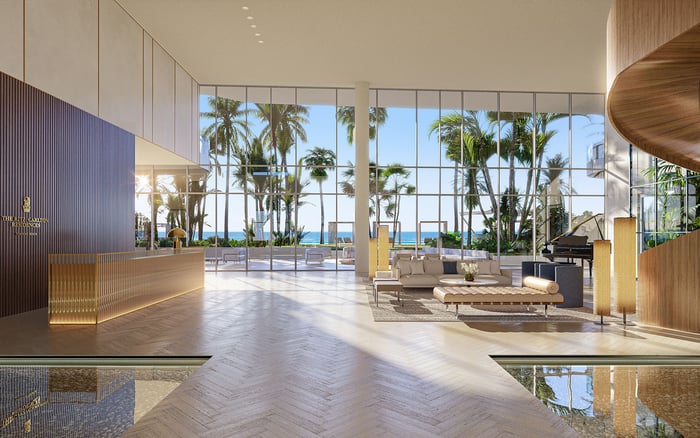
A discreet security plan begins with clear authority, not additional equipment. For Pompano Beach buyers, the essential due diligence covers building permissions, individual and agency licensing, continuous staffing, and tightly controlled access to household information.

In Pompano Beach, the view may establish a residence’s appeal, but less visible arrangements deserve equally careful attention. For a household considering full-time private security, the central question is not simply who will stand watch. It is who may authorize entry, who controls access to the residence, and what information each participant needs.
The most discreet arrangement is a clearly defined layer of private-residence protection, not a parallel building administration. A private officer should complement the building’s approved procedures rather than assume authority over shared entrances, elevators, contractors, or cameras. That distinction belongs in the buyer’s due diligence before a staffing contract or equipment purchase.
For buyers considering The Ritz-Carlton Residences® Pompano Beach, the practical inquiry is the same: request the applicable governing documents and management-approved procedures. A project’s identity does not establish permission for a household’s preferred security arrangement.
Start with a written responsibility map. Identify who grants building entry, who approves access to the unit, and who coordinates emergencies. Separate household authorization from the credentials or permissions the building requires. The objective is to prevent a visitor from receiving conflicting instructions at different stages of arrival.
Ask management to approve procedures before a private officer issues credentials, overrides elevator restrictions, accesses common-area camera feeds, or admits contractors. Treat these as questions of permission, not assumed privileges of ownership. The relevant building documents and written approvals should determine the limits.
A useful planning document traces an arrival from entrance to residence. At each step, record the authorized decision-maker, the communication method, and the response when authorization is unavailable. Address guests, household employees, deliveries, and service appointments explicitly rather than leaving officers to improvise.
Keep emergency responsibilities equally clear. The household’s instructions should identify the building contact and define how the private team coordinates with management without replacing established emergency procedures.
Licensing diligence in Florida should distinguish the business providing the service from the individuals assigned to the residence. Neither check substitutes for the other.
A person or company operating a private security agency must hold a Class B private-security-agency license. That license is valid for one business location; it is not unrestricted authorization for multiple agency locations. Ask the vendor to identify the licensed location associated with the proposed engagement. A company name alone is not sufficient verification.
Individuals performing security-officer services require a Class D license. Applicants must complete at least 40 hours of professional training at a licensed security school or training facility. Obtain licensing details for the assigned personnel and define how replacement officers will be checked before deployment.
For a buyer evaluating Armani Casa Residences Pompano Beach, this review should remain separate from the property decision. Selecting a residence and selecting a qualified private security provider are distinct exercises, each requiring its own documentation.
“Full-time” should describe an operating commitment, not merely a reassuring phrase. Specify the hours and locations of coverage, then identify the legal employer, supervisor, relief arrangements, shift handoffs, and absence coverage. The agreement should make clear who is accountable when an assigned officer cannot attend.
State the armed-versus-unarmed scope expressly. An armed security officer needs the applicable security credential plus a Class G statewide firearm license. Initial Class G training requires 28 hours of classroom and range instruction. Class G authorizes firearm use within the regulated duties; it does not replace the underlying security-officer credential.
An armed arrangement should not be the default response to a luxury address. Assess the intended duties and obtain building-approved procedures before finalizing that scope. Ground the decision in the household’s protection needs and the permissions applicable to the property.
Handoffs should transfer necessary operational information without circulating the family’s routines more widely with each shift. Define what must be recorded, who reviews it, and how unresolved access decisions are escalated.
Before commissioning additional cameras or access devices, map the existing arrangements. Document coverage, apparent gaps, device ownership, recording ownership, and any integration management has approved. The purpose is to identify a genuine need before creating overlapping systems.
For purchasers reviewing Ocean 580 Pompano Beach, the useful question is not how many devices a household could install. It is what the building permits, what its systems already address, and which private-residence needs remain unresolved.
Distinguish permission to view footage from permission to export it. Likewise, distinguish possession of a credential from authority to issue another one. These boundaries should appear in the operating instructions so that convenience does not quietly expand access.
Where integration is proposed, request written approval defining its scope. Avoid designing a private system around assumed access to common-area feeds or shared access controls.
Security personnel may need selected household information to perform their duties. That does not justify unrestricted access to schedules, guest details, or recordings. Limit information to operational need and define access by role.
Put retention periods, export permissions, audit logs, and confidentiality terms in writing. Identify who may authorize a footage release and how that decision is documented. Have counsel review audio recording before enabling it rather than treating it as an incidental camera feature.
Have counsel assess the retention requirements applicable to the property rather than adopting an assumed period for every household recording.
For buyers considering Waldorf Astoria Residences Pompano Beach, privacy diligence should accompany access diligence. Confirm the applicable policies directly rather than assuming a branded setting resolves either question.
Across Broward, buyers can approach private security as a test of operational fit. Before committing to an arrangement, assemble the building permissions, vendor licensing details, staffing plan, responsibility map, and privacy terms into a single package for review.
The aim is not maximum visibility or maximum data collection. It is dependable coverage with clear limits: no duplicated authority, no assumed system access, and no unnecessary exposure of household life. A residence should accommodate that discipline as comfortably as it accommodates the view.
For a considered approach to Pompano Beach ownership, explore residential opportunities with MILLION.
If branded residences are on your mind — as a home or as an allocation — we would be glad to share what we are seeing, privately.
Begin a quiet conversationDocument who authorizes building entry, who approves unit access, and who coordinates emergencies. Obtain the applicable building procedures before defining the private team’s duties.
Do not assume that authority. Obtain building-approved procedures before permitting either activity.
A person or company operating a private security agency must hold a Class B license. Verify the agency separately from each assigned officer.
No. A Class B license is valid for one business location, so identify the licensed location associated with the engagement.
Individuals performing security-officer services require a Class D license. Applicants must complete at least 40 hours of professional training at a licensed security school or training facility.
An armed officer needs the applicable security credential plus a Class G statewide firearm license. Initial Class G training requires 28 hours of classroom and range instruction.
Specify coverage hours, the legal employer, supervision, relief staffing, handoffs, and absence coverage. Define the armed-versus-unarmed scope explicitly.
Map existing cameras and access controls first. Document coverage gaps, ownership, and approved integration before purchasing additional equipment.
Have counsel assess the requirements applicable to the property. Establish written retention periods for the relevant recordings rather than adopting an assumed period for every feed.
Restrict information and footage access to operational need, with written export permissions, audit logs, and confidentiality terms. Obtain counsel review before enabling audio recording.