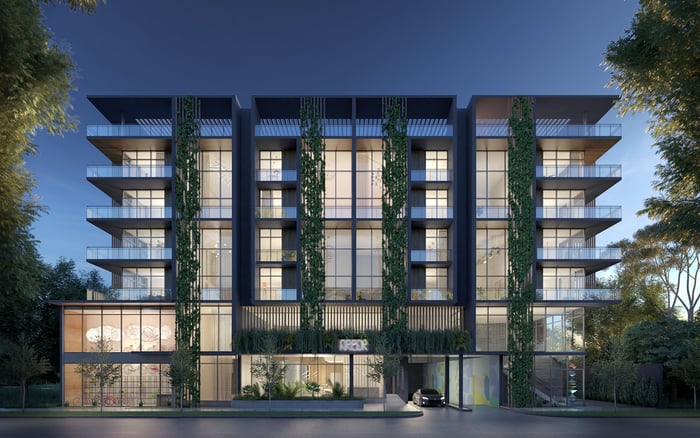
A buyer-focused guide to separating title, municipal, association, construction, and insurance issues in Coconut Grove, with a disciplined approach to tracking unresolved matters before closing.

In Coconut Grove, a compelling residence can make a decision feel immediate. The more consequential questions, however, may sit outside the apartment: an association dispute, an unresolved municipal violation, a construction claim still in its pre-suit phase, or an insurer’s unanswered coverage position. None can be evaluated from the view.
For buyers considering Park Grove Coconut Grove or another neighborhood address, the discipline is the same: separate the property’s appeal from the evidence needed to close comfortably. The project references here provide neighborhood context, not assertions of litigation, defects, or insurance difficulties at those properties.
A title search alone does not establish the absence of association-level claims. The objective is not merely to identify a dispute, but to understand its current status, potential financial exposure, and relevance to the proposed purchase.
Title defects, municipal enforcement, association litigation, construction claims, and insurance disputes require distinct reviews. They may intersect, but a satisfactory answer in one category does not resolve the others.
Ask counsel to organize the review around five questions: What affects ownership or recorded title? What remains unresolved with the relevant municipality? What proceedings involve the association? What construction complaints exist before or after filing? What coverage has actually been acknowledged?
Keep the answers in a transaction file rather than relying on a general assurance that the building is “clear.” For each matter, request the relevant documents, the latest dated status, the party responsible for responding, and evidence supporting any claimed resolution. A settlement document, a repair record, and a lien release answer different questions; one should not substitute for another.
For Coconut Grove properties within City of Miami limits, a public lien-and-violation search is available to prospective purchasers. Treat it as a separate diligence step, not an assumed component of the association review.
Miami-Dade’s enforcement-research service covers real property in unincorporated Miami-Dade County. Confirm the property’s jurisdiction before ordering it. A county service should not be mistaken for a universal municipal clearance.
Within its scope, county research can identify unsafe-structure matters, work without permits, expired permits, minimum-housing issues, and neighborhood or environmental matters. County enforcement remedies can include notices of violation, citations, fines, recorded liens, and civil proceedings. Contractor-license liens are another reason permit status alone is insufficient.
Where an issue appears, request both the underlying notice and evidence of disposition. Public records can establish that a matter exists; they do not, by themselves, establish repair cost, liability, insurance recovery, or whether closing can proceed.
A resale buyer should supplement unit-level closing documents with board minutes, financial-statement contingency notes, and written responses from management or association counsel. Those materials help frame questions a title search cannot answer.
For a buyer evaluating Arbor Coconut Grove, or any other address, the useful request is specific: identify pending proceedings, pre-suit construction claims, unresolved coverage disputes, and documents supporting any statement that a matter has concluded. This is a recommended diligence approach, not a universal statutory checklist.
Ask counsel to distinguish allegations from established findings, and claimed damages from documented repair estimates. Do not translate a lawsuit’s headline demand into a presumed obligation for an individual owner. Equally, do not treat the absence of a filed case as proof that no material dispute exists.
Florida Chapter 558 generally requires notice to contractors, subcontractors, or design professionals before a construction-defect lawsuit is filed. Its pre-litigation process generally gives recipients an opportunity to inspect alleged defects and respond. A meaningful dispute may therefore exist before it appears in a court search.
Request applicable Chapter 558 notices, responses, engineering assessments, repair estimates, and any settlement or release documents. Ask which conditions remain unresolved and what evidence supports the proposed remedy. A notice describes a claim, not a final determination of liability.
Construction-defect disputes at newly built Miami luxury condominiums have involved concrete cracking and roofing failures. These examples explain why common-element conditions deserve attention even when an individual residence presents beautifully. They do not establish defects at any project named here.
For purchasers considering Four Seasons Residences Coconut Grove, the broader principle remains: consider design and brand appeal separately from transaction-specific construction diligence.
Keep four insurance categories distinct: title insurance, association master-property coverage, unit-owner coverage, and developer liability insurance. Each addresses different risks. A favorable answer about one policy should not be treated as confirmation of coverage under another.
A construction-defect claim does not guarantee an insurance-funded repair. Coverage depends on policy terms, alleged damage, timing, exclusions, and the insurer’s position. Request relevant coverage correspondence and ask an insurance adviser to distinguish an asserted claim from an acknowledged obligation to pay.
Construction-defect litigation has increased developers’ insurance costs, but that does not establish that a particular purchaser’s unit policy will be denied or repriced. Obtain transaction-specific advice on available coverage and unresolved questions rather than extrapolating from another party’s insurance experience.
Pending litigation should not be described as an automatic financing prohibition. A claim’s existence alone does not establish how a particular lender will evaluate the project or transaction.
Provide the proposed lender with the relevant complaint or pre-suit notice, current status information, repair estimates, and available coverage correspondence. Request a written assessment of what remains necessary for the intended loan. Have counsel coordinate the legal explanation rather than relying on a sales summary.
Track lending and insurance responses separately. An acceptable title position does not answer the lender’s project questions, and a lender’s response does not establish insurance coverage. The buyer needs clarity across each review before treating the file as resolved.
In March 2024, receiver Alan Fine sought court permission to sell 12 Coconut Avenue townhouses despite code violations, liens, and purchase contracts dating from 2018-2023. The requested relief included sales free and clear of liens and claims so purchasers could obtain title insurance with reduced exposure to legacy disputes.
That example illustrates the importance of transaction-specific legal relief. It does not establish current conditions at those townhouses, a completed outcome, or a blanket mechanism available to other buyers.
Before closing, ask the advisory team to refresh each open item and identify the evidence required to resolve it. The strongest purchase decision distinguishes what is known, what remains contested, and what still requires a written answer.
For a considered approach to your next Coconut Grove purchase, connect with MILLION.
If branded residences are on your mind — as a home or as an allocation — we would be glad to share what we are seeing, privately.
Begin a quiet conversationNo. A title search alone does not establish the absence of association-level claims, so association documents and written responses should supplement it.
For properties within City of Miami limits, the city offers a public lien-and-violation search. Confirm jurisdiction before choosing a search service.
The county enforcement-research service covers real property in unincorporated Miami-Dade County. It should not be treated as a substitute for the appropriate municipal search.
Request board minutes, financial-statement contingency notes, and written responses from management or counsel. Relevant complaints, construction notices, coverage correspondence, and resolution documents can support the review.
Yes. Florida Chapter 558 generally requires pre-suit notice and gives recipients an opportunity to inspect alleged defects and respond.
No. Coverage depends on policy terms, alleged damage, timing, exclusions, and the insurer’s position.
Do not assume an automatic prohibition. Obtain a transaction-specific assessment from the proposed lender using the relevant claim documents and current status information.
No. Title insurance, association master-property coverage, unit-owner coverage, and developer liability insurance address different risks.
It describes a receiver’s request for permission to sell 12 townhouses, including requested relief from liens and claims. It does not establish current conditions or a blanket solution for other properties.
Track the relevant documents, latest dated status, responsible responding party, and evidence needed for resolution. Seek separate legal, lending, and insurance answers where applicable.