A buyer-focused framework for separating Mr. C Residences Boca Raton’s planned residential offering from unverified litigation, insurance and financing questions, with a precise document agenda for informed decisions.

At Mr. C Residences Boca Raton, the appeal is a planned collection of 133 private residences with a hospitality-led residential identity. For a buyer considering a substantial commitment, however, the decisive questions extend beyond the amenities: what legal obligations attach to the purchase, what insurance arrangements are documented, and what financing conditions could affect execution?
Project-specific litigation disclosures, insurance-renewal negotiations and lender reaction remain unverified here. That is neither evidence of distress nor a clean bill of health. The appropriate response is focused document review, not a conclusion drawn from branding or silence.
Decision-grade diligence separates three things: what is planned, what is contractually promised and what remains unresolved. Keeping those categories distinct allows a buyer to appreciate the residence without letting enthusiasm substitute for evidence.
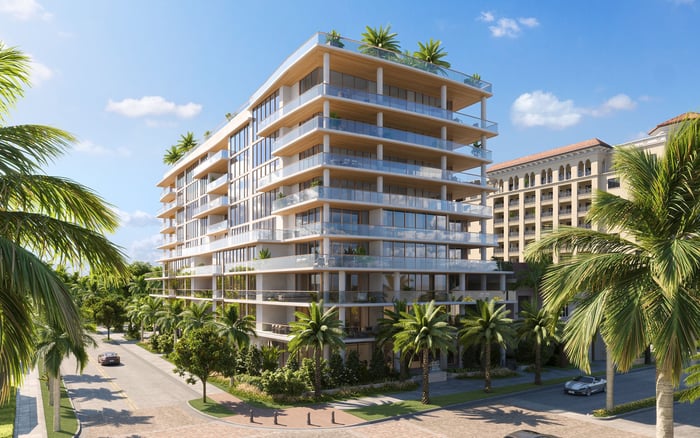
The planned development’s address is 41 SE 4th Street, with Key International and Wexford Real Estate Investors identified as the developers. Plans describe a 12-story tower with two- and three-bedroom residences. Planned amenities include on-site Bellini dining, indoor and outdoor amenity spaces, and a rooftop resort deck.
Advertised starting prices of approximately $1.7 million for two-bedroom residences and an expected top-penthouse price of approximately $8.5 million are marketing indications, not confirmed transaction prices. Likewise, the projected 2029 completion is an estimate, not a contractual delivery commitment. A definitive construction commencement date has not been established here.
Before comparing layouts or premiums, request the current offering documents, proposed purchase agreement and applicable amendments. Have counsel identify the provisions governing delivery, changes to the offering, deposits and remedies. The objective is to understand the purchase offered today-not assemble contractual expectations from separate marketing statements.
Project-specific litigation remains unverified here. This is not a representation that no lawsuits exist. A buyer’s legal review should begin with requests for developer and contractor litigation disclosures, then establish the relevant legal entities and properties for county and federal docket searches.
Ask counsel to coordinate title, lien, UCC and judgment searches as appropriate. The useful deliverable is more than a collection of search results: it is a written explanation of whether any identified matter concerns the property, contracting parties, construction obligations or the buyer’s rights, and what follow-up would clarify its significance.
An important contractual distinction also warrants attention: website-use terms should not be treated as project-wide litigation disclosures or assumed to establish the dispute provisions in a purchaser’s signed contract.
The agreement presented for signature requires its own review. Ask counsel to explain its actual dispute process, notice requirements and remedies without importing provisions from another document.
The Residences at Mandarin Oriental Boca Raton is a separate development. Any litigation or financing disclosures reviewed for that property should not be attributed to Mr. C.
The lesson is procedural, not predictive: establish the legal and financial record of the specific property under consideration. A shared city or hospitality-oriented identity does not establish shared ownership, construction difficulties or financing problems.
For buyers also considering Alina Residences Boca Raton, the comparison should likewise remain property-specific. Apply a consistent document checklist, but do not treat another development’s record as evidence for or against this purchase.
Carrier identities, limits, deductibles, exclusions, claims history, placement status and renewal correspondence remain unverified here for Mr. C. There is no established basis here to describe an insurance-renewal negotiation as contentious, successful or even underway.
Request actual policies and endorsements alongside certificates, together with available loss runs and relevant renewal correspondence. Ask an insurance adviser to identify the named insureds, insured property, effective periods and material coverage conditions. If a requested document is not yet applicable, seek a written explanation of the anticipated placement stage and responsibility.
For any renewal under discussion, distinguish an indicative quotation from documented coverage. Ask which terms are proposed, what remains subject to underwriting and whether deductibles, exclusions or limits would change. Request applicable replacement-cost and reserve documentation rather than assuming an advertised budget resolves those questions.
The question for the buyer is precise: what insurance obligation or potential cost could reach the purchaser, under which document, and at what stage? The answer should come from the relevant contract and coverage review, not a generalized assurance that the project is insured.
The construction lender, loan principal, maturity, extensions, pricing and covenants remain unverified here. So does any lender rejection, repricing, acceleration or default. Neither lender confidence nor lender concern can responsibly be inferred from those unknowns.
Request construction-loan information and recorded-mortgage documents where available, with counsel assessing their relevance to the purchase. Ask which financing milestones remain outstanding, what documentation supports the stated position and whether any disclosed conditions intersect with contractual delivery obligations. These are diligence questions, not findings of a financing problem.
Separately, a purchaser intending to borrow should ask their own lender which project documents it needs and which matters require review before closing. Developer financing and an individual buyer’s financing are distinct inquiries. A response on one should not be presented as approval of the other.
Lifestyle remains a legitimate part of the decision. Bellini dining and the planned resort deck may be compelling, but the commitment should be assessed against documented obligations and unresolved questions. The same discipline applies when weighing Glass House Boca Raton as another option, without assuming equivalent contracts, coverage or financing.
Organize the final review around a short decision register: the document requested, the answer received, the adviser responsible and the issue still open. Ask counsel which matters warrant clarification before signing and which should be revisited before later contractual milestones. Have the insurance adviser and purchaser’s lender address their respective questions in writing.
The goal is not to eliminate every uncertainty. It is to understand which uncertainties remain, how the contract addresses them and whether the purchase still fits the buyer’s priorities.
For a discreet perspective on South Florida residential choices, explore MILLION.
If branded residences are on your mind — as a home or as an allocation — we would be glad to share what we are seeing, privately.
Begin a quiet conversationThe development is planned to include 133 private residences. The residential offering includes two- and three-bedroom homes.
The planned development’s address is 41 SE 4th Street in downtown Boca Raton. The developers are Key International and Wexford Real Estate Investors.
Planned amenities include on-site Bellini dining, indoor and outdoor amenity spaces, and a rooftop resort deck.
No. Approximately $1.7 million for starting two-bedroom residences and approximately $8.5 million for the expected top penthouse are marketing indications, not confirmed transaction prices.
The projected 2029 completion is an estimate, not a contractual delivery commitment. Buyers should have counsel review the purchase agreement’s actual delivery provisions.
No, project-specific litigation remains unverified here. That does not establish that no lawsuits exist.
Website-use terms should not be assumed to establish a purchaser’s contractual dispute provisions. Counsel should review the agreement presented for signature separately.
No, these are separate developments. Any litigation or financing disclosures should be assessed for the specific property and legal entities involved.
Request actual policies and endorsements alongside certificates, available loss runs and relevant renewal correspondence. Applicable replacement-cost and reserve documentation should also be reviewed with advisers.
No lender rejection, repricing, acceleration or default is established here. Construction financing and the purchaser’s own loan requirements should be reviewed separately.