A guest-focused Coral Gables residence should balance gracious entertaining with privacy, practical circulation, flexible sleeping space, and rules that suit the owner’s preferred hosting style.
For buyers who entertain often, a Coral Gables residence should be evaluated as more than a collection of bedrooms and reception rooms. The essential question is how gracefully the home supports a complete sequence: arrival, welcome, dining, conversation, overnight privacy, and an unhurried departure.
That sequence begins before anyone enters. Consider whether visitors can identify the entrance easily, wait under cover, park without disrupting the household, and move from the front door to the principal entertaining spaces without crossing private family zones. In a condominium, assess the entire route through the lobby, elevator, corridor, and residence entry. In an estate, study the relationship among the drive, pedestrian approach, garage, and front door.
This is where a buyer’s lifestyle priorities become tangible. A visually impressive home may still feel awkward when several people arrive together. A quieter plan with generous thresholds, practical coat storage, and intuitive circulation can accommodate guests with far greater confidence.
The most effective hosting plans establish clear degrees of privacy. Public rooms should feel connected, while guest accommodations remain comfortably removed from the primary suite and everyday household activity. A guest bedroom beside a media room or kitchen may appear convenient on paper but prove less restful in practice.
Look for bedrooms with direct bathroom access, adequate wardrobes, and a route that does not expose private workspaces or dressing areas. A den can provide flexibility, but buyers should confirm that its dimensions, doors, storage, ventilation, and bathroom access make it genuinely suitable for overnight use.
A townhouse may provide useful vertical separation, placing entertaining spaces on one level and sleeping quarters on another. That arrangement also introduces stairs, so consider mobility, luggage handling, and how visitors will navigate the home at night. In a single-level residence, a split-bedroom plan can create similar separation with fewer transitions.
Dining room dimensions matter, but successful hosting usually depends on the connections among the kitchen, dining, living, and outdoor areas. Walk those routes as though dinner were underway. Note where guests gather, where service intersects with conversation, and whether open doors or occupied chairs constrict important passages.
A kitchen designed for daily family use is not automatically equipped for entertaining. Examine refrigeration capacity, pantry placement, landing space, dish storage, and the distance between cooking and serving zones. A secondary preparation area can be valuable, but only when it supports how the owner actually hosts.
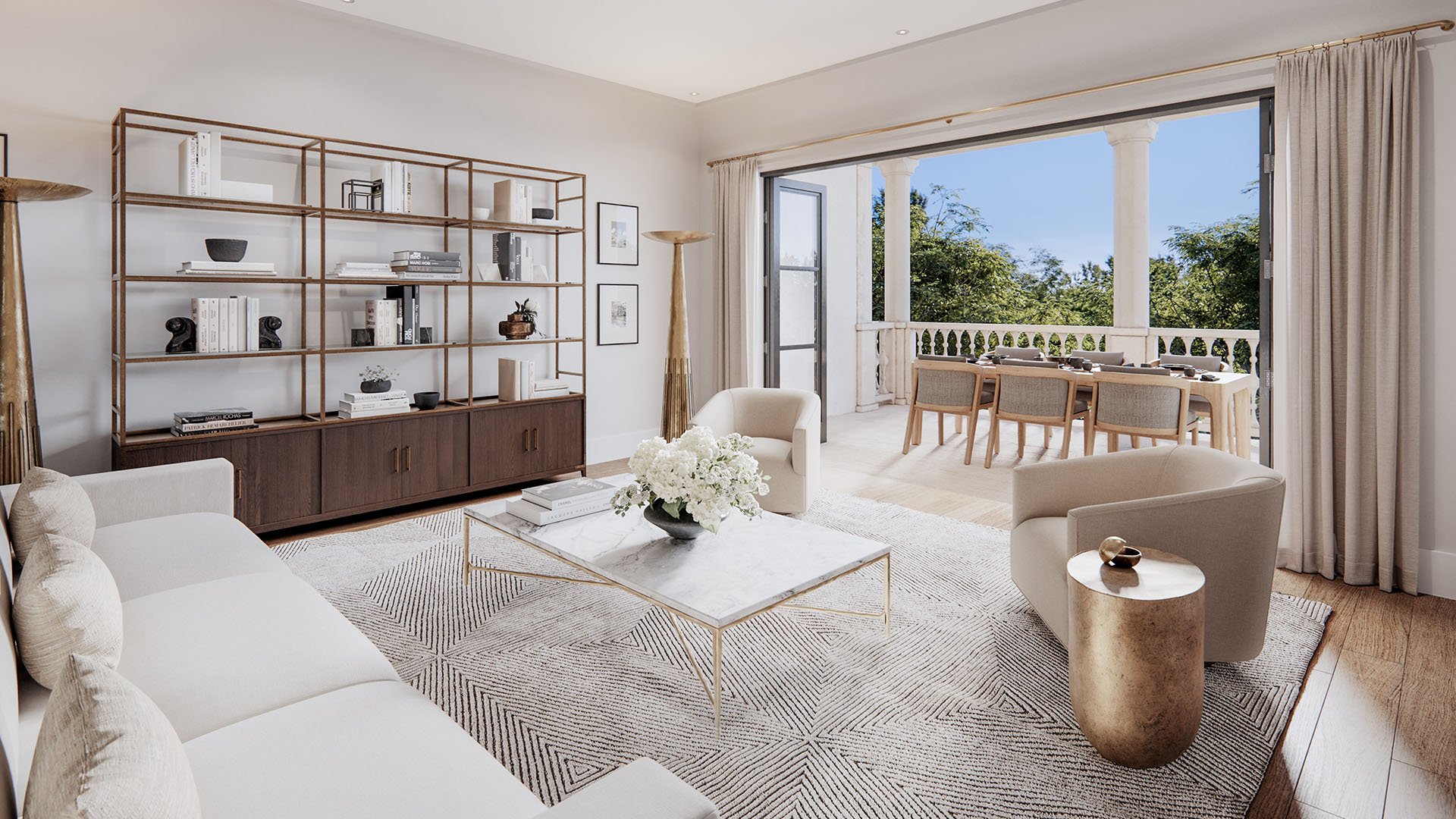
Outdoor space deserves equal scrutiny. A terrace should be assessed at the hour it is most likely to be used, with attention to shade, wind, privacy, lighting, door operation, and proximity to a powder room. Buyers comparing current Coral Gables options can consider how the plans at Ponce Park Coral Gables frame arrival, gathering, and private rooms, then apply the same scrutiny to any residence under consideration.
Coral Gables offers a range of residential formats, and each can serve hosts well when the plan suits their social patterns. A detached home may provide multiple arrival points, gardens, and stronger separation between household and guest areas. It can also place greater operational responsibility on the owner, from exterior preparation to parking coordination.
A condominium can streamline the experience through shared arrival and building operations, but buyers should investigate reservation procedures, visitor access, parking, deliveries, and rules affecting common spaces. The residence itself must also accommodate practical needs such as luggage, linens, serving pieces, and occasional overflow seating.
Projects such as Cora Merrick Park provide a useful point of comparison for buyers considering apartment living in Coral Gables, while The Village at Coral Gables can prompt a broader conversation about multi-level living and residential scale. These links are starting points for plan review, not substitutes for examining the specific residence, governing documents, and service arrangements.
Before contracting, request the documents and practical details that shape guest use. Review visitor registration, parking allocation, valet procedures, elevator access, move-in rules, amenity reservations, pet policies, noise provisions, and any restrictions relevant to extended occupancy. If staff or caterers may be involved, clarify loading, service entry, elevator, and kitchen access.
For new construction, study plans with furniture drawn to realistic scale. Confirm door swings, clearances, ceiling transitions, outlet locations, lighting controls, and whether optional walls or millwork alter circulation. Model residences can convey atmosphere, but the purchased plan, orientation, and included specifications require separate review.
Resale buyers should test what already exists. Open doors simultaneously, sit where the dining table would be placed, trace the route from the guest room to the bathroom, and listen from the sleeping areas while conversation continues in the main room. Assess mechanical systems, window coverings, exterior lighting, and smart-home controls from the perspective of both owner and visitor.
A guest-ready residence should remain composed after the final course. Storage for folding chairs, table extensions, glassware, linens, luggage, and outdoor cushions reduces the need to reorganize daily rooms before every occasion. Durable finishes in circulation areas can be as important as dramatic finishes in formal spaces.
The strongest choice is rarely the home with the largest stated capacity. It is the residence that accommodates the owner’s most frequent gathering with ease, preserves private routines, and expands gracefully for occasional larger events. The distinction is disciplined: favor space that performs elegantly over space that merely photographs well.
How many guest bedrooms should a buyer prioritize? Begin with the number of overnight visitors hosted regularly, then add flexible space only if it functions comfortably without compromising daily life.
Is an open kitchen always best for entertaining? No. Open kitchens encourage connection, while partially screened preparation areas can better contain noise, equipment, and cleanup.
What makes a guest suite feel private? Separation from the primary suite, direct bathroom access, useful storage, acoustic control, and an intuitive nighttime route all matter.
Should buyers prioritize indoor or outdoor entertaining space? Prioritize the setting used most often, then confirm that indoor and outdoor areas connect without creating narrow service routes or privacy conflicts.
How important is guest parking in Coral Gables? It is central to arrival planning. Verify the actual spaces, access procedures, street conditions, and any association controls for the specific property.
Can a den substitute for a guest bedroom? It can, provided its enclosure, dimensions, storage, ventilation, bathroom access, and furnishings support a comfortable stay.
What condominium rules deserve special attention? Review visitor registration, parking, elevator access, amenity reservations, noise provisions, pets, deliveries, and any rules affecting extended stays.
What should buyers test during a residence tour? Walk arrival and service routes, open doors, place furniture mentally, test acoustics, and examine storage from a host’s perspective.
Are multi-level homes suitable for frequent hosting? They can create excellent separation, but buyers should consider stairs, mobility, luggage movement, and nighttime wayfinding.
What is the best final test before choosing? Imagine a typical gathering hour by hour, identifying where guests, household members, food service, vehicles, and belongings will move.
For a confidential assessment and a building-by-building shortlist, connect with MILLION.
If branded residences are on your mind — as a home or as an allocation — we would be glad to share what we are seeing, privately.
Begin a quiet conversation